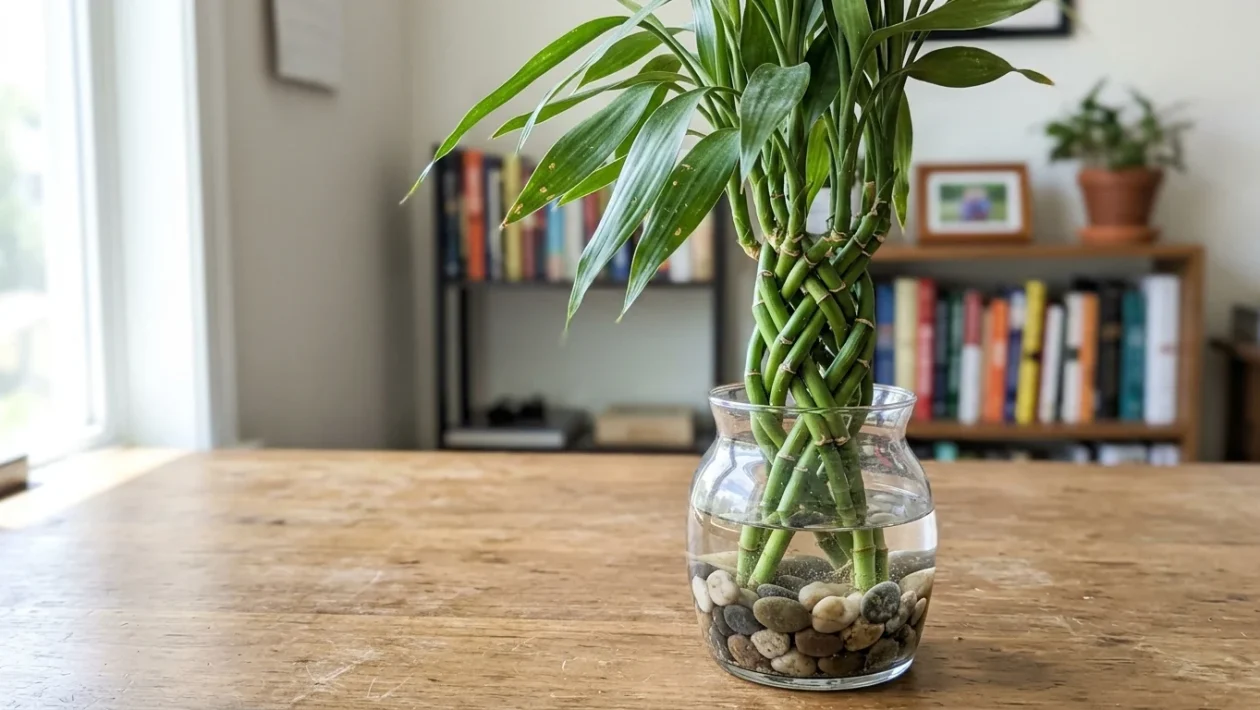
Lucky bamboo is famous for bringing prosperity and eye-catching aesthetics to indoor spaces. Growers train its stems into intricate braids and tight curls before the plant ships from China or Taiwan. But despite its name and appearance, this popular houseplant holds a surprising secret.
“The most fascinating feature of lucky bamboo is that it is not, in fact, bamboo!” says Ekta Chaudhary, gardener and founder of the green-living platform Garden Up.
While native to Africa, it belongs to an entirely different plant family. Jon VanZile, master gardener and author of Houseplants for a Healthy Home, notes that “the plant we prize for its intricate, sculptural stems and long, pointed leaves is actually a type of dracaena (Dracaena sanderiana).”
While hardy and easy to maintain, owners must take one critical precaution before bringing it home. Keep the plant entirely out of reach of cats and dogs, as it is highly toxic to animals.
Hydration and Water Quality
Lucky bamboo can grow in standard potting soil, but nurseries typically sell it as a fully aquatic plant. VanZile points out that these water-bound plants thrive in a simple setup, provided you manage the hydration properly.
Because the plant’s roots are highly sensitive to chlorine, Chaudhary recommends using “clean distilled or bottled water.” Alternatively, you can fill an open container with tap water and leave it undisturbed for 24 hours, allowing the harmful fluoride and chlorine to evaporate.
Consistency dictates success. VanZile advises keeping the container topped off so the roots remain completely covered between monthly water changes. “If the water becomes cloudy or dirty, it’s time to change it,” he says.
Feeding and Lighting Needs
This compact houseplant reaches a maximum height of about 100 centimeters. According to Chaudhary, it grows “faster in well-draining, nutrient-rich soil, which needs fertilization once every month.”
Aquatic setups require significantly less feeding because the plant absorbs nitrogen directly from the water. Adding a drop or two “of a high-quality, balanced fertilizer when you change the water will ensure strong leaf growth,” VanZile explains. He suggests seeking out formulas specifically designed for lucky bamboo or hydroponic systems.
When it comes to location, bright, filtered sunlight or shade works best. However, lucky bamboo possesses remarkable durability. VanZile notes it tolerates “low-light conditions for long periods without dropping its leaves,” making it an ideal desk plant for offices or dim rooms where other greenery struggles.
Selecting and Repotting
Finding one of these sculptural plants requires minimal effort. “Luckily for us, the lucky bamboo is a staple in most nurseries, gardening supply stores, or just anywhere that sells live plants,” Chaudhary says.
Shoppers should inspect the store displays carefully. VanZile advises buyers to “look for specimens with healthy leaves and interesting stem shapes.” He adds that ambitious owners can even try training the plant into new shapes themselves.
If your lucky bamboo eventually outgrows its original container, upgrading to a larger vessel is straightforward. Just handle it with extreme care during the transfer. “Do your best to keep the original stems bundled together and protect the delicate roots,” VanZile says.