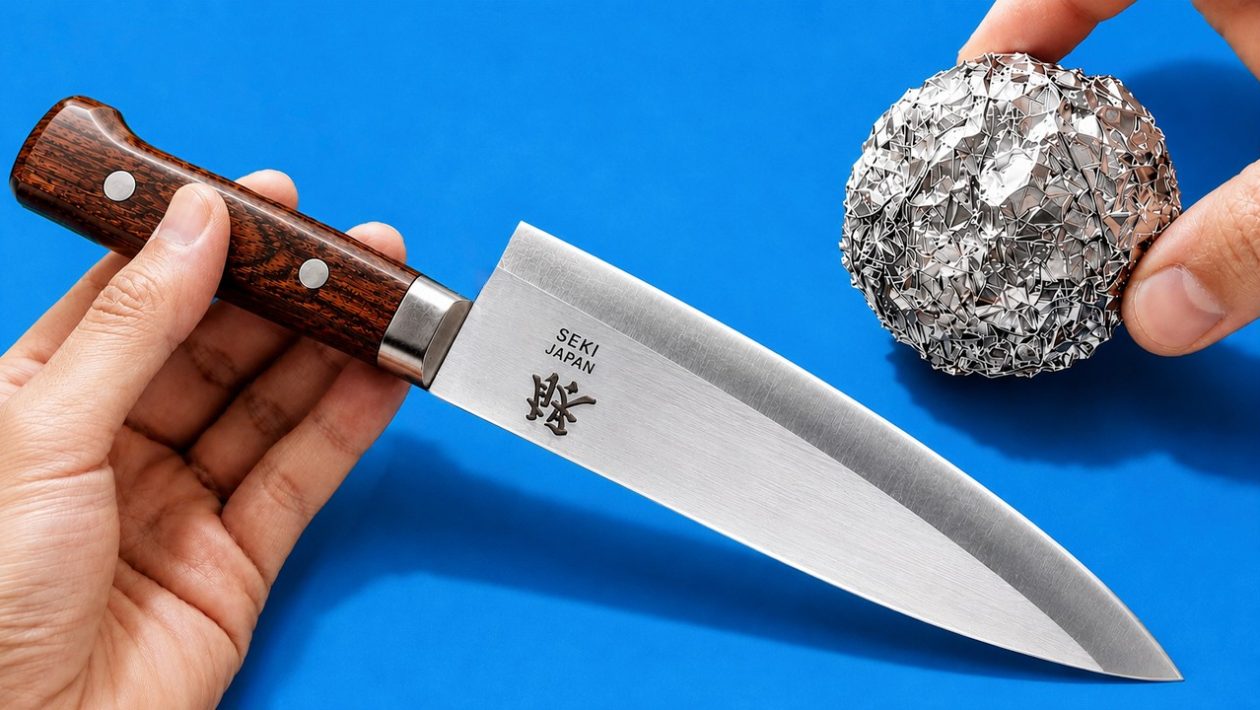
The Reality of the Foil Hack
You have likely seen the viral claim that crumpling a sheet of aluminum foil and running your knife blade against it will restore a razor-sharp edge. It sounds like magic: a household staple turning a dull, dangerous blade into a tool that slices through paper with ease.
The truth is more nuanced. Aluminum foil is not a sharpening stone, and it cannot grind steel to create a new bevel. However, it does possess a unique property that makes it useful for one specific task: honing.
Understanding Honing vs. Sharpening
To understand why this trick works—or fails—you must distinguish between sharpening and honing. Sharpening removes metal to create a fresh, sharp edge. Honing, conversely, uses a rod or abrasive material to straighten the microscopic “burrs” or folds in the existing edge of the blade.
When a knife becomes dull, the edge often loses its alignment, rolling slightly to one side. By running the blade against a harder material, you can push those microscopic teeth back into a straight line. Because aluminum foil is abrasive enough to provide a slight friction, it can effectively “realign” a blade that has simply lost its edge through light use.
How to Properly Use the Technique
If you find yourself in a pinch and need to perform a quick fix on a slightly dull knife, the aluminum foil method can offer a temporary improvement. Follow these steps to ensure you are doing it safely:
- Fold the foil: Take a standard sheet of aluminum foil and fold it over itself several times. You want a thick, dense pad, not a loose, flimsy sheet.
- Angle matters: Hold your knife at a consistent 15 to 20-degree angle. This is the same angle you would use on a sharpening stone or honing steel.
- Consistent strokes: Draw the blade across the folded foil in a sweeping motion, moving from the heel of the blade to the tip. Repeat this on both sides of the knife about 5 to 10 times.
- Test the edge: Carefully test the sharpness by slicing through a piece of paper or a tomato. The foil should have helped straighten the edge, making the cut significantly smoother than before.
When to Skip the Foil
This hack has strict limitations. If your knife is truly dull—meaning the edge is rounded, chipped, or has lost its bevel entirely—aluminum foil will not help. A dull blade requires material removal, which can only be achieved with a whetstone, a ceramic rod, or a mechanical sharpener.
Furthermore, this method is not a substitute for proper maintenance. Frequent use of aluminum foil may eventually lead to uneven wear if your angle isn’t precise. It is best reserved for kitchen emergencies when you don’t have access to your professional sharpening kit.
Maintaining Your Blades
The best way to keep knives sharp is through prevention. Avoid cutting on glass, ceramic, or granite countertops, as these surfaces will blunt your blade instantly. Use a wooden or plastic cutting board instead.
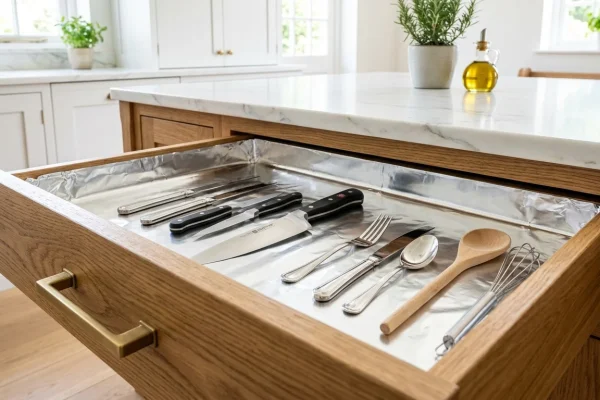
Additionally, hand-wash your knives immediately after use. The heat and harsh detergents in a dishwasher can degrade the edge and weaken the bond between the handle and the blade. Storing them in a knife block or on a magnetic strip will also prevent the blade from knocking against other metal utensils, keeping the edge protected for longer periods.
While the aluminum foil trick is a functional hack for quick edge realignment, remember that professional sharpening remains the gold standard for long-term knife health. If your blade is beyond the help of a quick hone, invest in a quality whetstone and learn the fundamentals of edge maintenance.