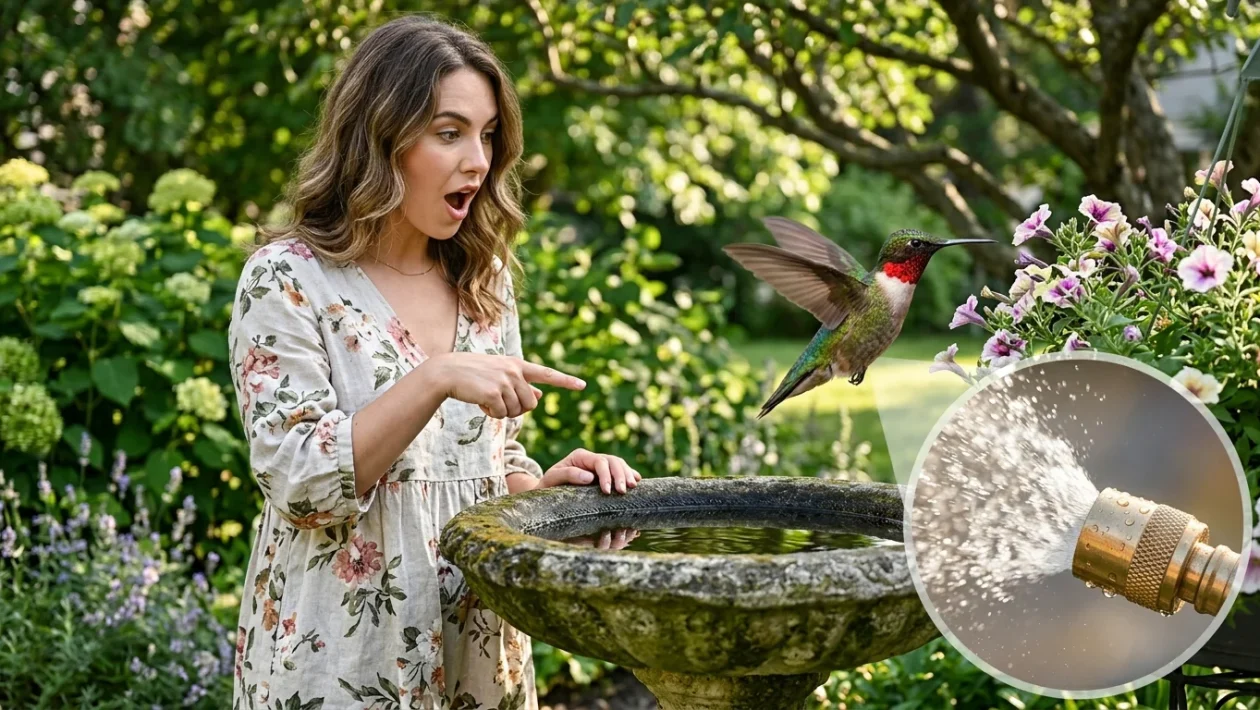
A close-up of a vibrant hummingbird hovering in a garden setting.
Hummingbirds burn massive amounts of energy darting through gardens every day. While traditional birdbaths easily attract robins and finches, hummingbirds routinely ignore them.
Standard birdbaths are simply too deep for these tiny pollinators. Jordan Rutter, ornithologist and Communications Director at the American Bird Conservancy, notes that stagnant, deep water presents a physical hazard.
“It’s difficult for them to stand in one since their short legs are made more for perching than standing,” Rutter says. Deep water also weighs down their feathers, making flight extremely difficult and draining their already limited energy reserves.
The True Purpose of Water for Hummingbirds
A hummingbird in mid-air approaching a bright flower.
Hummingbirds rarely drink plain water. Holly Grant, a project assistant for NestWatch at the Cornell Lab of Ornithology, explains that hummingbirds fulfill their hydration needs through nectar and sugar water.
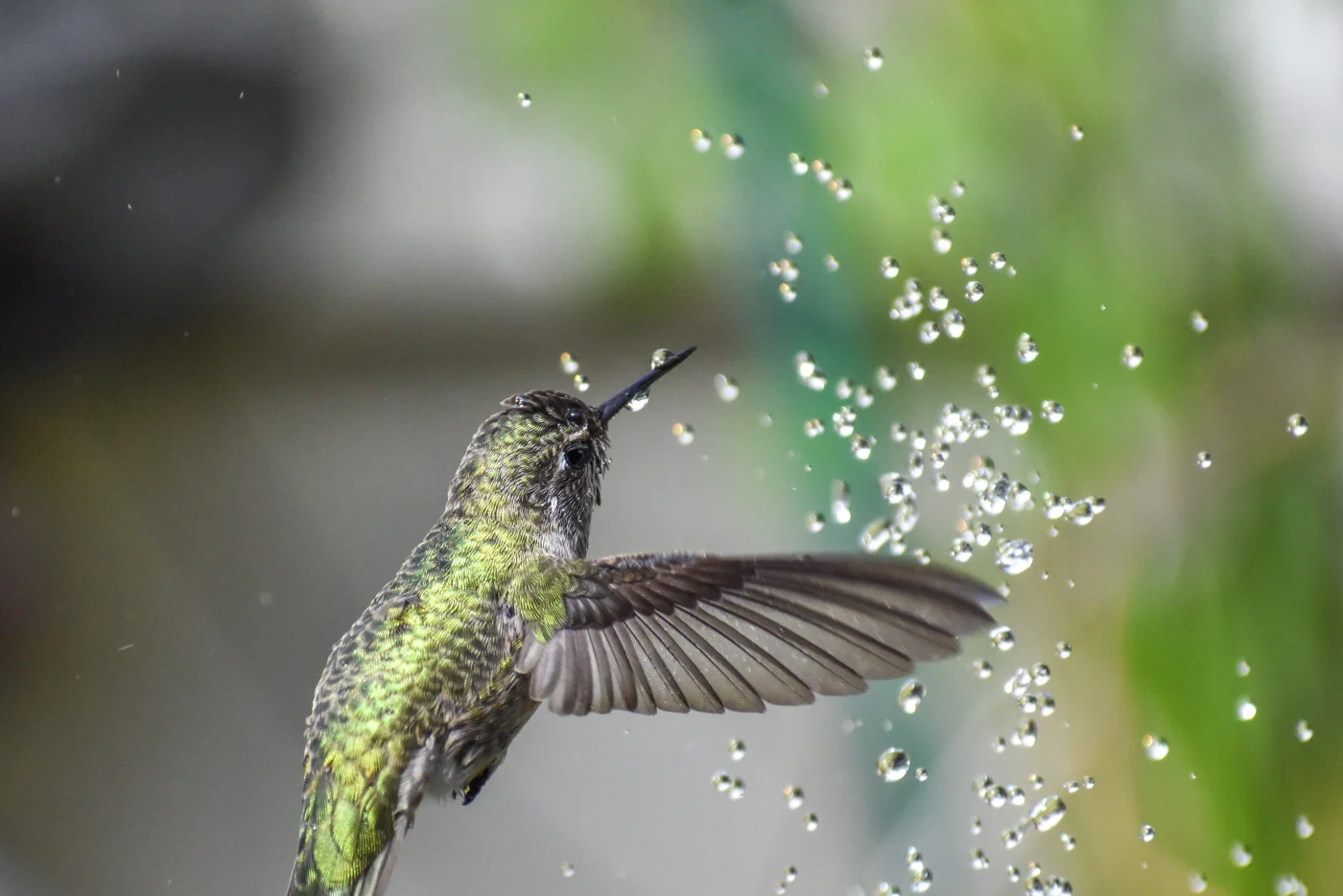
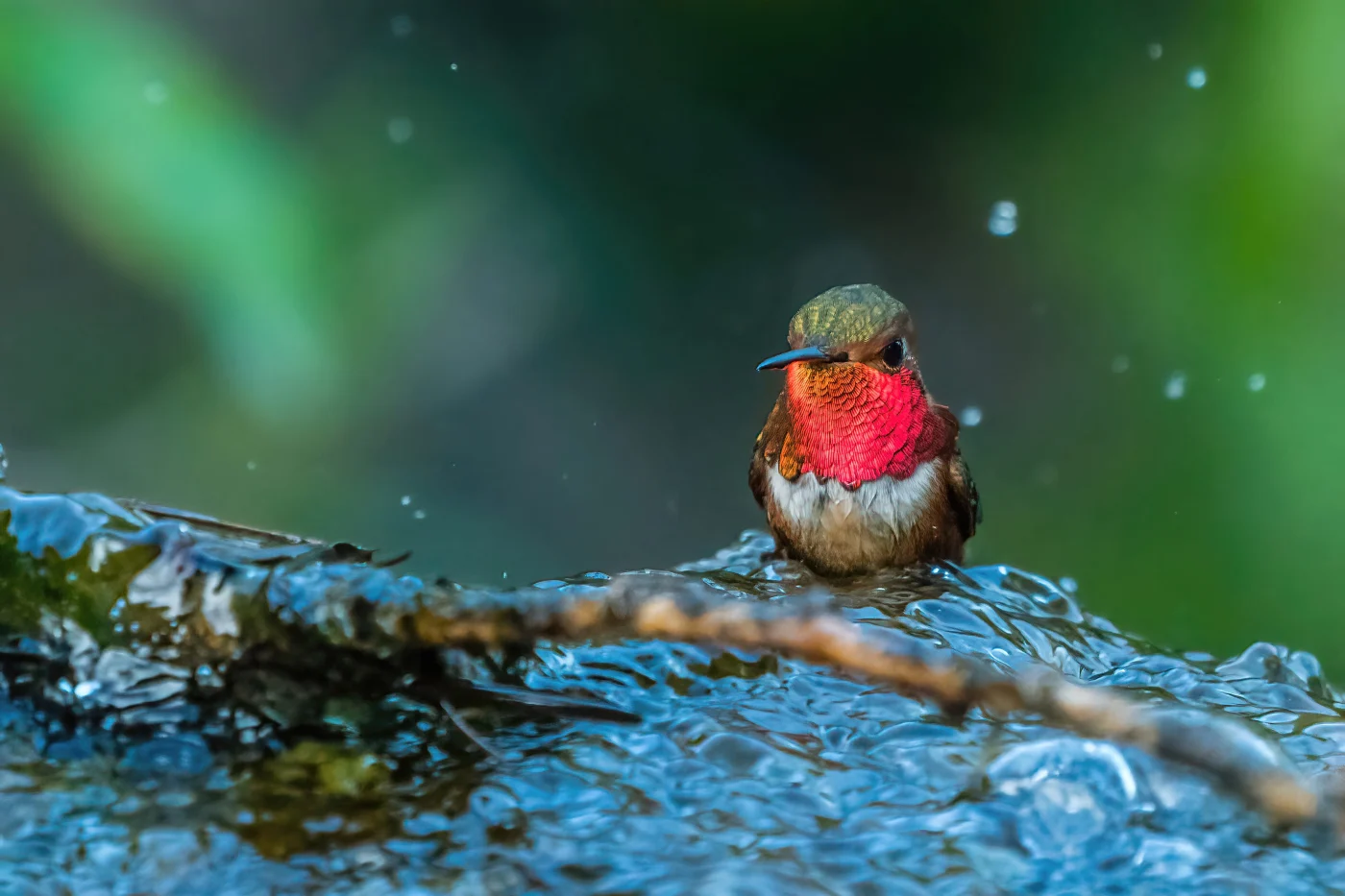
Instead, they seek out water almost exclusively for bathing. “Rinsing helps remove sticky nectar and pollen that gets stuck in their feathers, that may affect their flight,” Rutter says.
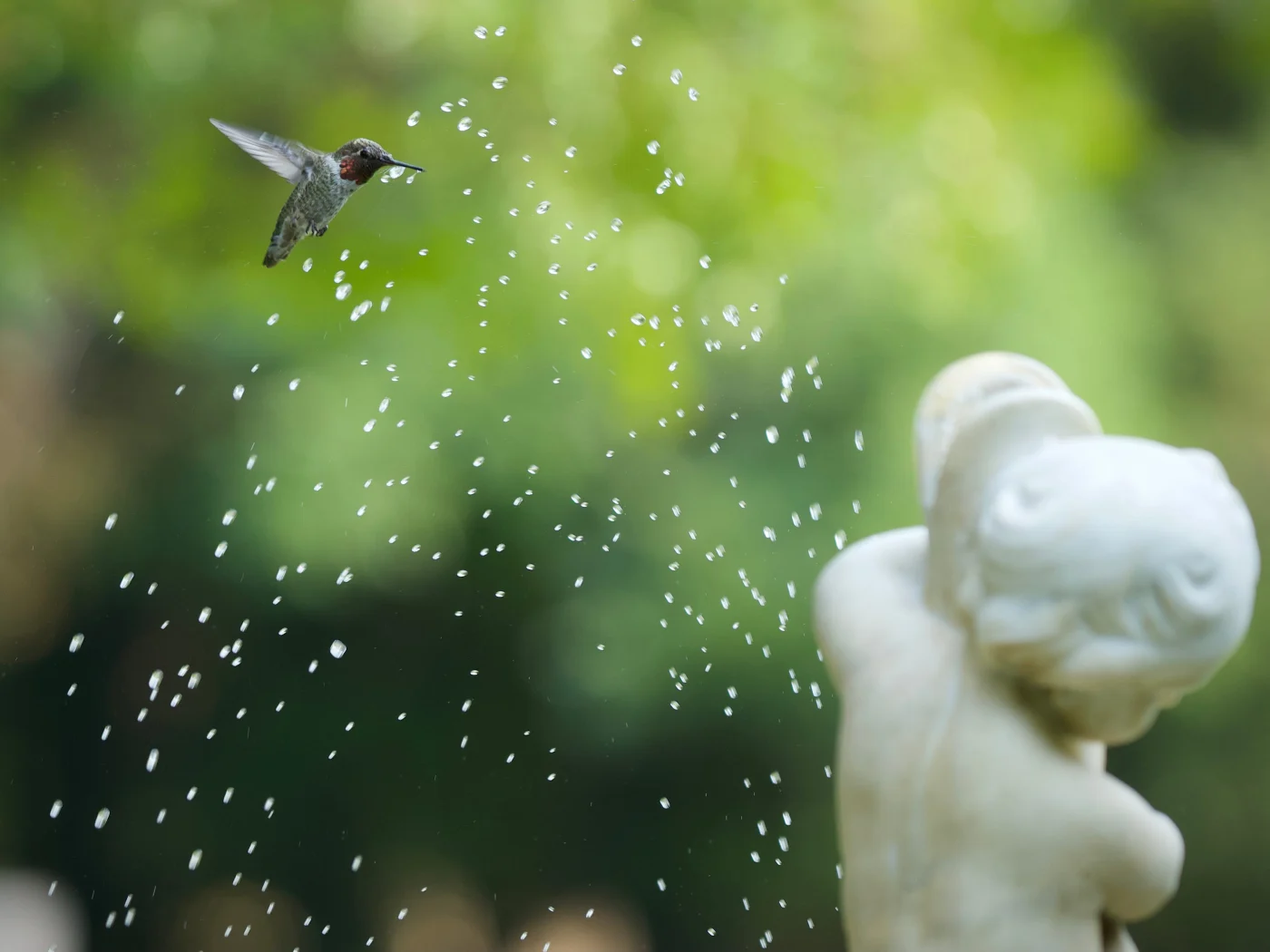
In the wild, hummingbirds bathe using morning dew, fog, and fine mist. They actively rub against wet leaves or fly through the gentle spray of fast-moving waterfalls to clean themselves and regulate their body temperatures.
Building the Perfect Misting Station
A close look at a hummingbird interacting with water droplets.
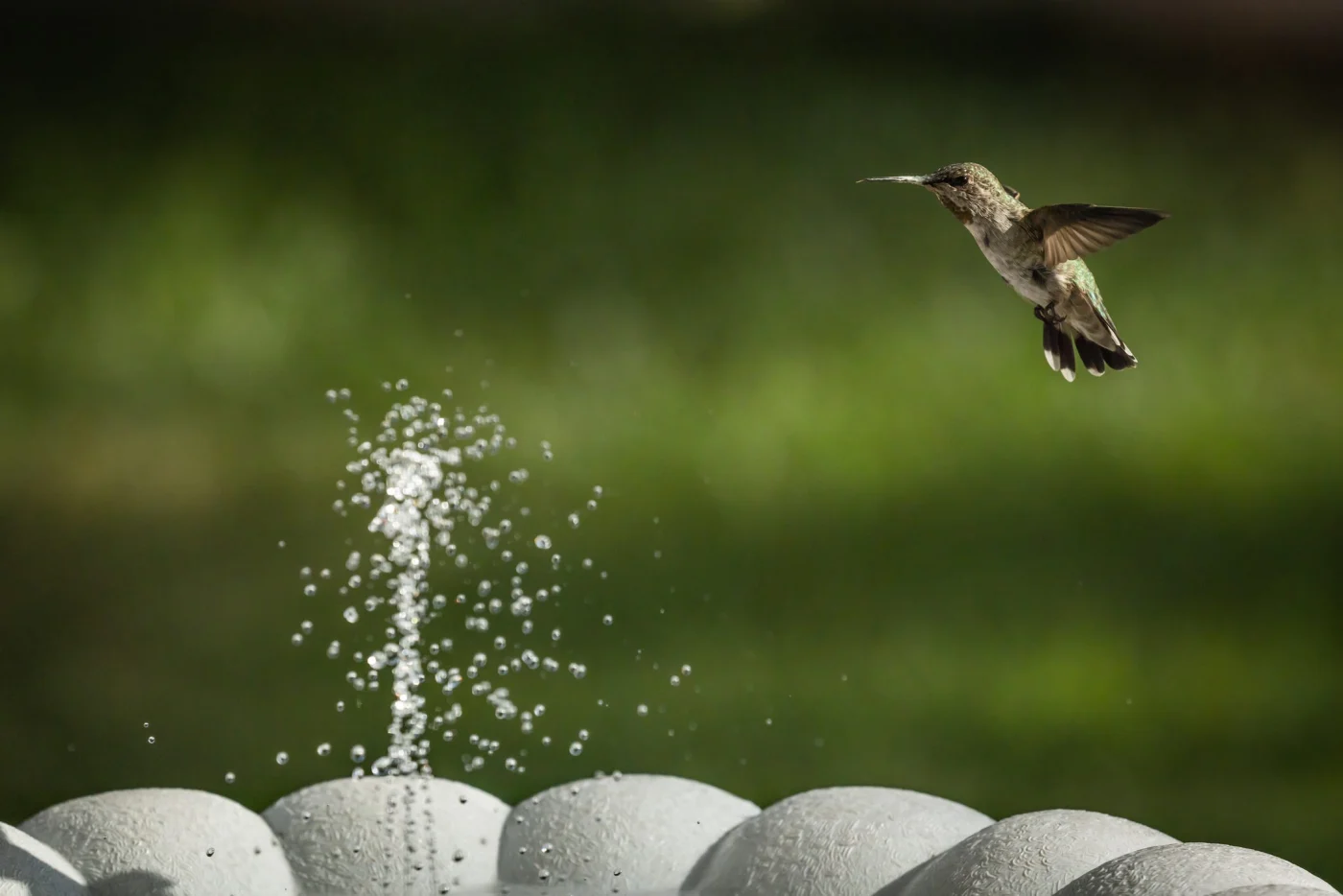
To replicate their natural bathing habits, swap out deep basins for shallow hummingbird fountains, misters, or drippers. Adding a mister attachment above an existing birdbath creates the exact environment hummingbirds crave.
Grant suggests a simple DIY alternative: pierce a tiny hole in the bottom of a bucket and hang it over a basin. The slow, steady drip creates ripples and splashes that instantly catch a hummingbird’s attention.
Placement is critical. Position your water feature in a shaded area near safe perching spots. Avoid placing baths near dense shrubs where predators, particularly feral cats, can easily ambush the birds.
Backyard Strategies to Support Local Populations
A hummingbird hovering near a backyard feeder.
Beyond specialized water features, creating a comprehensive habitat ensures hummingbirds will return to your yard year after year.
- Plant native species: Hummingbirds are naturally drawn to red, tubular plants. Grant recommends planting cardinal flower, trumpet vine, bee-balm, and jewelweed.
- Offer safe perches: Leave dead branches intact or hang hummingbird swings so they can survey their territory safely.
- Eliminate pesticides: Toxic chemicals poison the flowers birds rely on. Removing pesticides also protects beneficial insects that naturally control garden pests.
- Maintain sugar water feeders: Stick to a basic two-ingredient homemade sugar water recipe. Never use red dye, which is unnecessary and toxic to the birds.
- Clean feeders rigorously: Scrub feeders every few days, increasing the frequency during heatwaves or if the liquid turns cloudy.
- Keep domestic cats indoors: Outdoor and feral cats are an ecological disaster for avian populations, killing an estimated 2.4 billion birds every year.