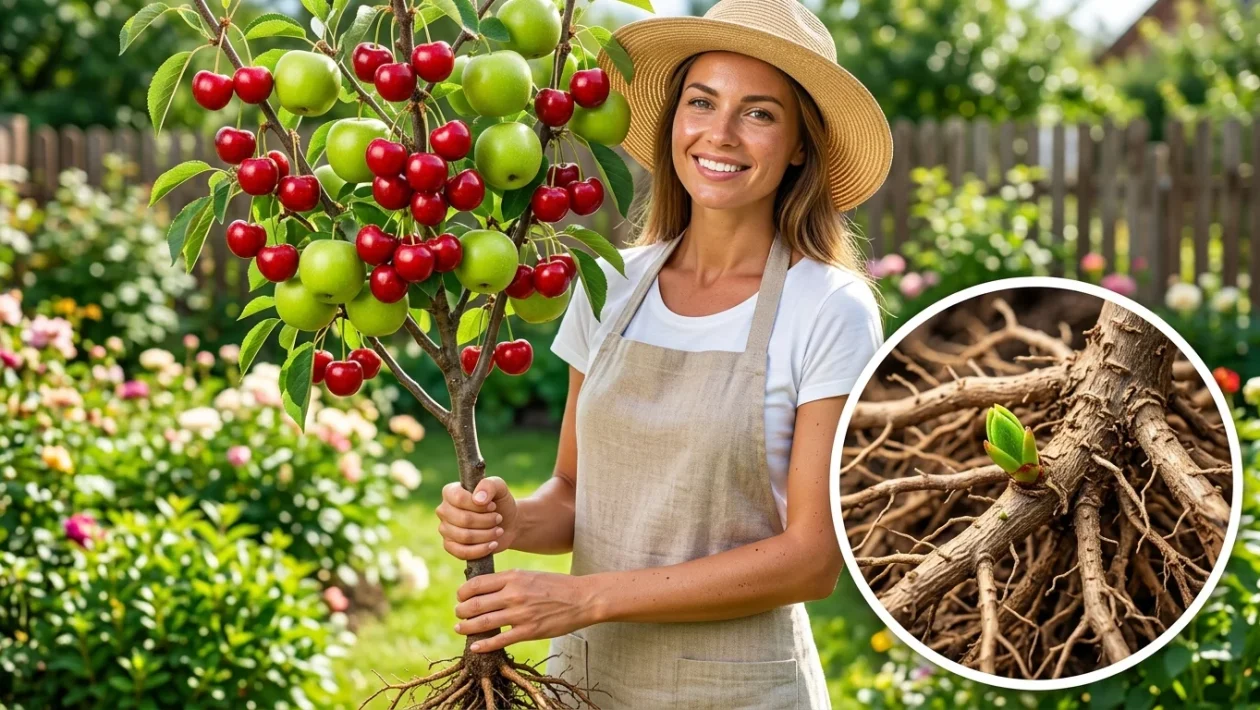
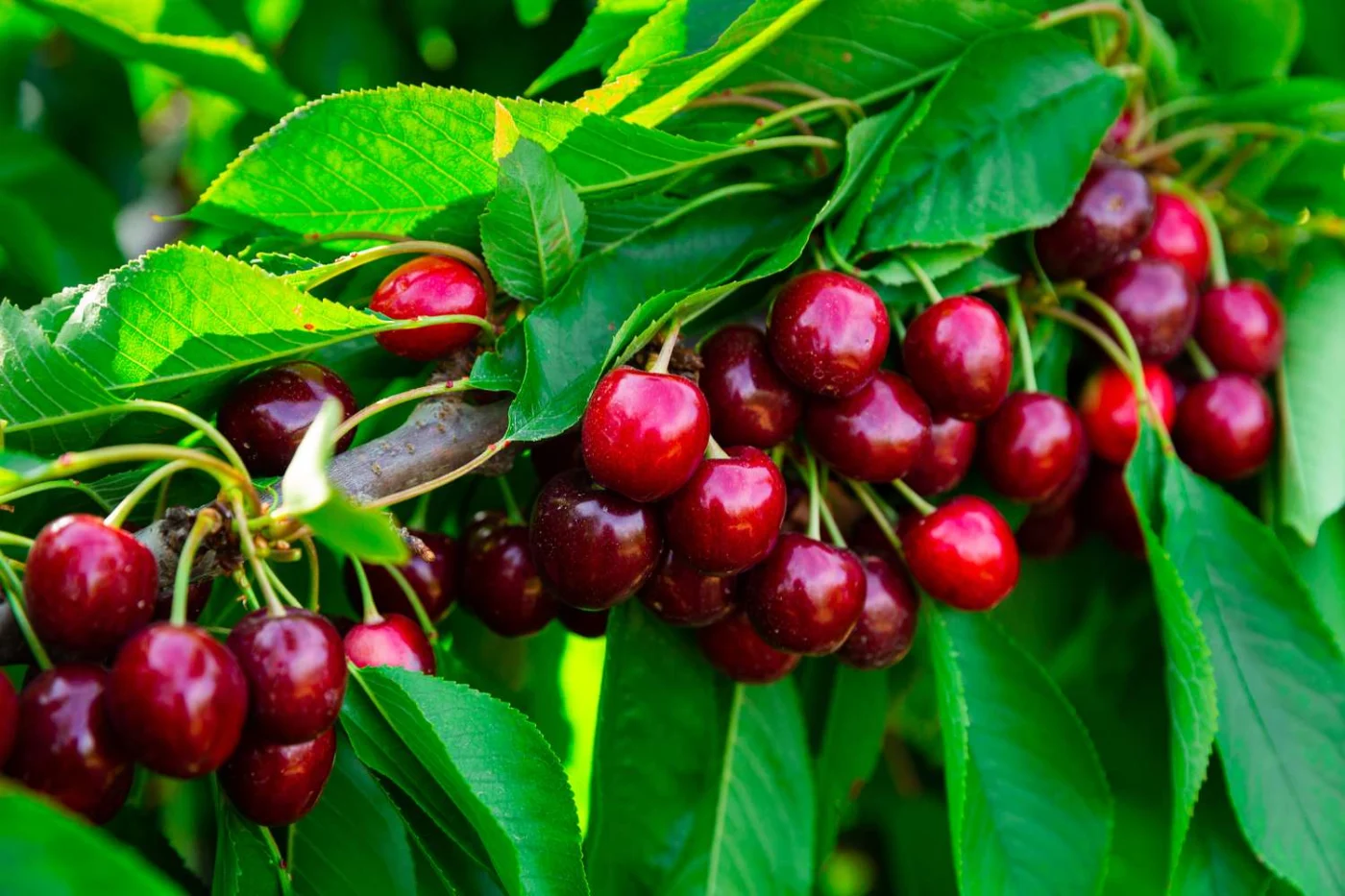
A thriving young fruit tree bearing an abundant harvest in a sunny garden
Waiting a decade for a backyard orchard to produce fruit is unnecessary. Bare-root fruit trees offer a proven shortcut to a rapid harvest. Sold dormant and completely soil-free, these deciduous trees adapt immediately to their new environment.
Because they are planted without soil, bare-root trees easily bypass the transplant shock that often stunts potted plants. Standard trees can take up to 10 years to yield fruit, but dwarf and semi-dwarf bare-root varieties routinely produce in just one to three years. Horticulture specialists highlight five specific trees designed for immediate backyard impact.
Granny Smith Apple
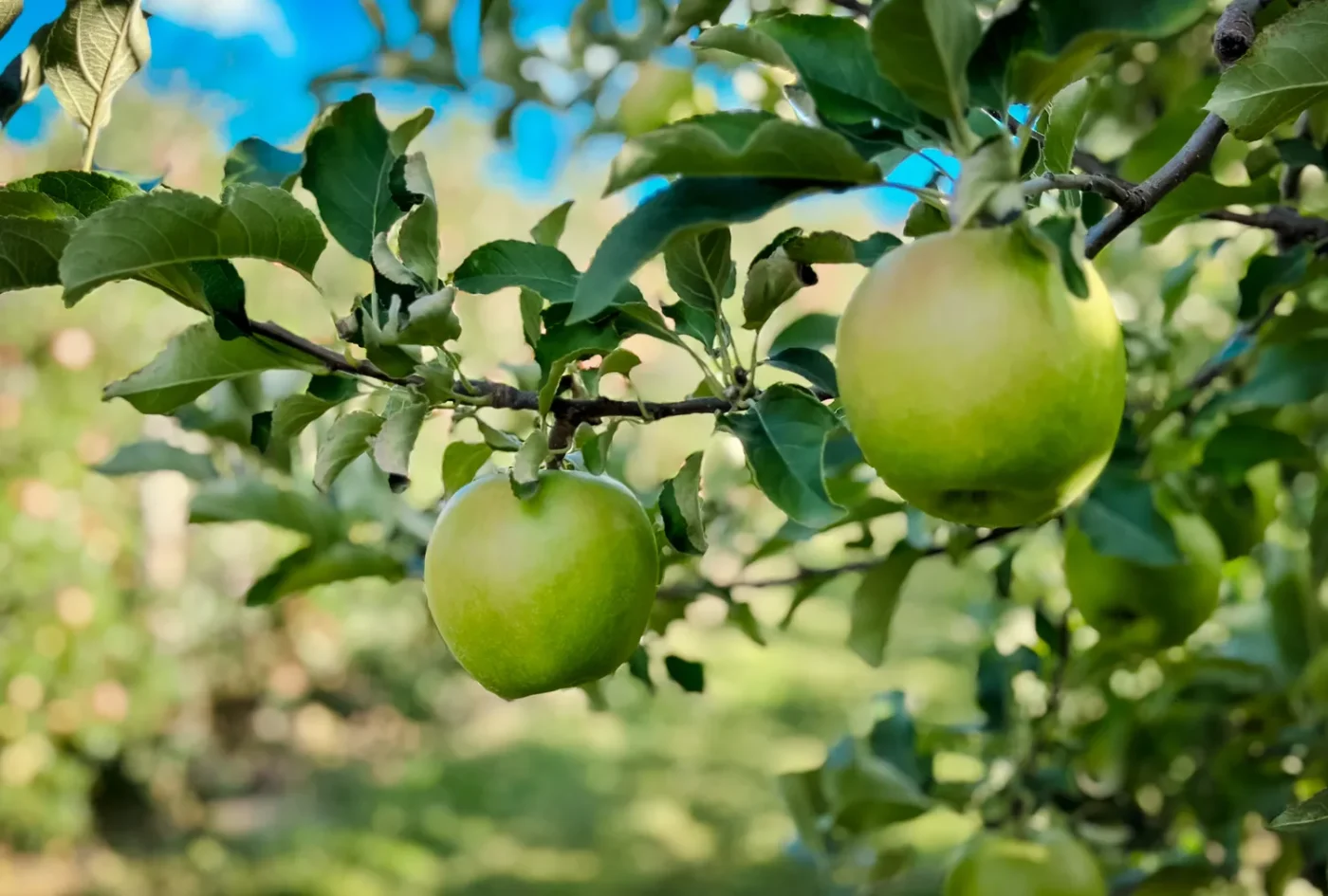
Bright green Granny Smith apples growing in dense clusters on a leafy branch
Apple trees anchor most backyard orchards, but picking the right variety dictates the timeline. Melissa Higgins, wholesale manager at Sprague’s Nursery & Garden Center, points to the Granny Smith (Malus domestica ‘Granny Smith’) for rapid production. When planted bare-root in early spring, this dwarf variety frequently yields fruit in its first or second year of growth.
Timing always depends on the rootstock type and the age of the tree at planting. To guarantee early success, Higgins also recommends the Liberty and Freedom varieties as highly reliable, fast-producing alternatives.
Brown Turkey Fig
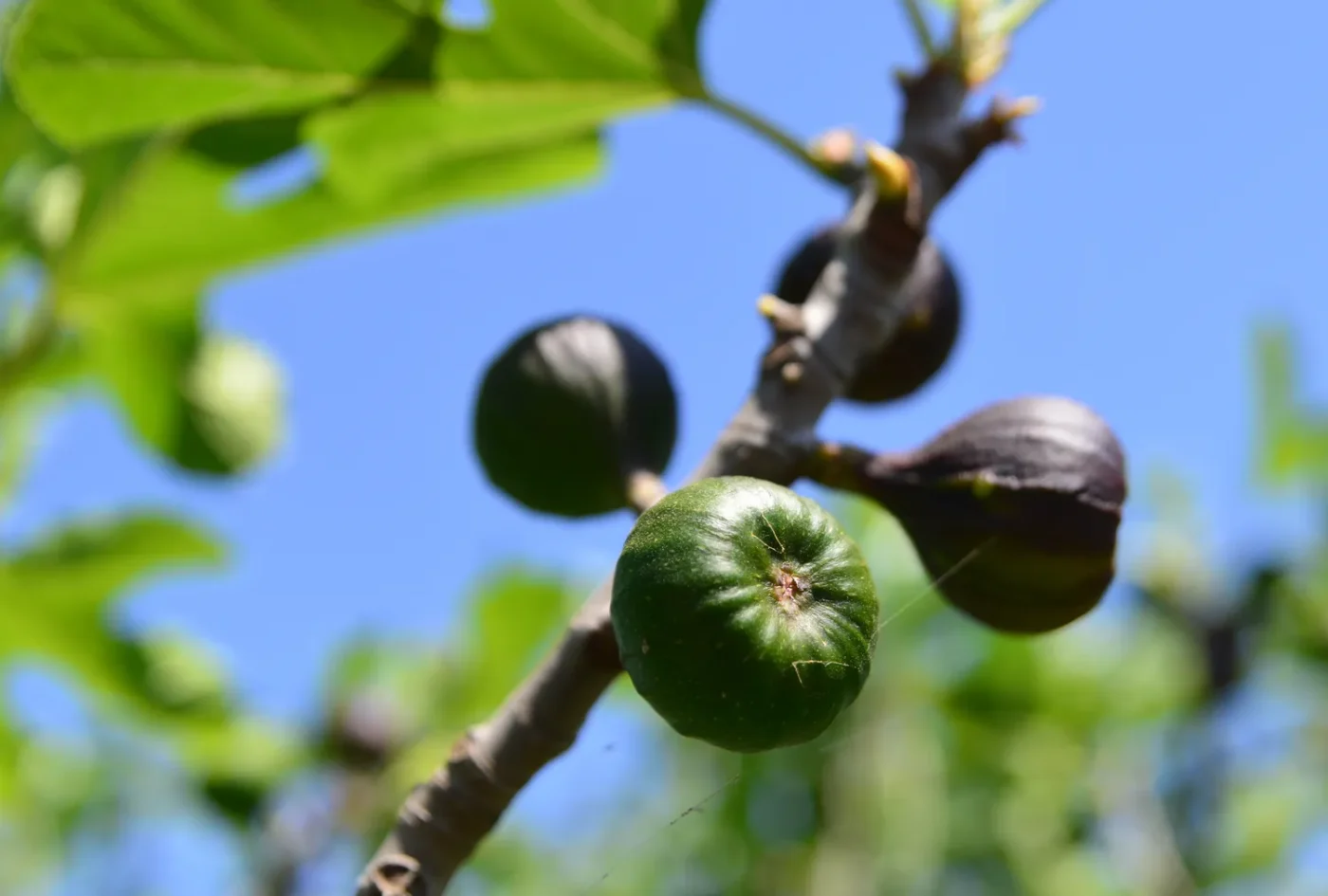
A close-up of a ripening Brown Turkey fig hanging alongside broad green leaves
Fig trees deliver rapid growth alongside striking foliage. The Brown Turkey fig (Ficus carica ‘Brown Turkey’) is prized for its vigorous expansion, shooting up 13 to 24 inches annually. Gardeners typically see their first fruit within one to two years, followed by heavy, significant harvests by year three.
This self-pollinating variety sets fruit on both new growth and last year’s wood, keeping productivity consistently high. Plant this bare-root tree during its dormancy in full sunlight and well-draining soil for optimal spring establishment.
Dwarf Cherry
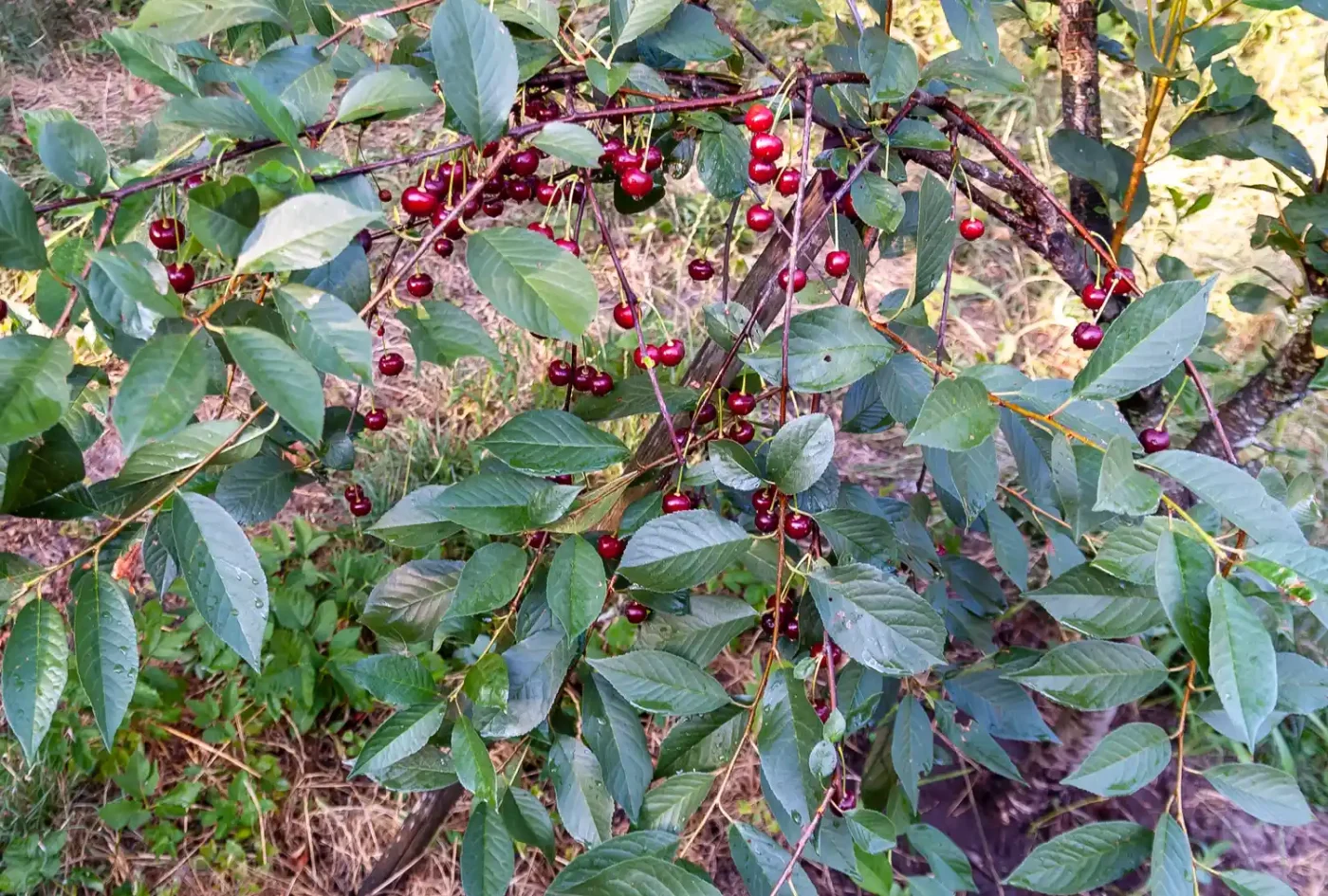
A branch heavily loaded with deep red, ripe cherries ready for harvest
Capping out at 4 to 10 feet tall, dwarf cherry trees (Prunus fruticosa) maximize tight garden spaces while offering a range of sweet and tart flavors. University of Maine tree fruit specialist Renae Moran notes these compact, self-pollinating trees begin producing very early in their lifecycle. Depending on the variety, expect harvests in just two to five years.
Specific cultivars like Stella and Carmine Jewel can even bear fruit their very first year in the ground. They require six to eight hours of direct sunlight and well-draining soil to thrive.
A young cherry tree thriving outdoors in a bright, sunny landscape
Moran advises that annual late-winter pruning prevents disease and stimulates healthy growth. Gardeners seeking sweet cherries may need to hunt through specialty nurseries, as tart varieties dominate mainstream garden centers.
Peach
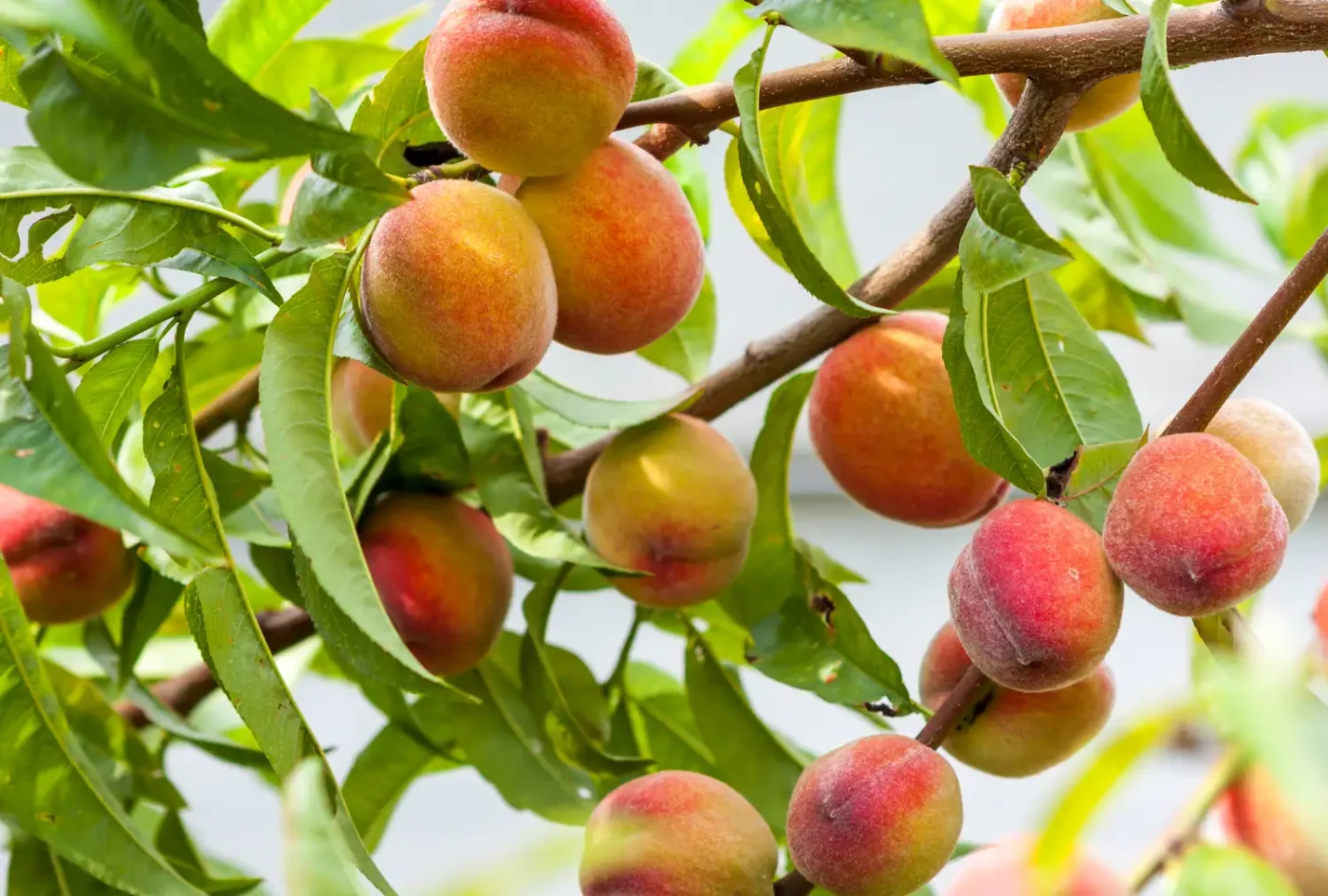
Large, fuzzy peaches ripening on a tree branch surrounded by green foliage
Peaches are incredibly fast growers when grafted onto the right rootstock. “Peach trees will naturally begin to bear flowers and fruit at a young age, about three years after planting,” Moran explains. These self-fertile trees require minimal waiting compared to other orchard staples.
Popular varieties like Elberta and Redhaven often produce during their first year under ideal conditions. To guarantee a heavy yield, prune peach trees (Prunus persica) into an open-center V-shape every spring to maximize airflow and canopy sunlight. They require full sun, slightly acidic soil, and roughly one inch of water per week.
Dwarf Plum
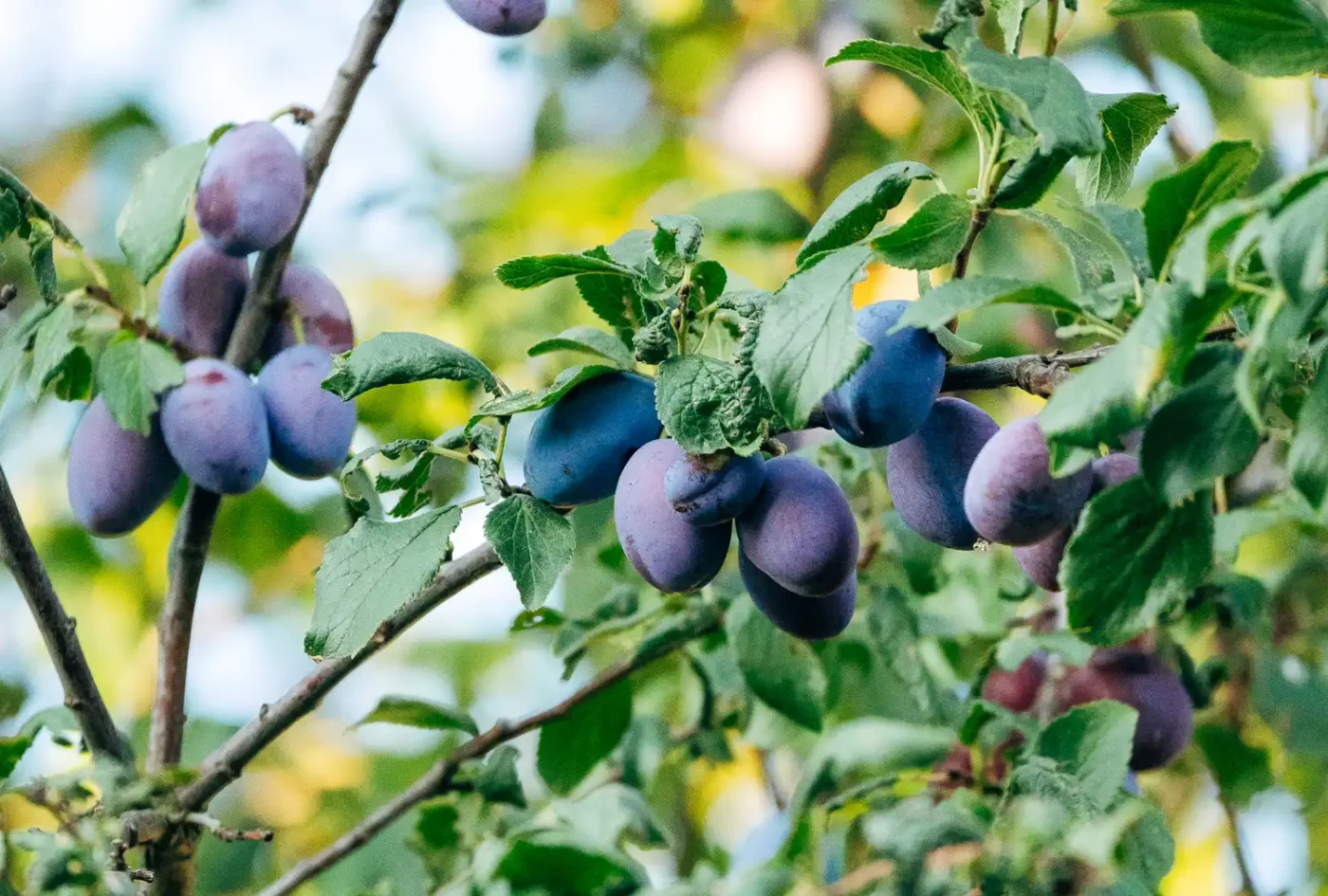
Smooth, dark purple plums hanging heavily from a thin tree branch
Bare-root plums (Prunus domestica) are highly resilient to transplant shock. This allows them to quickly establish root systems and push their energy directly into early fruiting. Whether you prefer honey-sweet or tart varieties, these trees adapt rapidly to well-draining, slightly acidic soil.
Breeders have cultivated several dwarf varieties explicitly for early seasonal yields. Look for Dwarf Shiro, Dwarf Santa Rosa, Methley, and Superior. When planted in full sun, these specific plum trees consistently produce within one to three years.