The Workshop Secret Hiding in Your Kitchen
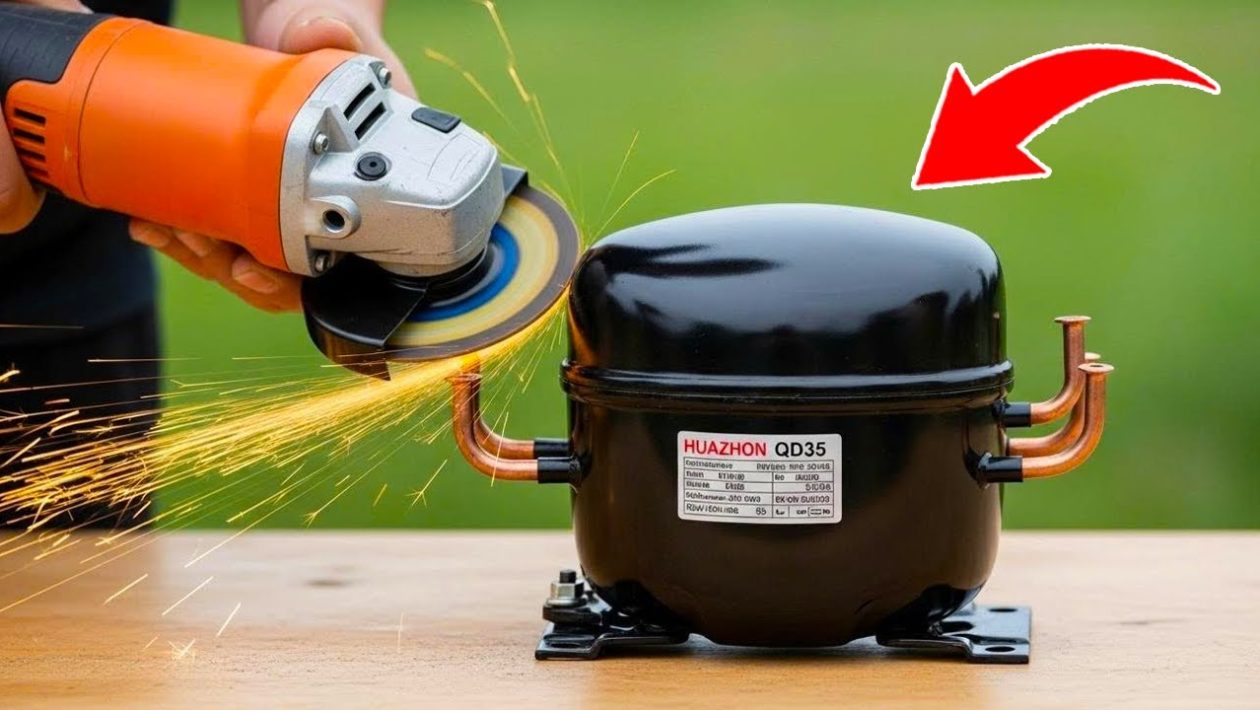
When a refrigerator dies, most people drag it to the curb or pay a disposal fee to have it hauled away. But inside the chassis sits a highly engineered, hermetically sealed motor that is built to run for decades.
This component is the fridge compressor. To a resourceful DIYer, it is a mechanical gold mine.
Commercial air compressors and specialized vacuum pumps easily cost hundreds of dollars. By salvaging a working compressor from a discarded appliance, you can build identical tools for a fraction of the retail price.
Why These Motors Are So Valuable
A refrigerator compressor is essentially a heavy-duty piston pump suspended inside a sealed steel shell. It is designed to pump refrigerant gas under high pressure continuously.
Because it is built for home appliances, it operates in near silence. This makes it infinitely superior to the deafening roar of standard workshop air compressors, especially for indoor projects.
Furthermore, every compressor has two sides: a suction line and a discharge line. This means it can function as either a vacuum pump or a pressure pump, depending on which copper tube you attach your hose to.
Building a Silent Air Compressor
One of the most popular ways to reuse a fridge compressor is converting it into a silent air supply. This setup is highly prized by scale modelers, artists, and indoor tinkerers.
Because the output volume is relatively low, it pairs perfectly with airbrushes. It provides a steady, ultra-quiet stream of air without waking up the entire house.
To build a complete system, the compressor is typically plumbed into a small receiver air tank. You must install a pressure switch to automatically turn off the motor when the tank reaches a set PSI, along with a safety relief valve to prevent over-pressurization.
Creating a DIY Vacuum Pump
If you connect a hose to the suction line instead of the exhaust, the unit transforms into a highly capable vacuum pump. This opens up entirely new manufacturing capabilities for a home workshop.
Resin casters and mold makers use vacuum chambers to pull trapped air bubbles out of liquid silicone and epoxy. A salvaged fridge compressor handles this degassing process effortlessly.
Woodworkers and composite builders also use these homemade vacuum pumps for vacuum bagging. The steady suction evenly clamps wood veneers or carbon fiber layers over complex curves while the adhesive cures.
Harvesting the Motor Safely
Extracting a compressor requires strict safety and environmental precautions. Refrigerators contain pressurized chemical refrigerants that are illegal to vent into the atmosphere.
Before cutting any copper lines, you must have an EPA-certified HVAC technician recover the refrigerant using specialized equipment. Many scrap yards or appliance repair shops will perform this recovery process for a small fee.
Once the lines are safely evacuated, use a tubing cutter to sever the copper pipes, leaving enough length to attach hoses later. Unbolt the mounting feet and save the starting relay and capacitor attached to the side of the unit.
Essential Maintenance and Upgrades
Inside the sealed steel shell, the internal motor relies on a pool of specialized oil for lubrication. When operating as an open-air pump, it will slowly spit microscopic droplets of this oil out of the exhaust line.
To prevent the motor from seizing over time, you must periodically check and top up the oil. Many builders drill a small, sealable port into the casing to add standard air compressor oil as needed.
Installing an inline oil catch can on the discharge line is also highly recommended. This traps the expelled lubricant, keeping your air hoses clean and ensuring stray oil doesn’t ruin an expensive airbrush paint job.