The Viral Promise of Free TV
Cord-cutters are constantly looking for ways to access free over-the-air television. Recently, a surprisingly simple DIY hack has gained traction online, promising an end to bulky, expensive equipment.
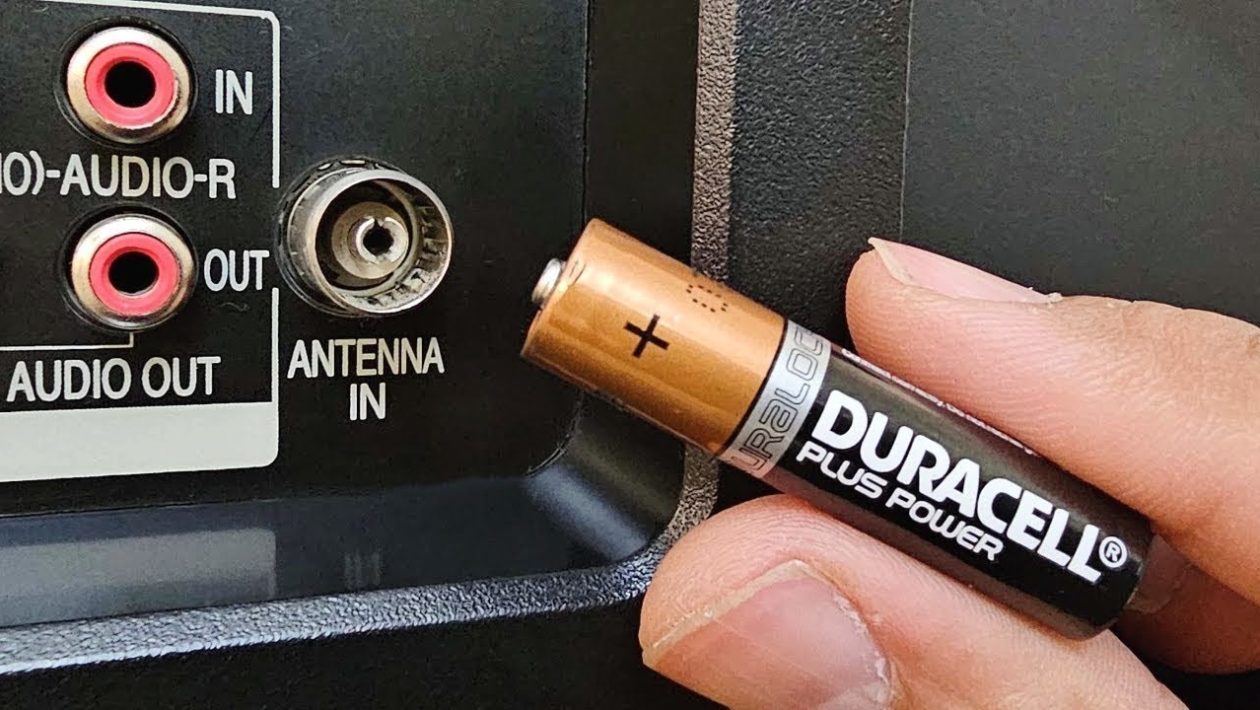
The claim is bold: by soldering a coaxial cable to a standard household battery, you can create a powerful digital antenna. Proponents say this homemade contraption can pull in dozens of high-definition channels.
It looks like the ultimate workaround. But the underlying physics of television broadcasting tell a very different story.
How the Trick Actually Works
To build this viral antenna, DIYers strip the end of a standard coaxial cable. They then solder the exposed copper wire to the positive terminal of an AA or AAA battery.
Once plugged into the back of a television, the TV often successfully scans and locks onto local broadcast channels. To the naked eye, the battery appears to be pulling in the signal.
However, the battery is getting credit for work it isn’t doing. The real hero of this experiment is the exposed copper wire itself.
The Science of Signal Reception
Digital television signals in the United States are transmitted via electromagnetic waves, primarily over Ultra High Frequency (UHF) bands. To capture these waves, you need a conductive material that can intercept the signal.
When you strip a coaxial cable and expose the inner copper core, you create a crude monopole antenna. If you live close enough to a local broadcast tower, this short piece of wire is entirely sufficient to catch a strong radio frequency (RF) signal.
The battery is chemically engineered to provide direct current (DC) power. It contains absolutely no internal components designed to resonate with or amplify television frequencies.
Why Attach a Battery at All?
From an electrical engineering standpoint, attaching an alkaline battery to an antenna lead does nothing to boost signal reception. It simply acts as a dense, metallic endpoint at the end of the wire.
You could solder that same coaxial wire to a metal spoon, a wire coat hanger, or a wrench, and you would achieve the exact same result. The mass of the metal might slightly alter the resonance of the wire, but the object does not inherently pull in TV channels.
The battery hack is an illusion fueled by physical proximity to broadcast towers. It only succeeds for people living in areas with high-powered transmitters nearby.
A Better, Science-Backed DIY Alternative
If you want to build a functional, free antenna in an emergency, you can skip the battery entirely. A much more reliable method relies on basic wavelength math.
Take a standard piece of coaxial cable and strip away the outer rubber casing and the wire mesh shield at one end. Leave exactly 6.5 inches of the inner copper wire exposed.
This specific length corresponds closely to a quarter-wavelength of the UHF frequencies used by modern digital broadcasters. Plugging this scientifically measured wire directly into your TV will yield far better, more consistent reception than an alkaline battery ever could.