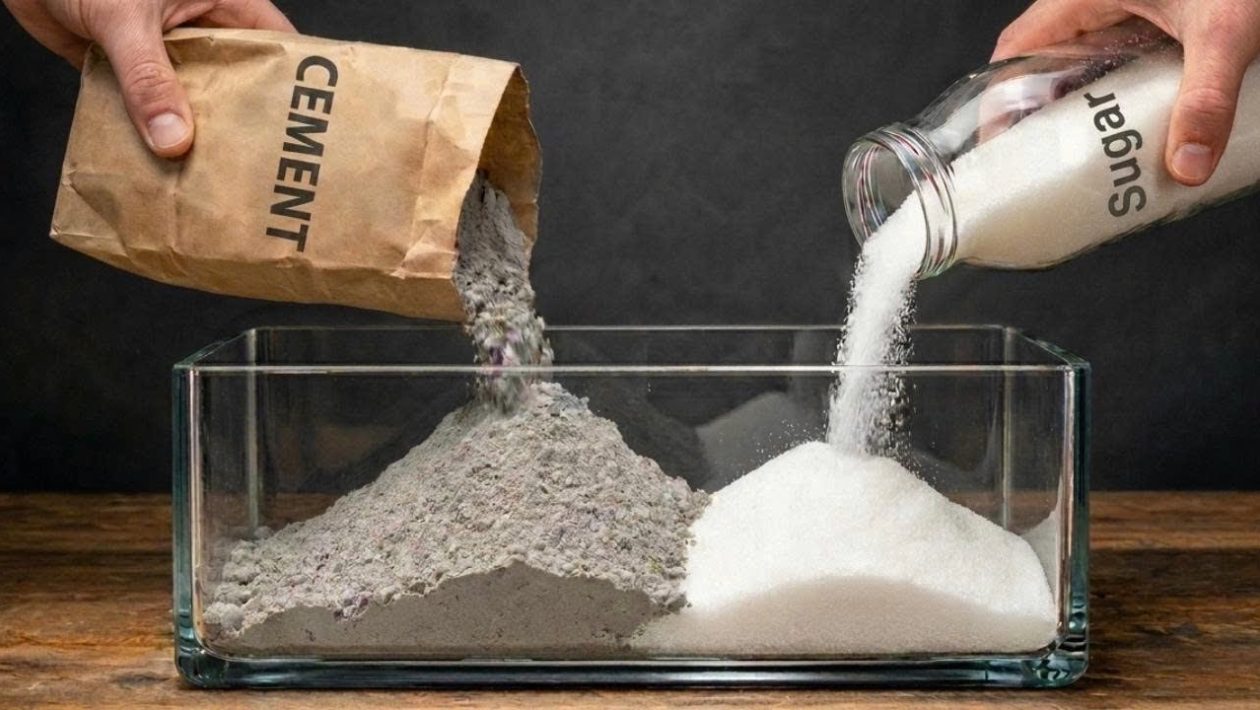
The Hidden Chemistry of Sugar and Concrete
Mixing sugar into cement sounds like a prank, but it is a well-documented chemical technique. In the construction world, sugar acts as a powerful concrete retarder.
When you mix water with Portland cement, a chemical reaction called hydration begins, causing the mixture to harden rapidly. Sugar disrupts this process.
Adding a minute amount of sugar coats the cement particles, temporarily stopping them from binding. This buys you hours of extra working time before the concrete locks into place.
Why DIY Crafters Are Using This Trick
Working with fast-setting cement can be incredibly frustrating for crafters making custom pieces like flower pots or garden sculptures. Once the mixture starts to kick, it becomes useless.
By dissolving a pinch of regular white sugar into the mixing water, crafters extend the life of their cement slurry. This is especially useful for the popular “draped rag” technique.
In this method, old towels or rags are soaked in a thin cement mixture and draped over buckets to dry. The extra time allows for careful shaping and folding of the fabric before it stiffens into a permanent, highly textured garden planter.
The Exposed Aggregate Hack
Beyond extending working time, sugar can completely transform the surface finish of a concrete project. This is where the potential for profit really opens up.
If you coat the inside of a mold with a heavy sugar-water syrup before pouring in your concrete, the sugar prevents the very outer layer of the cement from curing.
Once the rest of the object has hardened, you remove it from the mold and simply wash the surface with a garden hose. The uncured outer paste washes away, revealing the sand and stones underneath.
This creates a premium “exposed aggregate” finish that looks like natural, weathered stone.
Turning Cheap Materials into Profit
Boutique garden centers and online marketplaces regularly sell textured, stone-look planters for anywhere from $50 to well over $100. The materials to make them cost pennies.
A standard 94-pound bag of Portland cement costs under $20. Combined with recycled rags, water, and household sugar, the profit margins on a single successful weekend project are massive.
You don’t need expensive chemical retarders or commercial concrete release agents. The secret to premium textures and stress-free casting is already sitting in your kitchen pantry.
Getting the Ratio Right
The golden rule of mixing sugar with cement is restraint. You need an incredibly small amount.
Industrial guidelines suggest using just 0.03% to 0.1% sugar by weight of the cement. For a small craft project using a few pounds of cement, this translates to roughly half a teaspoon of sugar dissolved thoroughly in the water before mixing.
Adding too much sugar will completely kill the hydration process. If you heavy-hand the sugar, the cement will simply turn into a crumbly, useless mess that never hardens.