
The Structural Reality of Plastic Repair
Most household plastics are thermoplastics. This means they soften when heated and harden when cooled. Because of this property, you don’t always need expensive epoxies or chemical adhesives to fix a structural crack. You can physically weld the material back together.
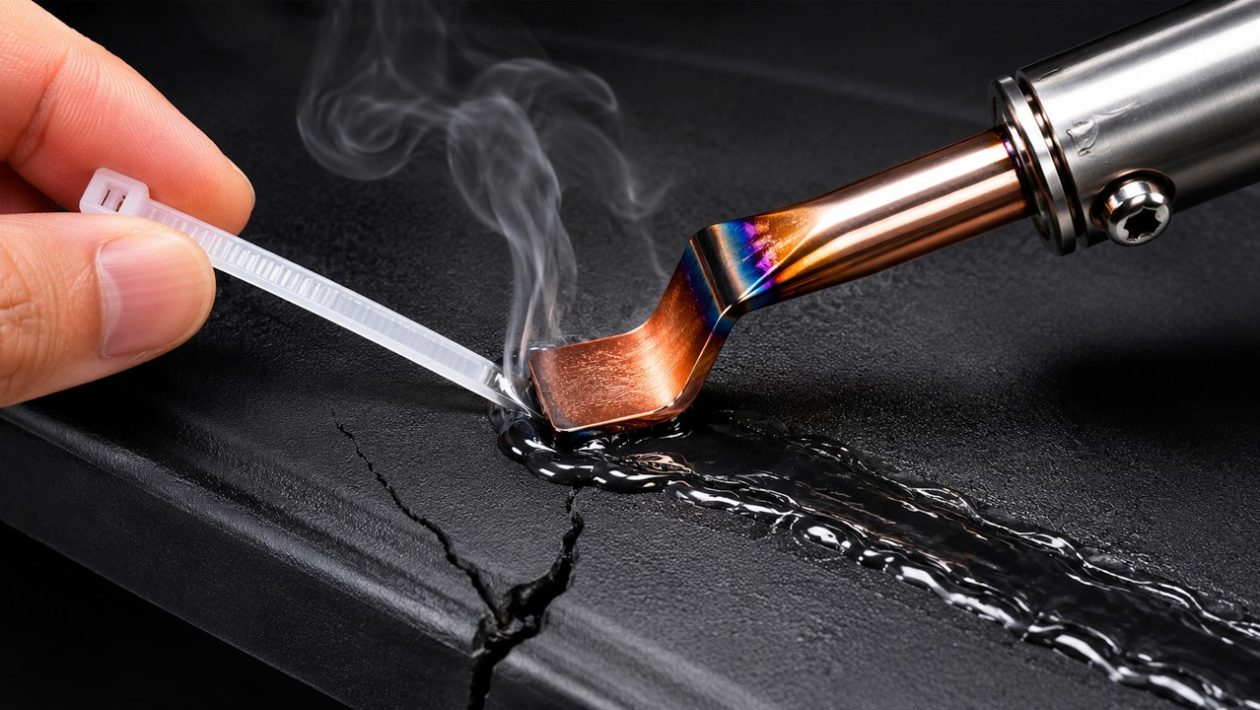
The most effective tool for this is often sitting in your plumbing supply bin: a short piece of copper pipe. Copper is an exceptional heat conductor, making it the perfect medium for transferring steady, controlled thermal energy into plastic seams.
Preparation: Clean and Clamp
Success depends on surface preparation. If the plastic is dirty or oily, the weld will fail. Start by wiping the area with isopropyl alcohol to remove any grease or debris.
Next, align the broken edges as tightly as possible. If the gap is wide, you may need a clamp to hold the pieces in place. If the plastic is thin, backing it with a piece of metal or rigid tape can prevent the material from deforming or “falling through” while you work.
The Welding Process
To begin, heat the end of your copper pipe using a standard butane torch or a heat gun. You do not want the copper glowing cherry-red; aim for a temperature that softens the plastic upon contact without causing it to smoke or char.
Press the heated copper pipe firmly along the seam of the crack. The goal is to melt the edges of both pieces simultaneously, allowing the molten plastic to flow together and merge into a single, seamless structure. Work in small, overlapping sections to ensure the bond penetrates the full thickness of the material.
Reinforcement Techniques
For high-stress areas, a simple surface melt may not hold up to long-term use. You can increase the structural integrity of your repair by embedding a material into the plastic while it is still in a semi-molten state.
- Wire Mesh: Place a small piece of fine steel mesh over the crack and use the copper pipe to press it into the plastic. This creates a “rebar” effect that prevents the plastic from pulling apart again.
- Plastic Filler: If there is a gap, use a piece of scrap plastic of the same material type (check for resin codes like ABS or PE) as a filler rod. Melt it into the seam using the copper pipe as your “soldering iron.”
Safety and Material Identification
Not all plastics respond well to this method. Before starting, check for the resin identification code molded into the product. Polyethylene (PE), Polypropylene (PP), and ABS are generally excellent candidates for heat welding.
Avoid attempting this on thermoset plastics—such as epoxy resins or melamine—which will burn rather than melt. If the plastic emits a harsh, chemical-smelling smoke, stop immediately. Always work in a well-ventilated area and wear eye protection to guard against accidental splashes of molten material.
Once you finish, let the part sit undisturbed until it reaches room temperature. Cooling is a critical part of the bonding process; moving the part too soon can introduce micro-fractures into the freshly welded seam.




