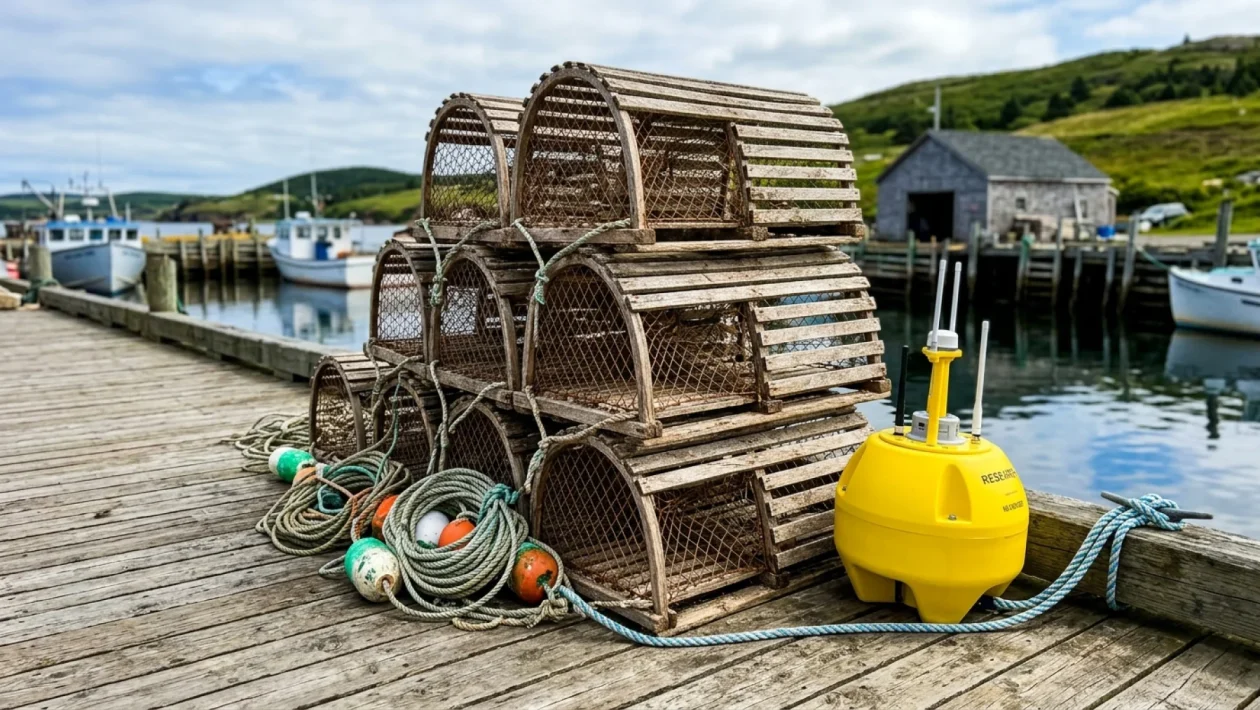
Imagine gearing up for the busiest and most lucrative time of your year, dropping your traps, and immediately getting a federal mandate to pull them all right back out of the water. That is the harsh reality currently slamming over a hundred Island fishers as P.E.I. lobster fishing suddenly grinds to a halt in prime coastal zones. A fresh underwater detection of the highly endangered North Atlantic right whale has triggered an immediate, mandatory closure from the Department of Fisheries and Oceans (DFO). This abrupt shutdown threatens local livelihoods and sends shockwaves through the early 2026 seafood supply chain.
But before you start worrying about the market price of your next weekend lobster roll, let’s look at the bigger picture. We are going to break down exactly what this sudden shutdown means for our local crews and why these massive marine mammals hold all the regulatory cards. We will also dive into the next-gen fishing technology that might just be the ultimate savior for the Atlantic maritime industry.
P.E.I. Lobster Fishing Shutdown
If you have ever spent time around the bustling wharves of Prince Edward Island, you know that setting day is basically a provincial holiday. Crews layer up in their trusty Stanfield’s wool sweaters and heavy-duty Helly Hansen bibs, ready to hustle for weeks on end. But this May, the momentum has completely flatlined for many.
This marks the second major closure of the 2026 season alone. The affected grids, situated just off the North Lake and Souris regions, had barely reopened from an April shutdown before disaster struck again. Now, fishers are facing a frantic race against the clock to rip their gear out of the water.
Here is a quick look at exactly who is taking the hit in this latest round of DFO closures:
| Affected P.E.I. Fishing Zone | Estimated Crews Impacted |
|---|---|
| North Lake Region (LFA 24) | 89 Fishers |
| Souris Region (LFA 26A) | 20 to 30 Fishers |
These hardworking men and women had just a handful of days on the water before being shut out once again. By 5 p.m. this Friday, every single trap in the detection grid must be back on dry land.
Why Right Whales Are Halting The 2026 Season
So, how does the government actually know these whales are cruising through our fishing grounds? It all comes down to cutting-edge acoustic sensors attached to offshore buoys. When a right whale makes a sound, the hydrophones pick it up, and the gears of bureaucracy immediately start turning.
The rules are incredibly strict for a very good reason. Here is a sobering hard fact: there are currently fewer than 360 North Atlantic right whales left on the entire planet. Because they are officially listed under the Canadian Species at Risk Act, avoiding fatal entanglements in fishing ropes is a top priority.
When a detection is confirmed, the DFO executes a highly rigid protocol that leaves zero room for negotiation:
- The Acoustic Trigger: Underwater microphones detect the distinct, low-frequency call of a right whale passing through a specific fishing grid.
- The Mandated Pause: Officials instantly enact a 15-day closure, forcing crews into a chaotic, multi-day scramble to haul thousands of pounds of gear onto their decks.
- The Aerial Clearance: Before the zones can legally reopen, two separate government surveillance flights must fly over the area and verify it is completely whale-free.
It is a frustrating waiting game for captains who have already invested heavily in fuel, bait, and crew wages for the spring season.
The Gear Saving The Industry
Nobody wants to see a majestic whale tangled in a buoy line, but shutting down multi-million dollar local industries every few weeks is not a sustainable long-term business model. The tension on the docks is palpable, but there is a glimmer of hope on the horizon.
Behind the scenes, the P.E.I. Fishermen’s Association (PEIFA) is actively negotiating with the DFO to launch a revolutionary pilot project. The goal? Implementing ropeless or “on-demand” modified gear that dramatically reduces the risk of whale entanglement while still allowing fishers to harvest in closed areas.
Melanie Giffin, a dedicated marine biologist with the PEIFA, highlighted the urgent need to get this technology on the water. Speaking on the progress of these vital negotiations, she provided a highly anticipated update for the fleet:
“Ideally, from the Fishermen’s Association perspective, it’s sooner rather than later, but the discussions are happening.”
If this pilot project proves successful, it could fundamentally change the way we fish in Atlantic Canada. It would protect the fragile whale population while keeping our boats running and our coastal economy thriving.
Frequently Asked Questions
Why can’t the fishers just move their traps to a different zone?
Lobster fishing licenses are strictly bound to specific Lobster Fishing Areas (LFAs). A fisher licensed for LFA 24 cannot legally drop their traps in another zone to avoid a closure. They simply have to wait it out.
Will this closure affect the availability of lobster in stores?
While local supply in P.E.I. might see a slight, temporary dip, the overall North American market is massive. However, repeated closures can certainly impact the wholesale price due to the sheer cost of fuel and lost labor hours.
How does “ropeless” fishing gear actually work?
Instead of a vertical rope sitting in the water column permanently, on-demand gear keeps the buoy attached to the trap on the ocean floor. The fisher uses a secure acoustic signal from their boat to trigger a release mechanism, sending the buoy to the surface only when it is time to haul.
🤝 Good luck to all the Island crews working around the clock to haul their traps before the strict Friday deadline.
💡 If you’re a local seafood lover, remember to keep supporting our coastal communities and independent fish markets through the unpredictable ups and downs of the spring season.
📱 Want to weigh in on how Canada balances critical wildlife conservation with commercial fishing? Share your thoughts on social media and make sure to tag your local representatives.
👇 Let’s keep this crucial conversation going—drop a comment below if you think modified gear is the ultimate answer to keeping P.E.I. fishing alive!