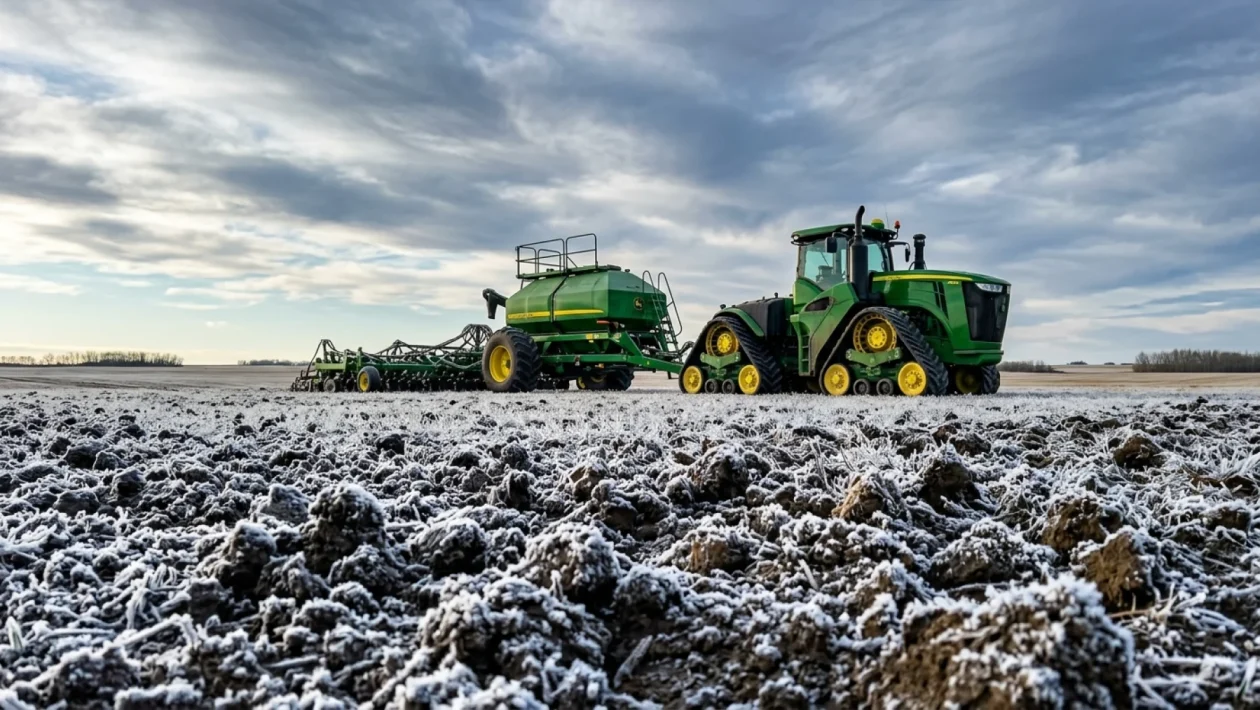
Right now, thousands of multi-million-dollar air seeders are sitting idle across the Prairies while the clock ticks down on the 2026 growing season. Spring seeding delays aren’t just an inconvenience; they are a direct hit to the bottom line of the agriculture industry. We are looking at a brutal combination of freezing dirt, relentless wind, and input costs that would make any accountant sweat. The solution isn’t just staring at the sky—it’s tactical planting, strategic depth adjustments, and running 60-hour tractor marathons the absolute second the ground is ready.
Spring Seeding Delays
Let’s look at the hard numbers. As of May 2026, planting progress in Manitoba is sitting at a sluggish 37 percent.
Compare that to this time last year, when a solid 57 percent of the province’s crop was already safely in the ground.
That missing 20 percent represents millions of acres of unplanted wheat, canola, and soybeans. When you are staring down a notoriously tight Canadian growing season, every single lost day pushes harvest further into the risky autumn frost zone.
Why Cold Soils
You might think a seed can just sit in the dirt and wait for better days. It can’t.
Seeds are living organisms, and when they are dropped into an ice-cold seedbed, they essentially go into shock. Most crops require a strict minimum soil temperature to trigger the germination process.
If they sit too long in cold, damp earth, they rot, or they lose critical early-stage vigour.
Add in the howling winds we’ve seen this month, and you’ve got seeds planted at shallow depths literally blowing right out of the furrow. Here is how experienced growers manage a stubborn, cold seedbed:
- Probe the depth: Constantly monitor soil temperatures at the exact depth the seed will be placed, not just the sun-warmed surface.
- Hold the fertilizer: Delay granular fertilizer application if wind gusts threaten to scatter your expensive nitrogen into the next county.
- Sprint when ready: Run equipment around the clock in coordinated shifts the moment the weather window finally opens.
And Sky-High Costs
Farming has never been a cheap business, but 2026 is fiercely testing the limits of agricultural profitability.
We aren’t just fighting the frozen ground; we are fighting the fuel pumps and the global suppliers.
Every time a heavy tractor idles while waiting for the wind to die down, it’s burning diesel that costs a small fortune. I was chatting with a buddy picking up heavy-duty parts at Peavey Mart last week, and the financial stress is completely palpable.
Fertilizer prices have surged massively due to global supply chain crunches. When you combine those sky-high input costs with the very real risk of lower yields from delayed planting, profit margins can vanish overnight.
| The Threat | The Financial Impact |
|---|---|
| Relentless Winds | Scatters precious topsoil and blows away freshly applied, high-cost fertilizer. |
| Delayed Germination | Reduces final crop yield, severely lowering the farmer’s ultimate autumn payday. |
| Soaring Diesel Prices | Makes running 60-hour catch-up shifts incredibly expensive to maintain. |
Are Squeezing Canadian Farmers
The mental toll of this waiting game is absolutely massive for producers.
You have guys working 60 demanding hours over just three days to beat an incoming rainstorm. When the conditions finally align, the rush is on, and sleep becomes a complete luxury.
Industry experts know exactly how volatile this balancing act is right now.
“Things change in a hurry in farming. What we say today, a week from now, it’ll be different once we get this warmer weather kicking in. But combine that with high input costs, high fuel costs, and high fertilizer—all of those additional tensions are making this year’s seeding tense.”
Frequently Asked Questions
Can seeds survive in freezing soil?
Seeds can sit dormant for a very short period, but prolonged exposure to cold, wet soil severely degrades germination rates and damages the crop’s ultimate yield potential.
Why don’t farmers just plant deeper to avoid the wind?
Planting too deep means the seed expends too much energy trying to break the surface crust. If the soil is already cold, a deep-planted seed will likely die before it ever sees the sun.
How fast can farmers catch up when the weather breaks?
Incredibly fast. Modern air seeders are massive machines. With operators working around the clock in shifts, a well-organized farm can seed thousands of acres in just a few days if conditions are optimal.
🤝 Good luck out there to everyone currently riding a tractor cab or patiently waiting on the weather to turn.
💡 The 2026 season is testing our collective patience, but Canadian farmers have a long, proud history of making miracles happen in incredibly tight weather windows.
📱 If you are managing these crazy input costs or battling the crosswinds this week, share your thoughts with your local ag community.
👇 Keep that heavy equipment fueled up and ready, because when the ground finally warms, it is go-time.