If you’ve walked through downtown Yellowknife after 5:00 p.m. lately, you already know the tension.
You step out of the local Tim Hortons, and the reality of public intoxication, unpredictable behavior, and raw vulnerability is right there on the sidewalk. Some folks won’t even venture past certain intersections once the workday ends.
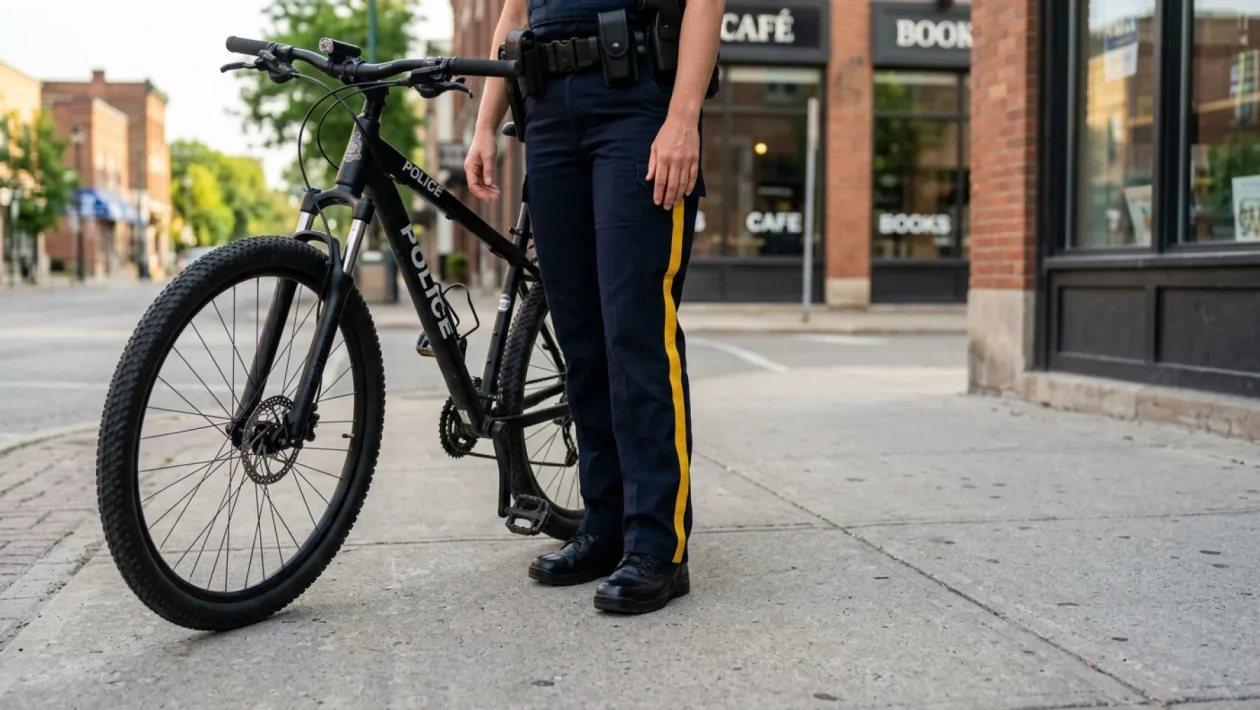
The RCMP knows this, and they are rolling out a heavy-duty solution for 2026: massive increases in foot and bike patrols to reclaim the downtown core. But slapping a band-aid on a broken bone rarely heals it.
Here is exactly what the ramped-up Yellowknife police patrols mean for your daily commute, and why half the city thinks this aggressive new strategy is completely missing the mark.
Yellowknife Police Patrols Are Expanding
The days of RCMP cruisers just slowly rolling past storefronts are over.
This year, the strategy is all about boots on the ground and tires on the pavement. The authorities are betting heavily on the idea that physical, visible presence is the ultimate deterrent against street-level chaos.
When an officer is standing right on the corner, that impulsive decision to crack open a bottle or start a screaming match suddenly becomes a lot less appealing. It’s old-school policing, and honestly, it works to a certain degree.
Here is the exact three-step playbook the RCMP is using to clean up the streets this season:
- The Visual Deterrent: Officers on bikes and foot embed themselves in high-traffic commercial zones to stop crimes before they start.
- The Spill Check: Instead of immediate arrests, officers confront public drinkers and force them to physically dump their open alcohol on the spot.
- The Ticket Route: If the behavior escalates or residents refuse to comply, officers escalate to issuing formal citations for open consumption.
For downtown workers who have witnessed chairs being hurled at restaurant staff, this localized crackdown feels like a massive relief. Bringing life back to local businesses requires people actually feeling safe enough to walk through the front doors.
The Real Impact On Downtown Safety
But let’s be painfully honest here: pushing a problem around isn’t the same as solving it.
While the downtown core might look a little cleaner, many seasoned locals know the bitter truth. When you squeeze a balloon, the air just moves somewhere else. Displacing folks who are deeply struggling with addiction doesn’t magically cure them.
Consider this hard fact: recent reports suggest the number of unsheltered people in Yellowknife has more than tripled in just three years. That is a staggering, heartbreaking statistic.
“We’re not going to police ourselves out of homelessness. We’re not going to police ourselves out of addictions.” – RCMP Insp. Byron Donovan
Even the top brass at the RCMP openly admit their limitations. They are a law enforcement agency, not a specialized psychiatric or housing task force.
For lasting community safety, the real heavy lifting falls on public health infrastructure. To see where this is going, let’s look at a quick breakdown of what policing achieves versus what it leaves behind:
| The Short-Term Police Fix | The Long-Term Community Reality |
|---|---|
| Immediate drop in open public drinking | Issues often migrate to quieter residential neighborhoods |
| Safer environment for retail shoppers | Zero impact on the root causes of addiction and trauma |
There is a glimmer of hope on the horizon, though. The massive new Wellness and Recovery Centre is actively under construction downtown.
Once it opens its doors, it will offer 30 dedicated recovery beds and a 59-seat day shelter. That kind of targeted, facility-based help is what will ultimately transition people off the concrete and into a stable life.
Frequently Asked Questions
When is the new Wellness and Recovery Centre opening?
The territorial government is pushing hard to open the doors in early 2027. Once fully operational, it will accommodate nearly 100 people, providing a permanent hub for services currently patched together by the city’s sobering centre.
Will the police just arrest anyone drinking in public?
No. The primary goal of the Yellowknife police patrols is deterrence, not mass incarceration. Officers are focusing on asking people to dump out their alcohol and move along, rather than clogging up the legal system with minor infractions.
Is downtown Yellowknife actually unsafe right now?
It depends entirely on who you ask and what time of day it is. During daytime business hours, most workers feel perfectly fine. The anxiety primarily spikes after 5:00 p.m. and on weekends when professional foot traffic dies down and vulnerable populations are left on the streets.
The Bottom Line
🤝 It takes a village to fix a city. The RCMP stepping up their patrols is a necessary stopgap to keep the peace, but we can’t expect a badge and a uniform to fix decades of mental health and housing failures.
💡 True safety comes from stability. Until those recovery beds are open and functioning in 2027, this summer is going to be a delicate balancing act of enforcing the law while maintaining our basic human empathy.
📱 Share your thoughts in the comments below! Have you noticed a difference downtown yet, or do you think the city needs to try a totally different approach?
👇 Good luck out there, stay observant, and keep supporting your local businesses.