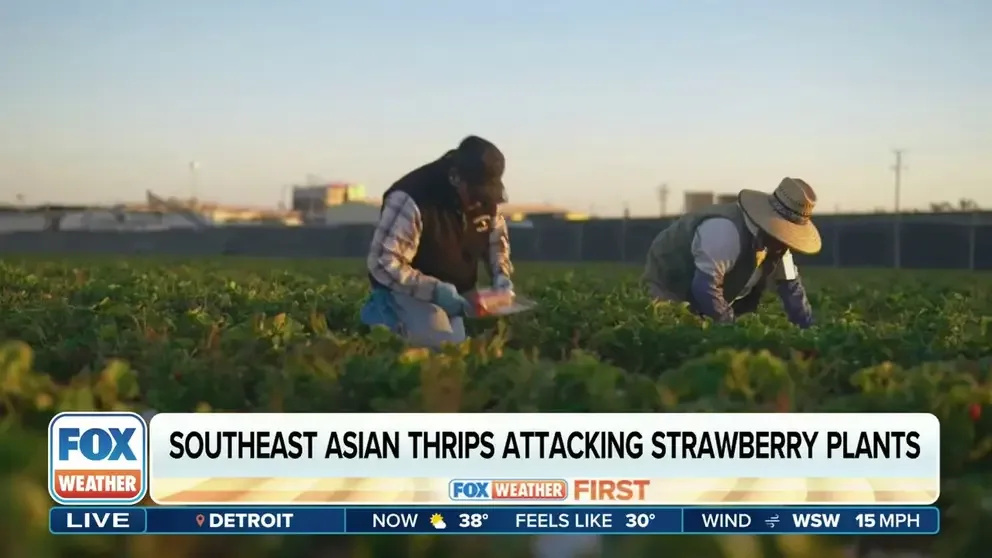
University of Florida Assistant Professor Sriyanka Lahiri details how agricultural sectors have battled devastating invasive crop pests since 2015.
An Unwelcome Stowaway
Agriculture officials are sounding the alarm over a highly invasive predator that poses a critical threat to domestic honeybees and national crop production.
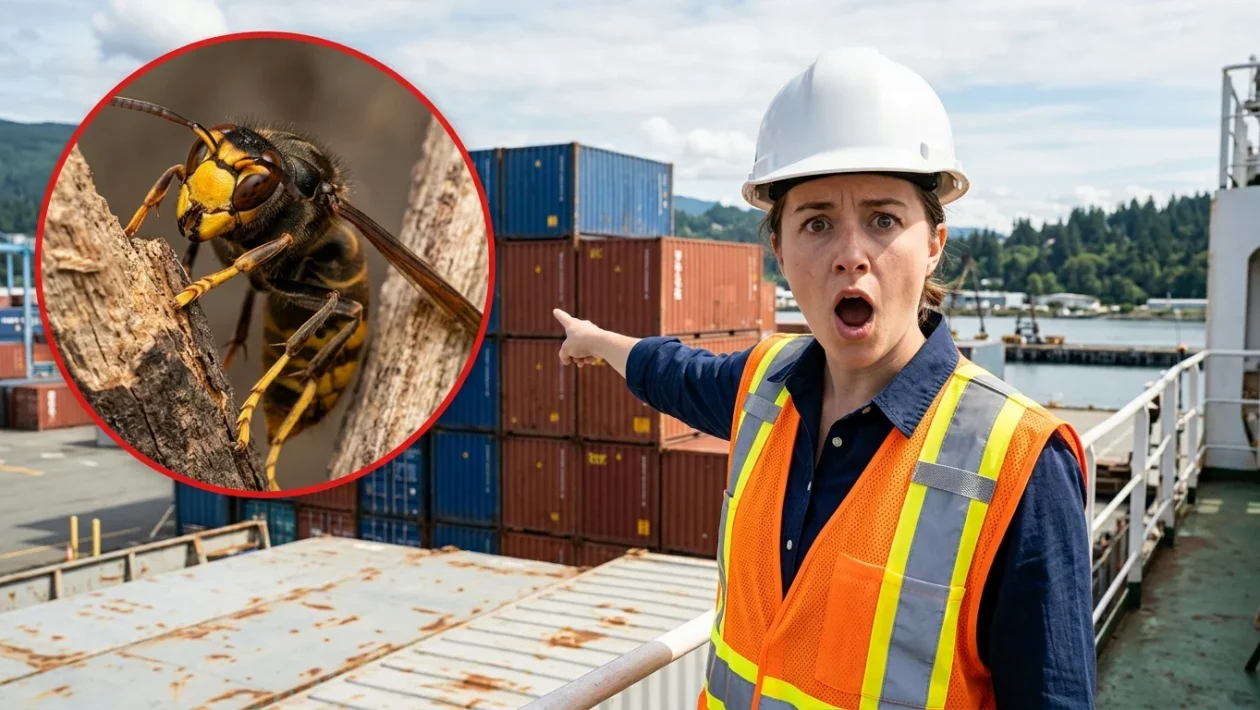
The warning follows a disturbing discovery in April at the Port of Vancouver. A Washington state grain inspector spotted and photographed a live yellow-legged hornet aboard an international cargo ship.
Immediately following the sighting, the Washington State Department of Agriculture (WSDA) deployed personnel to conduct extensive visual surveys of the surrounding port area. Fortunately, no additional hornets were detected during the initial sweep.
Worse Than the “Murder Hornet”?
Native to the tropical and subtropical zones of Southeast Asia, yellow-legged hornets typically infiltrate the United States by hitchhiking on international commercial shipments.
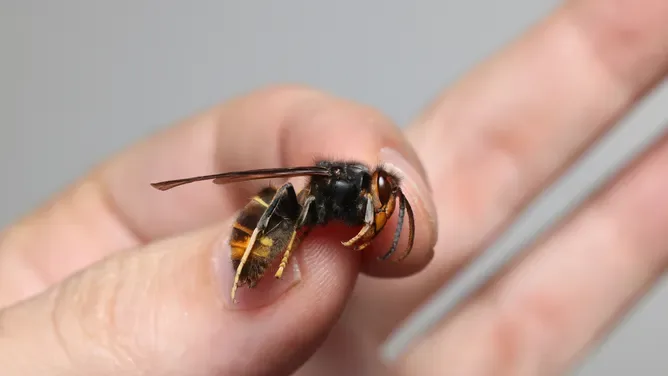
A macro close-up highlighting the physical features of the invasive Asian hornet.
While the northern giant hornet—widely dubbed the “murder hornet”—has dominated recent headlines, experts warn the yellow-legged species might actually present a far greater danger to ecosystems.
Though smaller in size, the yellow-legged hornet is highly adaptable to a vast array of climates. In contrast, the murder hornet is largely restricted to cool, moist environments, which naturally limits its geographic spread.
This adaptability, combined with their ability to build massive, exposed aerial nests, allows the yellow-legged hornet to multiply rapidly and colonize new regions with ease.
A Dire Threat to US Agriculture
The arrival of this predator is a worst-case scenario for the nation’s fragile pollinator populations. Honeybees, which are essential for commercial agriculture, are their primary targets.
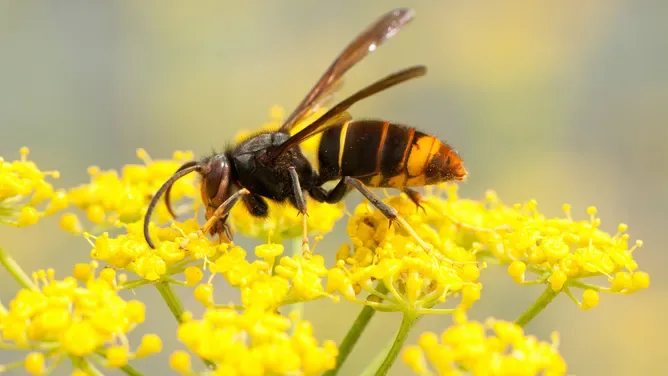
The Asian hornet originates from Southeast Asia and is known for hunting significant amounts of honeybees, causing major agricultural losses.
“If allowed to establish in the United States, these invasive pests could threaten populations of domestic and feral honey bees – some of which are already endangered – and other native pollinators,” according to a statement from the U.S. Department of Agriculture (USDA).
The USDA further noted that a widespread hornet population could severely disrupt the pollination cycles of numerous vital crops. The stakes for farmers are exceptionally high; in states like Florida, invasive insect outbreaks have previously threatened to wipe out up to 80% of unmanaged strawberry crops.
The Expanding Frontline
The Port of Vancouver incident is not an isolated event. The yellow-legged hornet has already breached other regions of the United States.
Since the pests were first detected near Savannah in 2023, agriculture officials have actively worked to track, trap, and eradicate a localized population across Georgia and South Carolina.
As the WSDA continues its aggressive trapping, surveillance, and community outreach programs in the Pacific Northwest, officials are urging the public to remain vigilant and report any potential sightings immediately.