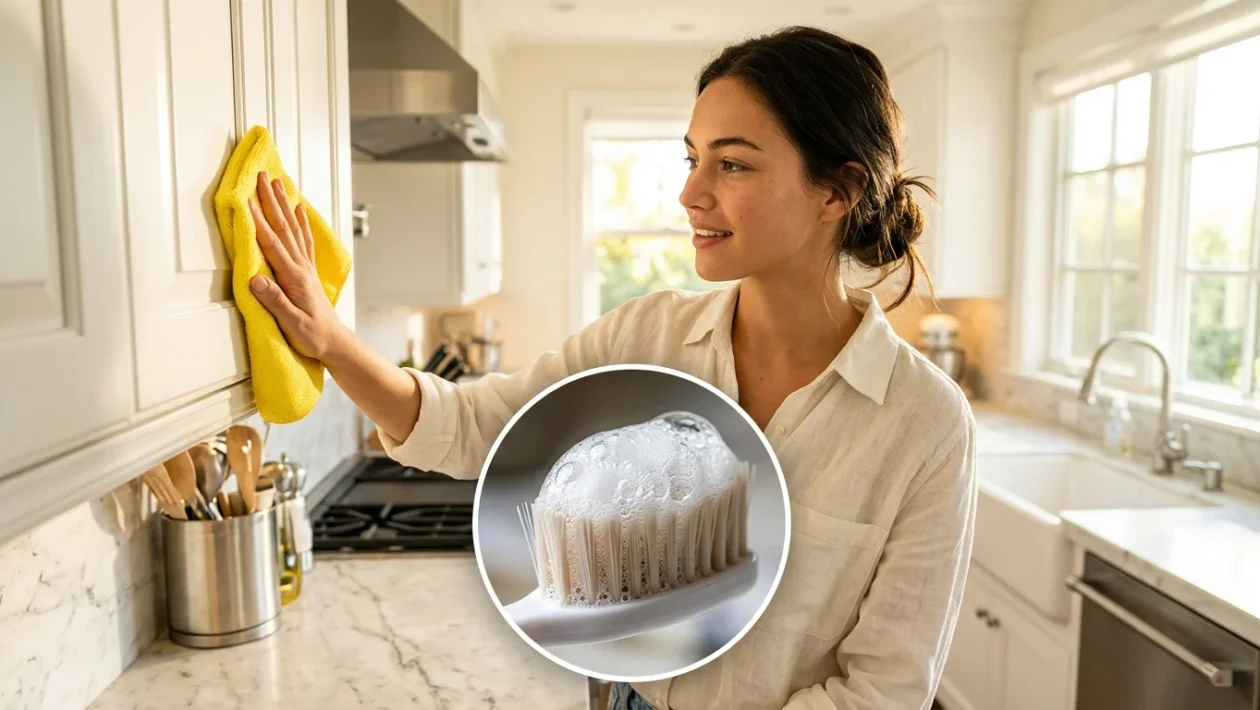
The Reality of White Kitchens
White kitchens look pristine right up until you actually cook in them. Fingerprints, grease, and food splatters stand out against pale finishes like a neon sign. Whether your cabinets are painted wood, laminate, or metal, restoring their original gleam requires a specific, non-destructive approach.
Routine maintenance is your best defense against stubborn grime. Wipe down doors and drawer faces weekly to stop grease from hardening into a sticky trap. If you spot a fresh spill, wipe it immediately with a damp washcloth.
Know Your Materials Before Scrubbing
Before you spray anything, identify your surface. Painted wood demands a gentle touch, as harsh chemicals will strip the finish right off. Laminate surfaces scratch easily and swell if water sits on the seams, so rapid drying is mandatory.
Metal cabinets are highly durable, but you still need to follow manufacturer guidelines to protect the factory coating. Finally, step away from the Magic Erasers. While they excel at whitening, they act like ultra-fine sandpaper and will permanently damage cabinet sealants.
A white kitchen island with three stools.
The Essential Toolkit
You do not need an arsenal of expensive specialty cleaners. Gather these basic supplies:
- Microfiber cloths or soft rags
- Grease-cutting dish detergent, such as Dawn
- A clean, soft-bristled toothbrush
- White distilled vinegar and baking soda for heavy stains
The Standard Wash: Soap and Water
For your weekly wipe-down, a mild soap solution is highly effective.
- Mix a few drops of dish soap into a sink or bucket of warm water.
- Dip a microfiber cloth into the solution and wring out all excess moisture. You want it damp, not dripping.
- Wipe the exterior of the cabinets, applying gentle pressure to any dried food spots.
- Use the soft-bristled toothbrush to carefully dislodge debris from tight corners, trim, and recesses.
- Immediately buff the surface dry with a clean, soft cloth to prevent water damage.
Defeating Stubborn Grease and Stains
When soap fails, you need a mild abrasive to cut through the grime safely.
- Pour a small mound of baking soda into a bowl and add just enough white vinegar to form a thick paste.
- Apply this paste directly to the stains and let it sit for a few minutes to break down the grease.
- Use a damp cloth or sponge to gently scrub the area and wipe away the paste.
- Dry the surface completely with a fresh cloth.
Reversing and Preventing Yellow Discoloration
Over time, sunlight, heat, and aerosolized cooking oils can cause white cabinets to take on a dingy, yellow tint. To reverse this, start by washing the cabinets with the standard soap method. Apply the baking soda paste to the most noticeable yellow patches, let it sit, and wipe it away.
For a final brightening step, mix equal parts water and white vinegar in a spray bottle. Mist the cabinet fronts lightly and wipe them down with a damp cloth.
To stop the yellowing from returning, limit the environmental factors causing it. Run your range hood every time you cook to capture airborne grease, and draw the blinds or curtains during peak afternoon sun to block damaging UV rays from baking your cabinets.