Folded microfiber towels in various bright colors.
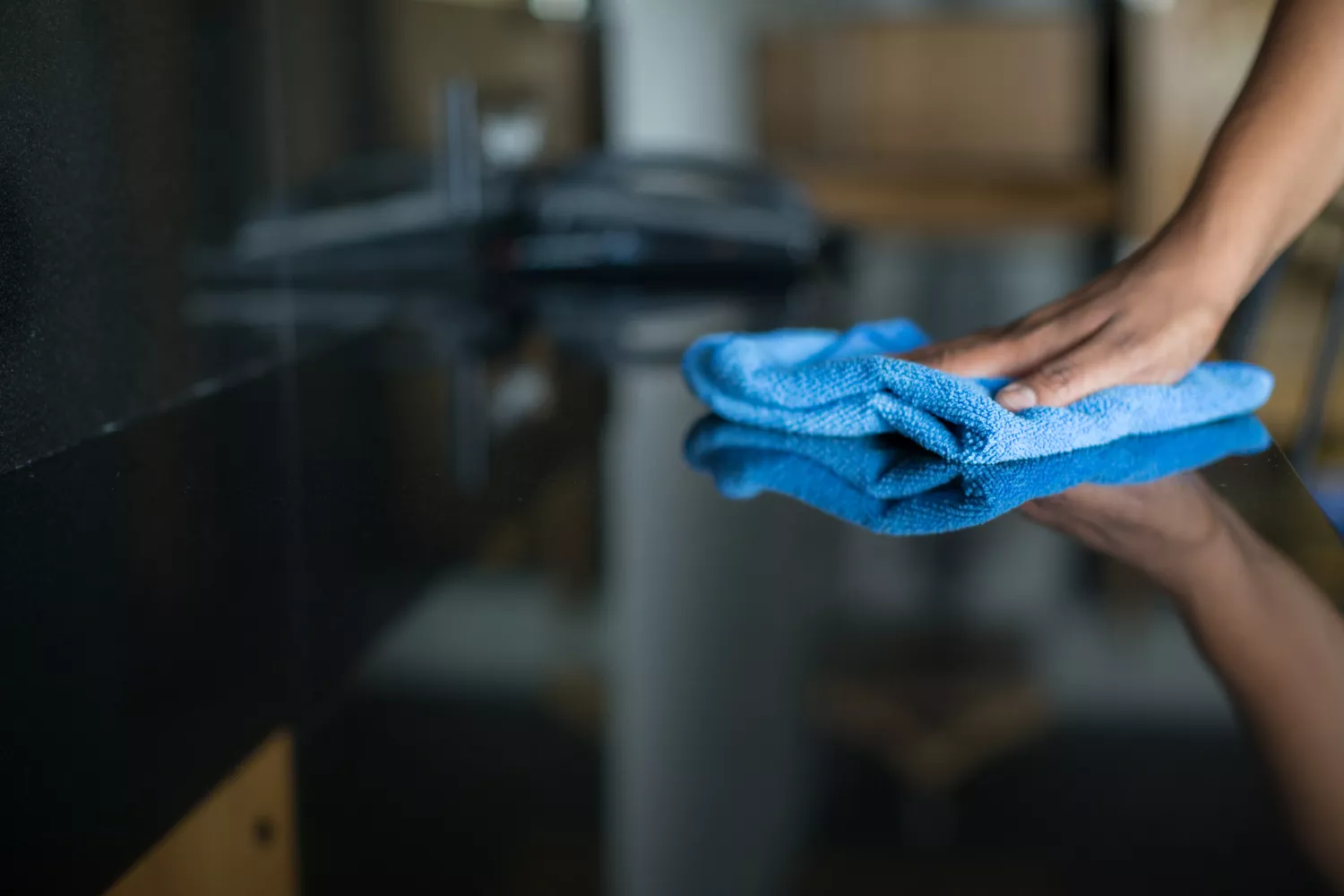
Microfiber towels are the undisputed workhorses of household cleaning. They deliver streak-free windows, trap microscopic dust, and remain incredibly soft.
But treating them like standard cotton rags will quickly destroy their effectiveness. When fibers get clogged with residue, these towels simply push dirt around instead of picking it up.
Cleaning experts agree there are strict rules for laundering microfiber to keep the fibers intact. You can either use a washing machine or wash them by hand, provided you follow the right steps.
The Machine Washing Method
Never toss microfiber into a mixed laundry load. These synthetic fibers are notorious lint magnets and will pull debris from cotton sheets or bath towels.
Wash them entirely on their own. Once isolated, the detergent you choose is critical.
“Many commercial detergents contain harsh chemicals that degrade the towel fibers,” says cleaning expert Ceconi. He recommends using a concentrated, pH-neutral detergent that relies on natural enzymes to break down grime.
Run a normal wash cycle using lukewarm water. This temperature is warm enough to release trapped dirt but cool enough to prevent the synthetic fibers from melting or shrinking.
Under no circumstances should you add chlorine bleach or fabric softener. Bleach degrades the material, while softener destroys its core function.
“The truth is that fabric softeners don’t soften fabric,” Ceconi warns. “Instead, they deposit a waxy coating over the fibers that damages your towels’ absorbency.”
Freshly laundered microfiber towels neatly folded after drying.
The Handwashing Method
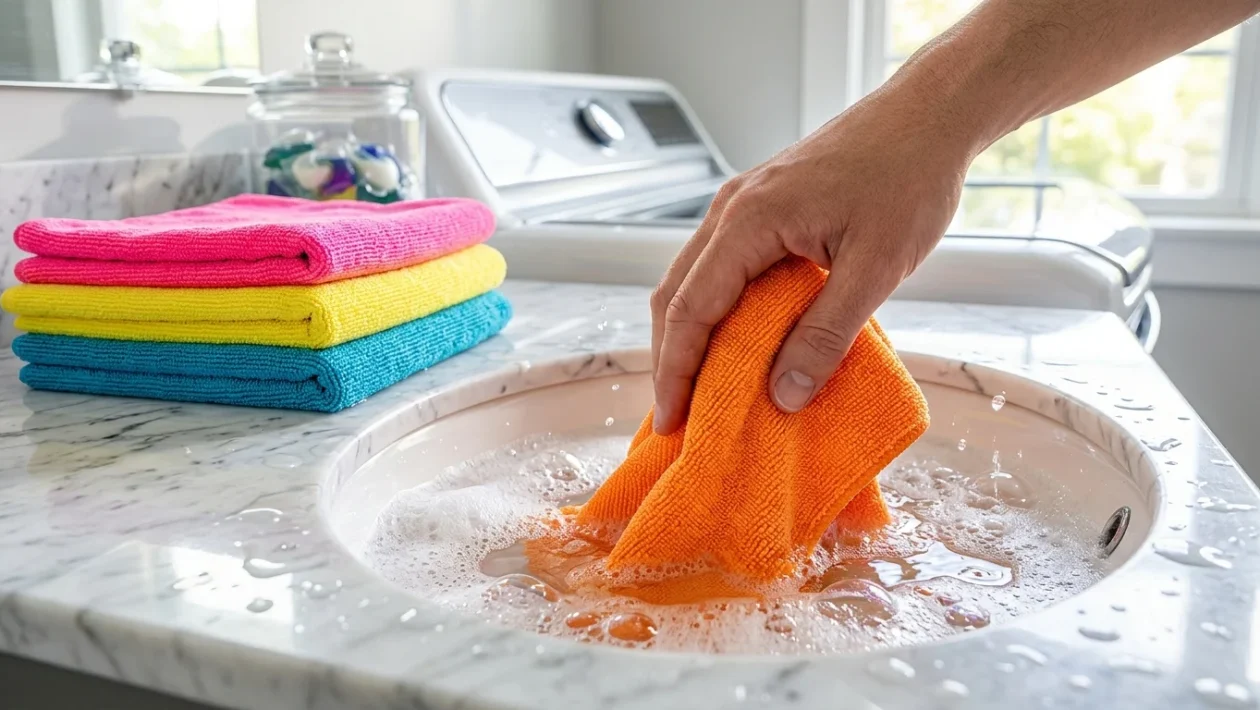
If you only have a few towels to clean, handwashing is fast and highly effective.
Cleaning expert Cohoon recommends filling a bucket or sink with warm water and adding just a few drops of gentle dish soap. She echoes the warning to avoid bleach and softeners, which break down the delicate synthetic structure.
Submerge the dirty towels and let them soak for 10 to 15 minutes. This loosens stubborn grease and dirt.
After soaking, use your hands to gently agitate the towels, rubbing the fabric together to release the remaining grime. Drain the soapy water and rinse each towel under running water until no suds remain, then wring them out tightly.
Drying Protocols
Heat is the enemy of microfiber. Cohoon notes that air drying is the optimal choice.
“All you need to do is hang each towel until they’re fully dry, but keep them out of direct heat,” she advises.
If time or space forces you to use a dryer, set the machine to the lowest possible heat setting. This preserves both the fibers and the stitched bindings along the edges.
Dryer sheets are strictly forbidden. Just like liquid softeners, they leave a waxy residue that ruins the fabric’s look, feel, and performance.
Maintenance and Odor Control
Aim to wash your towels after every single use, or at most, after three uses. Frequent washing prevents dirt from permanently embedding into the weave.
If your towels develop a musty smell, skip the commercial deodorizers. Instead, add plain white vinegar and baking soda to your wash cycle. This natural combination breaks down odors and strips away lingering residue.
Even with perfect care, microfiber doesn’t last forever. The moment your towels stop absorbing water, lose their signature softness, or begin to fray at the edges, throw them out and start fresh.