Vinyl flooring is wildly popular for its durability, affordability, and water resistance. But just because it handles muddy shoes and pet spills better than hardwood doesn’t mean it is indestructible.
“What sets vinyl apart is its resilience,” says Jacqueline Stein, a professional cleaner and owner of Home Reimagined in Austin, Texas. “This is a great floor for a first-time or a long-time homeowner because it is easier to maintain.”
Keeping it in top shape requires the right technique and products. Here is exactly how to clean your vinyl floors without ruining the material.
How Often You Should Clean
High-traffic areas need regular attention to prevent dirt buildup from scratching the surface. Sweep these zones daily and mop them at least once a week.
For low-traffic rooms, you can stretch your mopping schedule to every other week. Regardless of the room, always wipe up spills immediately before they set into the synthetic material.
What to Avoid at All Costs
Vinyl requires a gentle touch. Stein strictly warns against abrasive scrub brushes, ammonia, and bleach-based cleaners, which can permanently discolor the floors.
You should also skip traditional floor wax, polish, and any product promising to add “shine.” Most modern vinyl flooring features a no-wax finish, and shine-enhancing chemicals will simply leave a dull, damaging film over time.
Finally, keep water to an absolute minimum. Never steam clean a vinyl floor, and avoid over-saturating your mop.
The DIY Vinegar Method
You do not need expensive chemicals to get a spotless finish. A simple mix of vinegar and water is highly effective for routine cleaning.
- Prep the area: Remove all loose dirt and debris using a soft-bristled broom or a vacuum cleaner.
- Mix the solution: Combine one cup of apple cider vinegar (or white vinegar if you want to disinfect) with one gallon of warm water in a bucket.
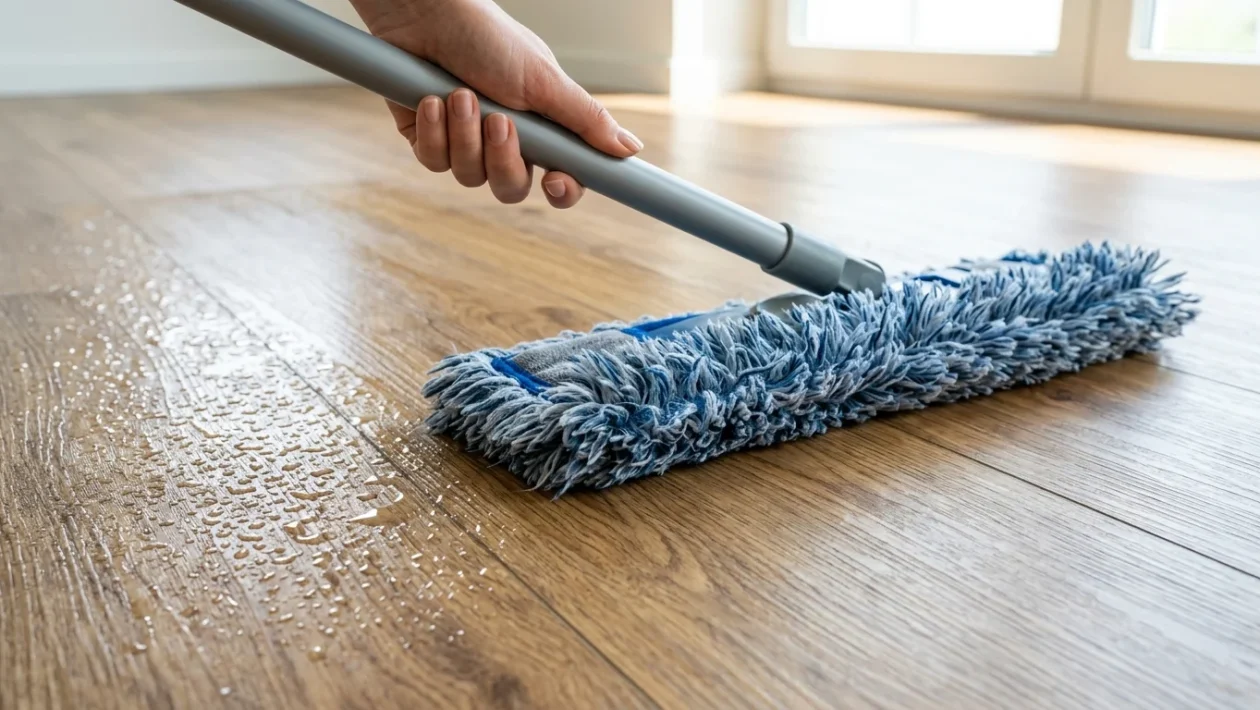
- Dampen the mop: Dip a soft microfiber mop into the bucket and wring it out completely. The mop should be barely damp.
- Mop with the grain: Push the mop in the same direction as the vinyl plank’s grain. Rinse your mop head frequently in clean, warm water as you work across the room.
- Dry it off: Use a clean, dry microfiber towel or a dry mop head to remove any remaining moisture.
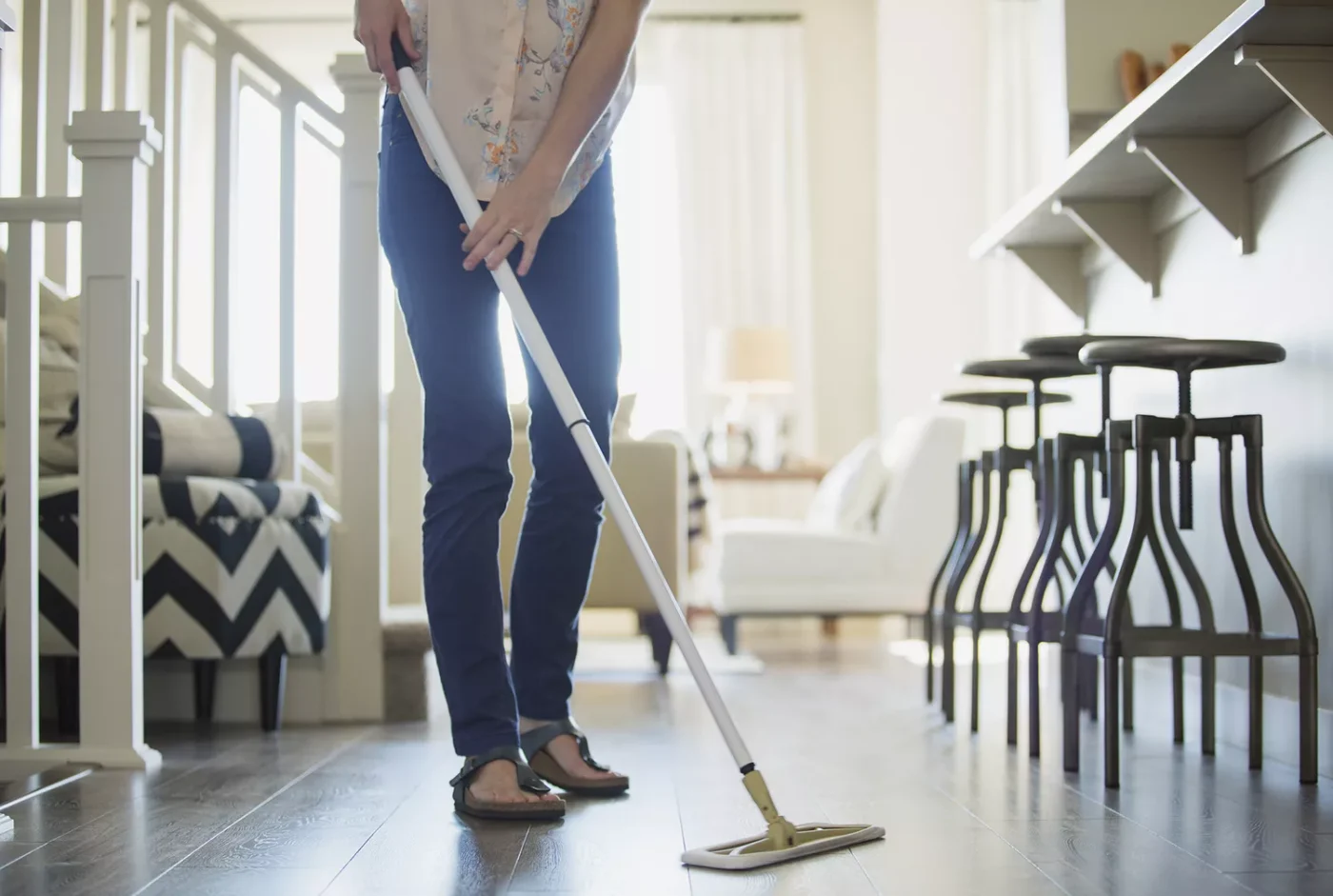
Woman dust-mopping floor
Using Commercial Cleaners
If you prefer store-bought solutions, always verify the product is explicitly designed for vinyl floors. Follow the manufacturer’s exact mixing instructions on the label.
The application rules remain the same: sweep first, wring the mop out thoroughly, mop with the grain, and manually dry the floor when finished.
Eradicating Tough Stains
Dark food spills and pet accidents need immediate attention. If a stain manages to set into the floor, do not reach for a wire brush or harsh chemicals.
Instead, mix equal parts baking soda and warm water to form a paste. Apply a small amount directly to the stain and gently rub it with a soft cloth or a soft-bristle brush.
Wipe the residue away with a clean, damp cloth. Because baking soda can leave a chalky film, you may need to do a final wipe with warm water before drying the spot.
How to Prevent Streaks and Scratches
Uneven drying is the primary culprit behind streaky floors. Wiping the floor with a clean microfiber cloth immediately after mopping ensures a smooth, streak-free finish.
To prevent scratches, stop dirt at the door. Place high-quality doormats at all entrances and institute a strict no-shoes policy inside the house.
For heavy furniture, attach protective felt pads to the legs. Never drag appliances or heavy couches directly across a vinyl floor, as this will easily cause permanent gouges in the material.