When chrome is clean, it shines like a mirror. But this sophisticated finish on your bathroom faucets and kitchen hardware is surprisingly delicate.
Because chrome is just a thin layer of plating over another metal, it is highly prone to scratches, dulling, and water spots. Using gentle household staples like dish soap, vinegar, and baking soda is the safest way to maintain its gleam without destroying the finish.
The Expert Approach to Chrome
“It looks beautiful when it’s polished, but it’s also delicate,” says Jacqueline Stein, a professional cleaner and owner of Home Reimagined in Austin, Texas. “Because it’s just a thin layer of plating, it can easily scratch or lose its shine if it’s not cared for properly.”
Chrome surfaces are common in bathrooms and kitchens. You will often find the finish on faucets, handles, showerheads, and towel racks. Stein notes that chrome is also frequently used on furniture accents and home appliances.
What You Will Need
Before tackling your fixtures, gather these basic household supplies:
- Microfiber cloths
- Mild dish soap
- White vinegar
- Baking soda
- Soft sponge or cloth
- Aluminum foil
- Water
- Spray bottle
- Rubber gloves (optional)
Everyday Maintenance
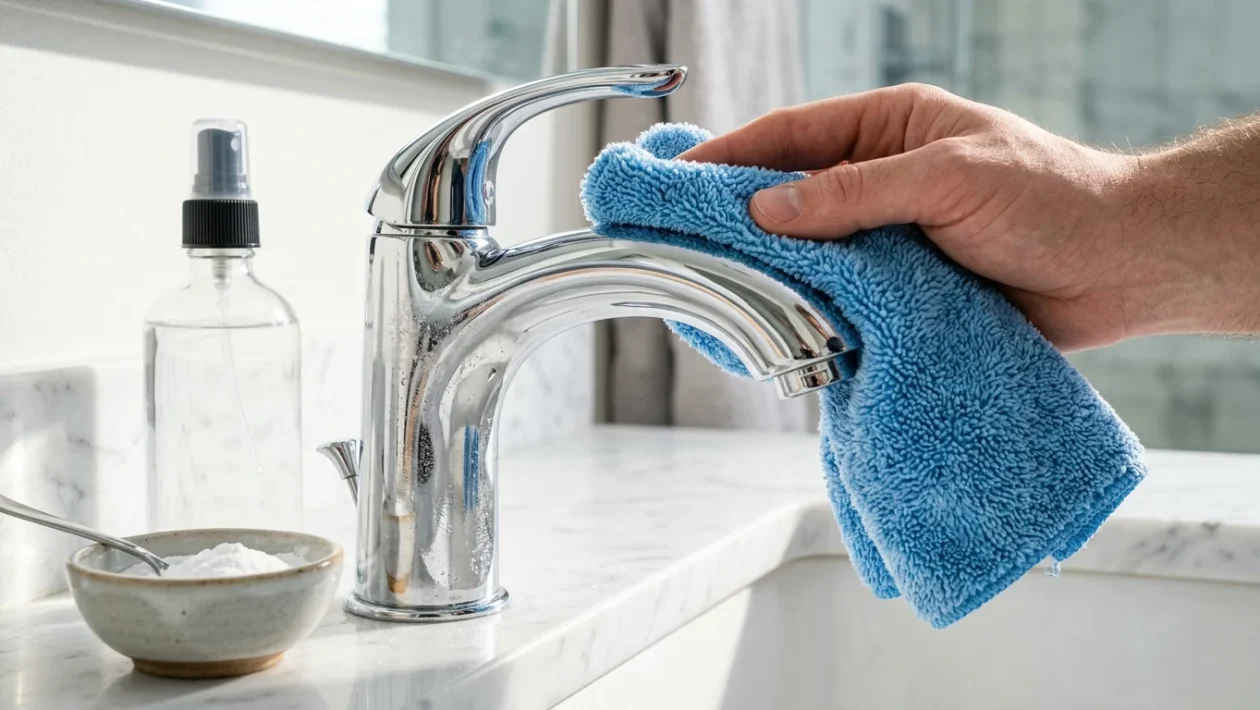
For daily fingerprints and dust, a simple soap solution works best. Mix a few drops of mild dish soap with warm water.
Dip a soft cloth or sponge into the mixture and wipe the chrome gently. Rinse the fixture with a clean, damp cloth to remove any soap residue.
Finally, dry the surface immediately with a microfiber cloth. According to Stein, drying your fixtures right away is the single most important step in cleaning chrome.
Deep Cleaning Water Spots and Buildup
For tougher grime and mineral buildup, you can safely use either vinegar or baking soda.
The Vinegar Method
Mix equal parts white vinegar and water in a spray bottle. Spray the solution directly onto the chrome and let it sit for two to five minutes.
Do not leave the solution on for long, as vinegar is highly acidic and can damage the plating. Rinse thoroughly with water or a damp cloth, then dry completely.
The Baking Soda Method
Mix half a tablespoon of baking soda with a few drops of water to create a thick paste. Apply the paste directly to the buildup and gently rub the area with a soft cloth.
Stein warns against using anything abrasive during this step to avoid scratching the surface. Rinse with water and dry immediately with a microfiber cloth.
Removing Rust from Chrome
Rust can ruin the look of chrome fixtures, but surface-level oxidation is entirely treatable.
The Aluminum Foil Trick
Dip a piece of aluminum foil into water, or a half-water, half-vinegar mixture. Rub the wet foil gently over the rust spots.
The resulting chemical reaction safely lifts the rust from the metal. Wipe the area clean with a soft, damp cloth and dry well to polish the chrome.
The Baking Soda Treatment
Apply a thick baking soda paste over the rusted areas, making sure to cover the spots entirely. Let the paste sit for 15 to 25 minutes.
Scrub gently with a microfiber cloth to lift the rust. Rinse completely and dry the fixture to seal in the shine.
How to Keep Chrome Shiny
Stein’s top advice for extending the life of your chrome is to dry it after every use. A quick wipe down stops water spots before they form, prolonging the time between deep cleans.
To create a protective barrier, apply a thin layer of car wax or chrome polish occasionally. “I also like products like RainX,” Stein says. “A thin layer helps reduce water spot buildup!”
What to Avoid
Never use abrasive tools like steel wool or harsh scrub brushes on chrome fixtures. You should also avoid strong chemical cleaners, particularly bleach.
“These can scratch or wear away the chrome finish, and once it’s damaged, it’s hard to restore,” Stein warns.
Maintenance Schedule and FAQs
Wipe down your fixtures once a week to maintain their shine. High-traffic areas, like bathroom faucets, should be wiped down twice a week or dried after heavy use.
Can you clean chrome with vinegar?
Yes, but always dilute it with water. Never let it sit for long because the acid can permanently damage the finish.
What is the best way to remove rust?
Stein recommends the aluminum foil trick for fast results, or a baking soda paste for a gentler approach.
Is it safe to use Windex on chrome?
While it is not Stein’s preferred regular deep-cleaning method, Windex is fine for occasional use to get a quick shine.
Can baking soda damage the finish?
Baking soda is mildly abrasive. It will not cause damage if used sparingly and gently, but you should never scrub the metal hard.
What if the chrome is flaking or pitted?
Once the plating flakes off or pits, cleaning will not fix the issue. The fixture must be refinished or replaced entirely.