Your washing machine tirelessly strips sweat and grime from your clothes, but it is not self-cleaning. If your laundry room smells musty or your freshly washed clothes carry a lingering funk, your machine is overdue for an intervention.
Every load of laundry leaves behind a cocktail of detergent residue, fabric softener, lint, and hard water minerals. Over time, this buildup creates the perfect breeding ground for odors.
Jacqueline Stein, a professional cleaner and owner of Home Reimagined in Austin, Texas, notes that front-load washers require very specific upkeep. By trapping water differently than top-loaders, they are notorious for harboring hidden mold.
The Mold Trap: Why Front-Loaders Smell
“Front-loaders and top-loaders both need to be cleaned, but a front-load machine is more likely to catch mold, especially in that rubber gasket around the door,” Stein explains.
Your nose is the best diagnostic tool for a dirty drum. A damp, mildew-like scent in the laundry room or a musty odor emanating from the machine itself are immediate red flags.
The 30-Day Rule
Stein advocates for a strict 30-day cleaning schedule. “That’s my rule, and I stick to it!” she says.
While she doesn’t believe cleaning schedules should drastically change from house to house, environmental factors play a role. Homes with high humidity or shedding pets may require more frequent washing machine maintenance to prevent rapid mold growth.
The 7-Step Deep Clean
Step 1: Empty the drum. Ensure no rogue socks or washcloths are left inside the machine.
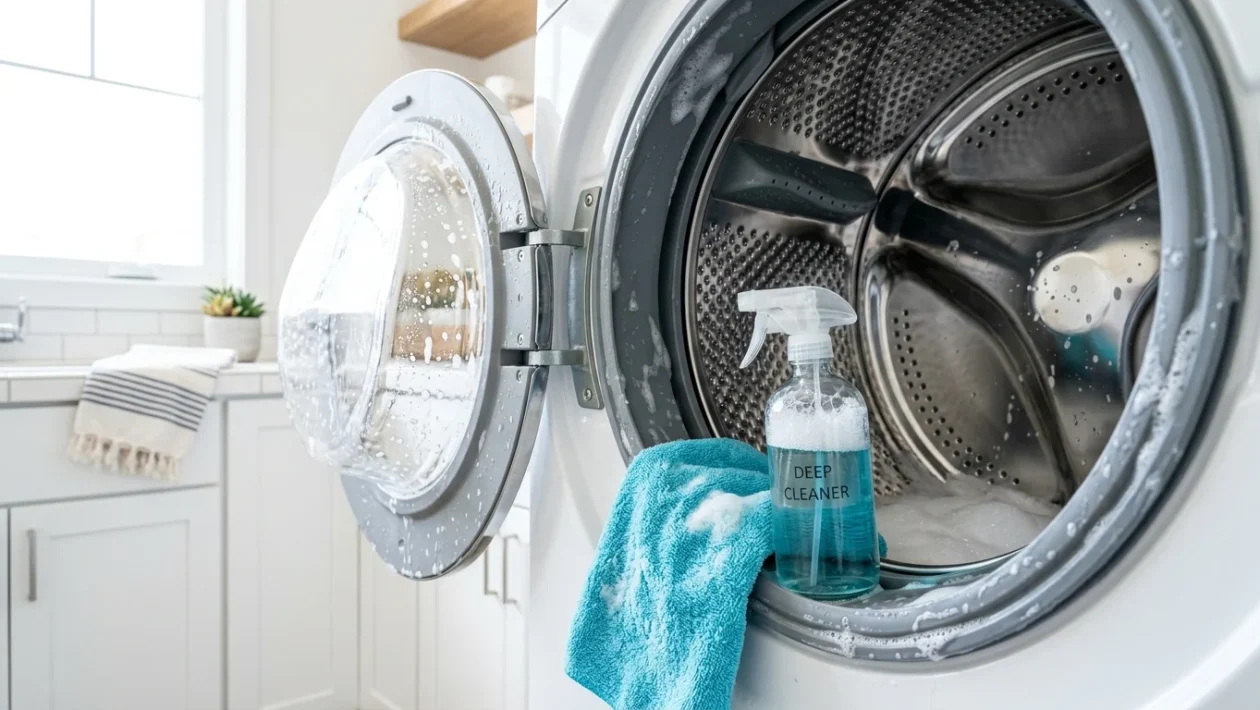
Step 2: Attack the gasket. Gently peel back the folds of the rubber door seal. “This is where front-loaders hide gunk, hair, and mold—get in there with a cloth,” Stein advises.
Step 3: Clear the trap. Locate and clean out the machine’s filter and drain trap. Stein points out that many owners don’t realize this part exists, but emptying it clears trapped lint and drains stagnant water.
Step 4: Run a hot cycle. Drop an Affresh tablet directly into the empty drum and run a hot or “clean washer” cycle to sanitize the drum, tank, and drainage system. For a natural alternative, pour two cups of white vinegar directly into the drum and run the hot cycle.
Step 5: Deodorize. If you chose the vinegar method, follow it immediately with a second hot cycle using a half-cup of baking soda. Never mix vinegar and baking soda in the same load, as they will neutralize each other and destroy their cleaning power.
Step 6: Wipe it down. Use a dry microfiber cloth to wipe the interior drum and gasket. Pull the detergent drawer all the way out, rinse away any crusty residue, and wipe it completely dry.
Step 7: Prop the door. Leave the washer door completely open so the interior can air out. “Moisture is what causes the musty smell and the mold, so this one habit does more than any product,” Stein says.
Preventing Future Odors
Consistency is the only way to stop washing machine odors from returning. The most common and destructive mistake owners make is closing the washer door immediately after moving clothes to the dryer.
You must dry the machine out after every single use. This includes manually wiping down the gasket, leaving the door ajar, and keeping the detergent drawer slightly open.
Furthermore, avoid over-pouring laundry detergent, which creates excessive, sticky residue. Stick to a 30-day deep clean, drain your filter regularly, and rely on quality cleaning tablets to clear the internal plumbing you cannot reach.