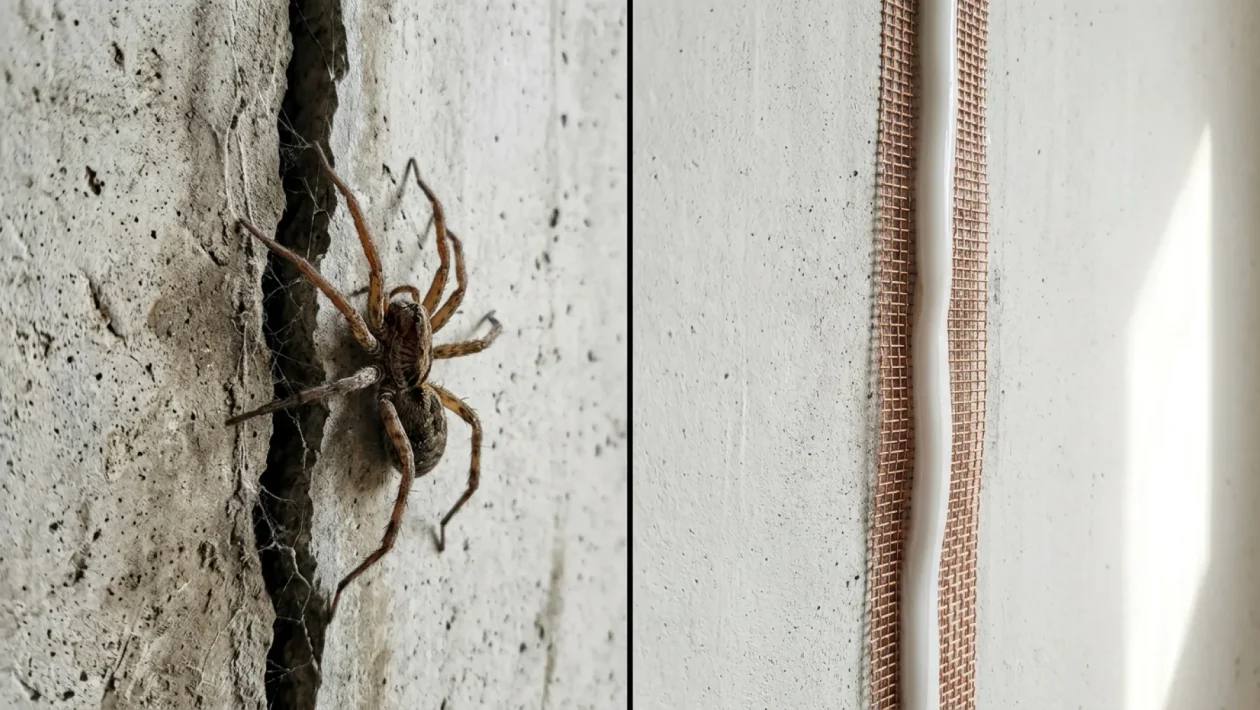
You head downstairs to grab a tool, flip on the light, and there it is—a massive wolf spider staring you down from the joists. Basement spiders aren’t just a creepy nuisance; they are a glaring symptom of a structural vulnerability in your home. The good news is you don’t need a hazmat suit or a costly exterminator to reclaim your subterranean space.
By physically sealing hidden entry points and adjusting your basement’s microclimate, you can permanently evict these squatters. It is entirely possible to create a fortress that keeps the outside world exactly where it belongs.
Basement spiders: Understanding your home’s most unwanted guests
Before we start caulking, you need to know exactly what you are up against. Spiders seek out your basement for three primary reasons: shelter, moisture, and a steady food supply. If you systematically eliminate these, you eliminate the threat.
Here is a hard fact that might make you rush to the hardware store. A single common house spider can lay up to 250 eggs in one silken sac. If you ignore a few stragglers hanging from the ductwork now, you are practically guaranteeing a massive infestation by July.
These pests do not actually want to be near you, but they absolutely love the quiet dampness of an unfinished concrete corner. We are going to change the locks on them.
Sealing your foundation: The complete blueprint for a physical barrier
If they cannot get in, you simply do not have a problem. As we push into the heat of May 2026, foundation cracks are expanding and contracting, creating perfect spider highways right into your home.
You need to meticulously inspect the exterior perimeter of your house. Look for tiny gaps around dryer vents, basement windows, and plumbing utility lines.
Here is my bulletproof method for locking down the foundation perimeter:
- Clean the gaps: Use a stiff wire brush to clear dirt, old flaking caulking, and cobwebs from any foundation cracks.
- Fill deep voids: For holes larger than a quarter-inch, tightly pack in some copper mesh. Spiders and rodents absolutely hate crawling through or chewing on it.
- Apply the sealant: Grab a high-quality exterior polyurethane sealant. Run a thick, even bead over the mesh and smooth it out with a damp gloved finger.
- Check your weatherstripping: Replace the worn rubber sweeps on your basement walkout doors to ensure a perfectly tight, bug-proof seal.
I always tell my neighbors to head to Canadian Tire and grab a few tubes of LePage Quad Max for this job. It handles our wild Canadian temperature swings without shrinking or cracking.
Repelling eight-legged invaders: Finding what actually works
Once the physical barriers are up, it is time to deploy active deterrents. You essentially have a choice between natural remedies and synthetic chemical sprays.
Both methods have their place, heavily depending on whether you have curious pets sniffing around the baseboards. I break it down below so you can confidently choose your weapon.
| Deterrent Type | Pros & Cons |
|---|---|
| Peppermint Essential Oil (Natural) | Smells fantastic and is totally pet-safe. However, it requires weekly reapplication to remain a strong barrier. |
| Permethrin Barrier Spray (Chemical) | Highly lethal to spiders and lasts for several months. Not safe for cats while the spray is still wet. |
Summer maintenance: Keeping the perimeter totally clear
Sealing and spraying will ultimately fail if you invite spiders right up to your siding. Your exterior landscaping plays a massive role in successful pest control.
“Homeowners often overlook the fact that shrubs touching the house act as a direct bridge for spiders. Keep vegetation pruned at least two feet away from your foundation to disrupt their travel routes.”
That advice from entomologist Dr. Robert Vink hits the nail squarely on the head. Clear away those dead leaves, move the firewood pile completely off the concrete, and keep your eavestroughs clean to reduce exterior moisture.
Inside the basement, you need to run a high-capacity dehumidifier. Basement spiders thrive in humidity levels above 50%, so drying out the air makes your space incredibly hostile to their survival.
Frequently Asked Questions
Do ultrasonic pest repellers actually work on spiders?
Save your hard-earned money. Most entomological studies conclusively show that spiders are virtually unaffected by ultrasonic sound waves. Physical barriers and rigorous moisture control are significantly more effective.
Are basement spiders dangerous to my family?
The vast majority of spiders found in North American basements are completely harmless. While a rare bite might cause minor localized redness, they are actually beneficial for catching flies and mosquitos—even if we do not want them living indoors.
Should I squash spiders I find indoors?
If you can, try to catch and release them safely outside. Squashing a female carrying an egg sac can accidentally scatter hundreds of tiny spiderlings across your floor, instantly multiplying your pest problem.
Wrapping it up
🤝 Tackling a spider problem is just part of being a smart, proactive homeowner. It takes a single Saturday afternoon, a little bit of elbow grease, and the right materials to permanently reclaim your basement.
💡 Remember the golden rule: diligently control the moisture, seal those foundation gaps, and push the exterior landscaping back. Do that consistently, and your basement will remain a comfortable living space, not a bug sanctuary.
📱 Share your thoughts or your own pest battle stories in the comments below. Did you find a massive foundation crack hiding behind your overgrown rosebushes?
👇 Good luck with your weekend maintenance projects, and enjoy a completely pest-free summer!