Bringing Color to the Shadows
Trees, tall fences, and neighboring buildings often block sunlight, leaving homeowners with dark garden corners. But a lack of direct sun does not mean a landscape must remain barren.
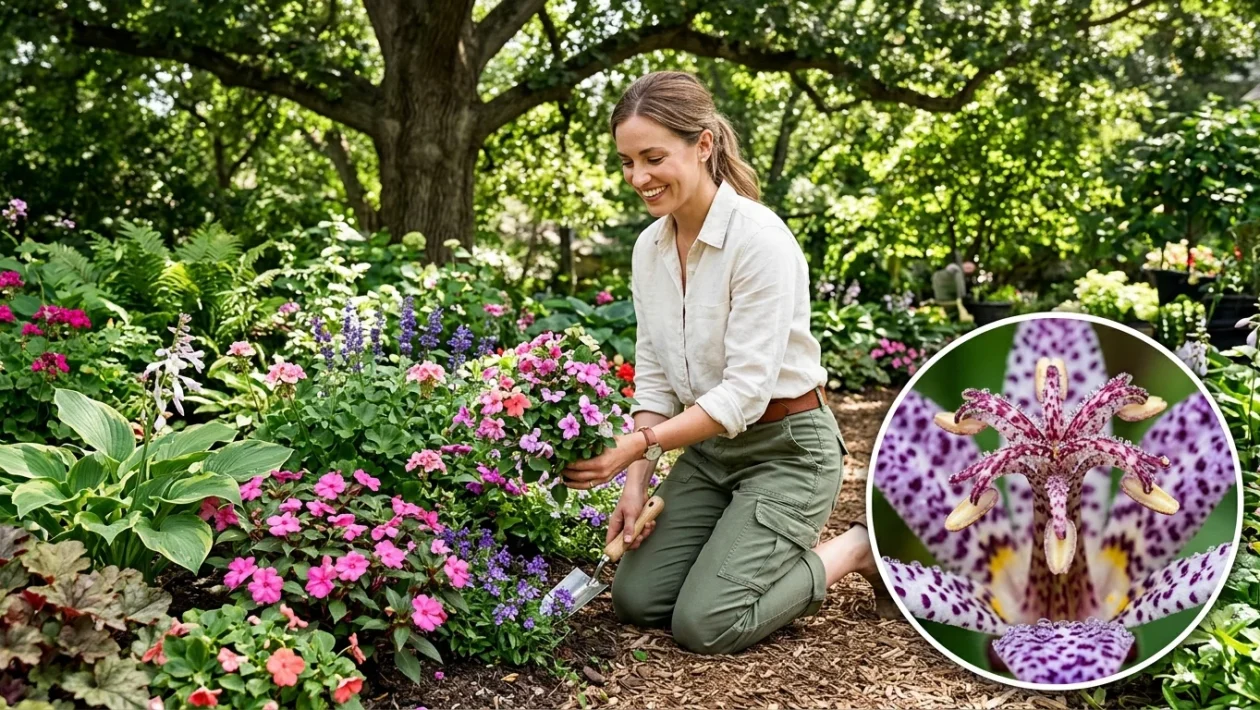
A diverse mix of colorful flowers and foliage flourishing in a shaded garden bed.
Some of the most striking plants actually require partial or full shade to survive. By selecting the right shade-loving flowers, you can introduce vibrant colors, bold foliage, and varying textures into low-light spaces.
Before planting, map out exactly how much ambient light your dark spots receive. Once you understand your landscape’s specific shade levels, you can utilize these nine plants to transform your yard.
1. Coleus
Coleus is grown primarily for its vivid, highly patterned foliage rather than its blooms. It instantly brings structural, bold color to shaded beds and containers without the need for deadheading.
This plant prefers morning sun followed by strict afternoon shade. It requires nutrient-rich soil and consistent watering to maintain its bright leaf patterns.
- Best Uses: Borders under tree canopies, container accents, and pathway edging.
2. Coral Bells
Coral Bells offer vibrant, long-lasting foliage that ranges from bright lemon yellow to deep, glowing burgundy. While the leaves are the main attraction, the plant also produces delicate flower spikes that add vertical interest.
These shade-tolerant plants require rich, moist, and well-drained soil. They serve as an excellent anchor for woodland gardens and foundation plantings.
3. Wishbone Flower
Also known as Torenia, the Wishbone Flower produces two-toned, velvet-textured blooms from spring through late summer. It thrives in high heat, heavy humidity, and deep shade.
Usually grown as an annual in most climates, it survives as a perennial in USDA Zones 10 and 11. Its mounding, trailing habit makes it an exceptional groundcover or edging plant for shaded walkways.
4. Begonia and Caladium
Begonias deliver months of continuous color from summer until fall. They thrive in partial sun to dappled shade, making them highly versatile for hanging baskets and patio containers.
For a classic container design, pair begonias with caladiums. Use a white and green caladium as a tall, striking centerpiece, and surround it with Dragon Wing Pink begonias to act as a heat-tolerant filler.
5. Astilbe
Astilbe is a shade garden staple that blooms from late spring through mid-summer. It produces feathery flower plumes in pink, red, white, or violet, rising above glossy, fern-like foliage.
These plants require significant moisture and will not tolerate prolonged dry spells. Without consistent drip irrigation and organic mulch, the leaf margins will crisp and turn brown.
- Companion Tip: Plant Astilbe alongside broad-leaved Hostas for a sharp contrast in leaf texture.
6. Toad Lily
The Toad Lily thrives in deep shade and offers a late-season bloom exactly when other plants begin to fade. It produces exotic, orchid-like flowers in late summer and early autumn.
The star-shaped or bell-shaped petals range from white to lavender and feature heavy deep purple or magenta speckling. They require a highly moist environment, making them perfect for planting near rain gardens.
7. Impatiens
Impatiens are the quintessential annual for shaded areas. They yield blossoms resembling miniature rosebuds and bloom continuously from spring until the first frost.
They handle hot, humid, and deep shade environments with ease. Because impatiens stems have a high water content, they will wilt quickly if neglected, though they recover rapidly once watered.
8. Bleeding Heart
The Bleeding Heart brings distinct architectural elegance to early and mid-spring gardens. Rows of perfectly formed, heart-shaped flowers hang from graceful, arching stems.
Gardeners must plan for this plant’s summer dormancy. Once mid-summer heat arrives, the foliage turns yellow and dies back completely. Interplant it with later-emerging options like coleus or toad lilies to prevent bare spots in your beds.
9. Primrose
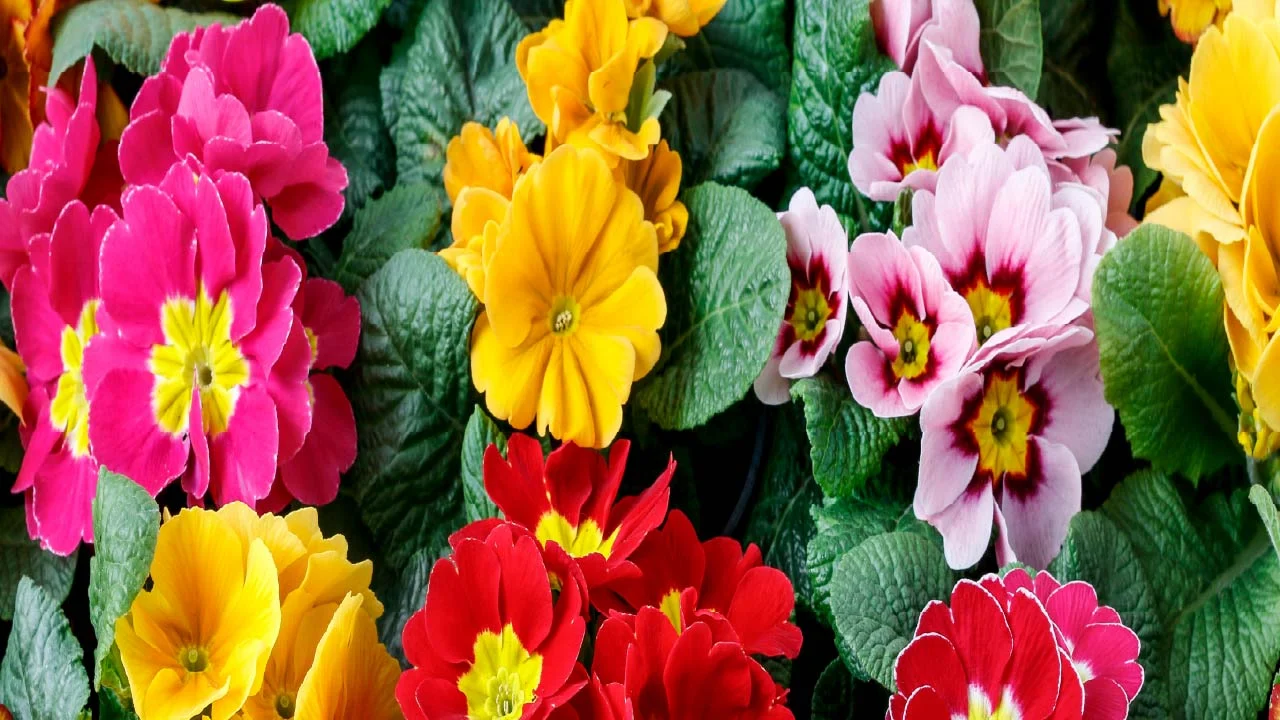
Primroses deliver a massive burst of bright color as winter ends. Their distinct flowers feature a bright yellow central eye surrounded by brilliant blue, crimson, yellow, violet, or pure white petals.
These early bloomers thrive in cool summer climates. They require consistently damp, moisture-retentive soil and are ideal for shaded rock gardens and the edges of ponds.