The Hidden Danger of Surface Cleaning
Everyday cooking leaves behind an inevitable trail of splattered grease, burnt spills, and scattered crumbs. While most home cooks diligently wipe down the surface after dinner, this basic maintenance leaves hidden grime untouched.
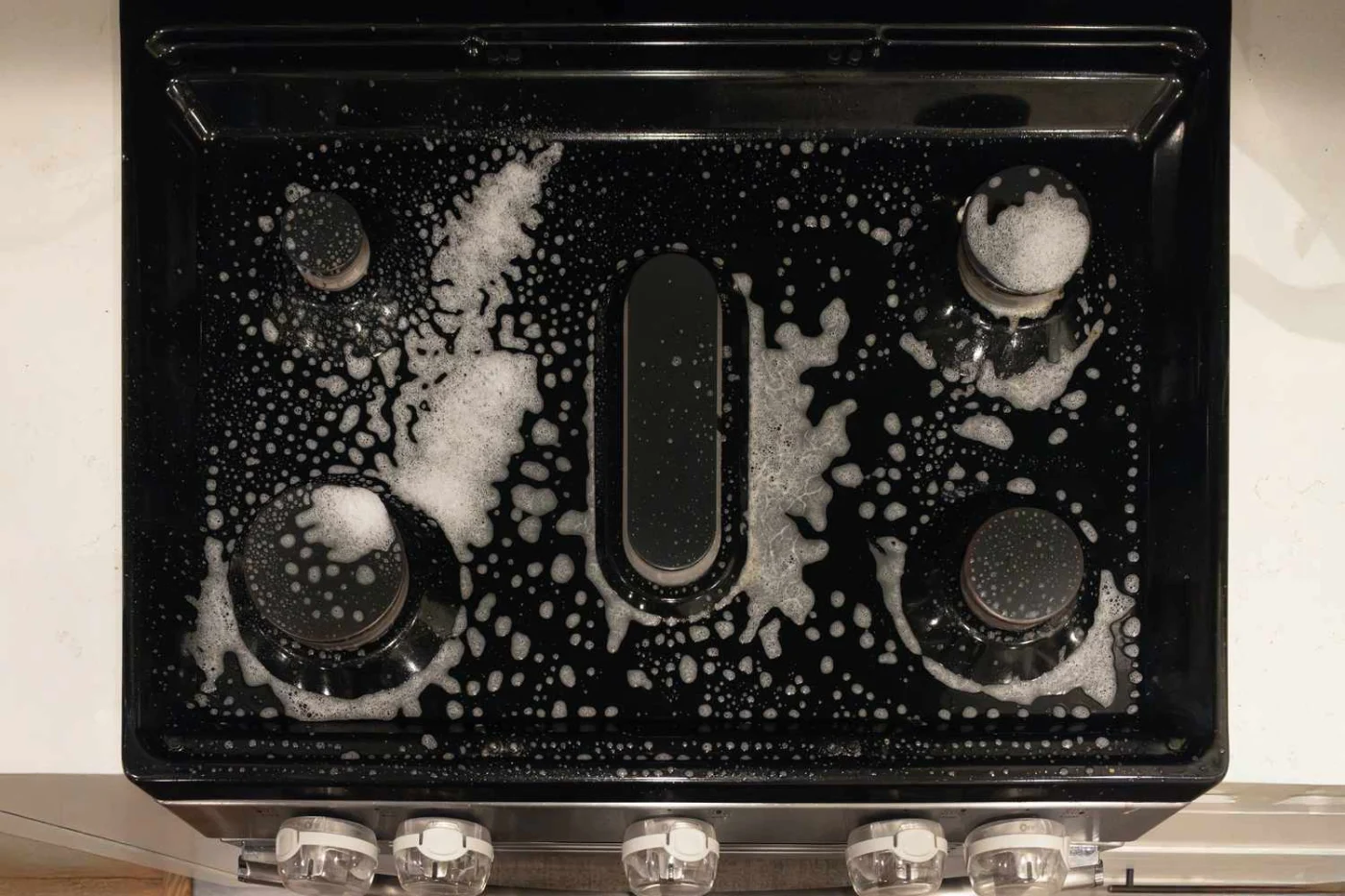
A dirty stovetop covered in grease and spilled food residue.
Over time, cooking residue accumulates beneath heavy grates and solidifies around burner caps. A quick swipe with a soapy sponge simply cannot cut through months of hardened cooking oil.
“One thing I’ve noticed while cleaning clients’ homes is that a lot of people will wipe down their stovetop after cooking, but very few will deep clean it,” says Ashley Torres, Cleaning Expert and Team Leader at Karen’s Green Maids. “Surface cleaning is great for everyday messes, but grease, burnt-on food, and cooking residue build up over time in places that aren’t always visible.”
The Expert Cleaning Timeline
Consistency prevents permanent damage. Katie Rush, integrated brand manager for cooking at KitchenAid, advises users to wipe the stovetop after each use with warm, soapy water to stop food from baking into the surface.
However, basic soap and water isn’t a long-term solution. “Stovetops should be deep cleaned at least once a month, with a wipe down after each use to help prevent spills and splatters from hardening or becoming difficult to clean,” Rush advises.
Your exact cleaning schedule should align with your cooking habits. If you cook multiple times a day and frequently fry with heavy oils, Torres recommends deep cleaning every two to three weeks. For lighter cooks who rely mostly on the oven or microwave, extending that window to four to six weeks is completely acceptable.
“One of the biggest mistakes I see is waiting until the stovetop is dirty,” Torres notes. “A regular deep clean doesn’t take as long as trying to scrub away months of buildup.”
Tackling Gas Stovetops
A true deep clean requires taking the appliance apart. Torres emphasizes removing burner grates and wiping down the easily forgotten edges, control knobs, and the surrounding backsplash.
Gas appliances require a delicate touch to avoid damaging the ignition system. Rush recommends carefully wiping down the igniter with a wet cloth rather than dousing it in cleaning spray.
Next, use a simple sewing pin to unclog the individual burner ports. Once all the hidden grease is removed, securely reinstall the burners and heavy metal caps before cooking again.
Maintaining Glass Cooktops
Flat glass stovetops demand a different, less aggressive approach. Veronica Smith, a residential cleaning expert at Oakville Maids of Scarborough, says these models rarely need extensive deep cleaning if wiped down daily.
“Part of the reason why they’re so popular is how easy it is to maintain them,” Smith explains. She suggests a thorough deep clean every three to six months, or whenever the glass begins to look dull and cloudy.
Ditch the basic dish soap for glass surfaces. Smith recommends applying a specialized product like Weiman Cooktop Cleaner or Method Heavy Duty Degreaser and letting it sit undisturbed for 15 to 30 minutes.
Attempt to wipe the cleaner away with a non-scratch cloth first. If stubborn burnt-on stains remain, carefully scrape them away using a specialized glass scraper held at a low angle.