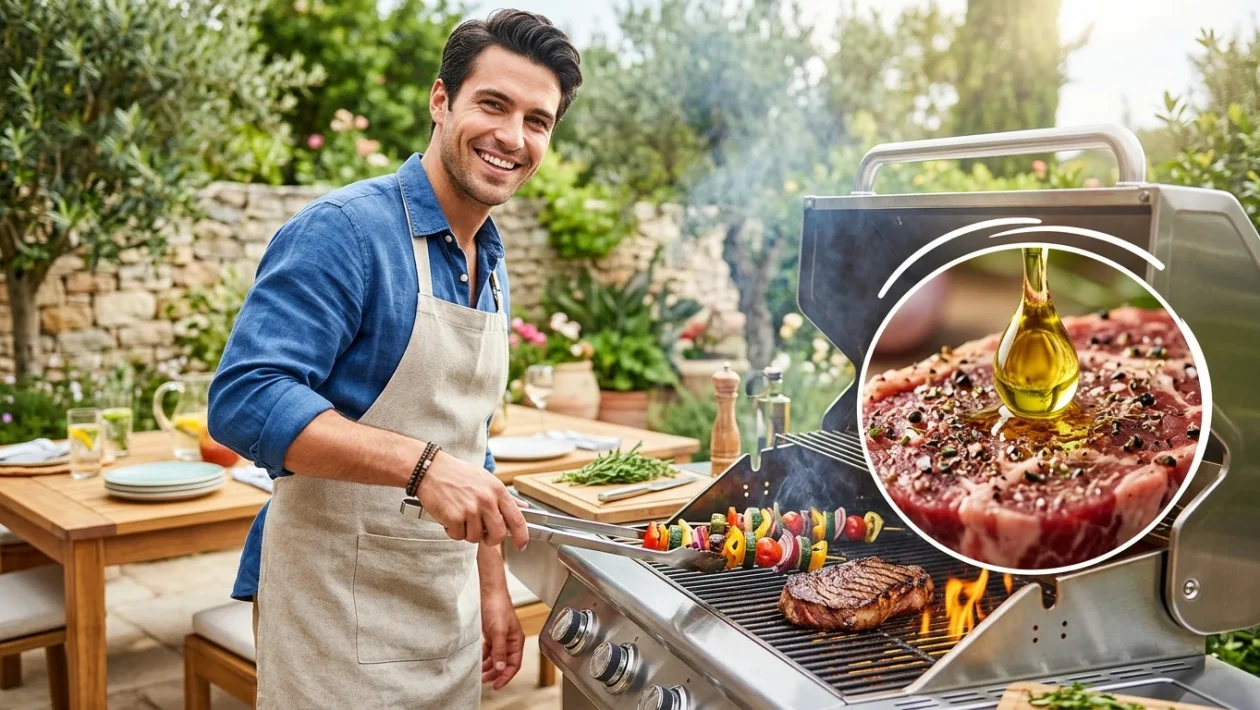
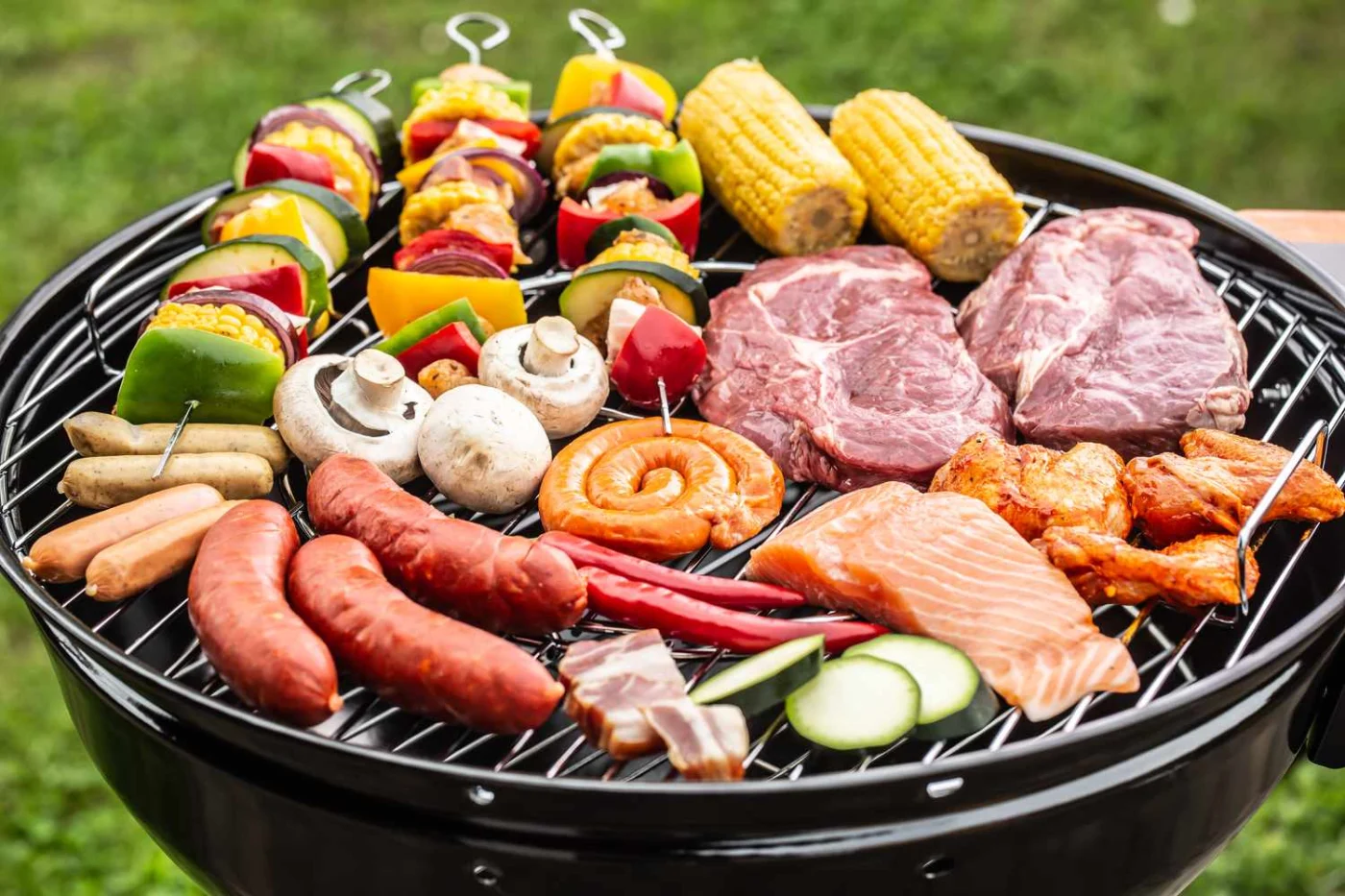
Assorted foods cooking flawlessly on an outdoor grill without sticking to the metal.
Barbecue professionals know exactly why delicate proteins and vegetables refuse to flip. According to top industry experts, mastering the grill comes down to simple preparation and a little patience.
Start With Spotless Grates
Old, carbonized food residue acts like a high-heat adhesive. If you skip cleaning, your fresh dinner immediately bonds to last week’s charred remnants before it can properly sear.
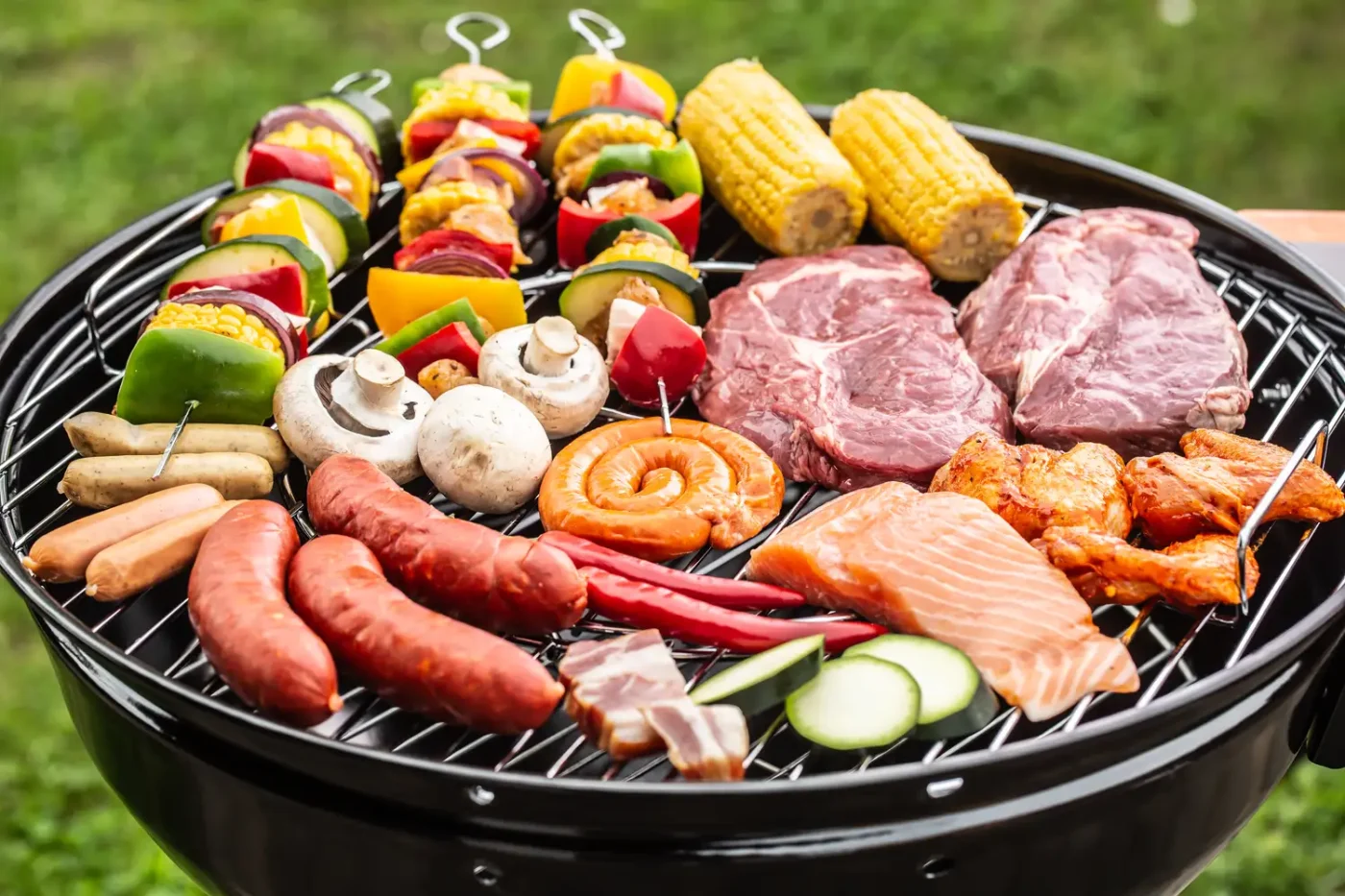
A close-up view of a barbecue grill surface actively in use over a fire.
“Regularly cleaning the grill and lightly oiling the surface before cooking can help allow food to lift more easily,” says Galen Bradford, CEO of Induction Hardware. Always scrape the grates while they are still hot, as the hardened debris flakes off much faster than when it’s cold.
Patience Pays: Preheat Completely
Rushing the preheating phase is the most common grilling mistake. If you’re hungry and toss seasoned food onto cold metal, the grill and the food heat up simultaneously, preventing a protective barrier from forming.
“If you take cold food, rub it with oil, season it, and put it on a cold grill before it is preheated all the way… the oil doesn’t start to separate,” explains Dustin Green, head grill master at Weber.
A hot grate guarantees a fast sear. Most gas and charcoal setups require 10 to 15 minutes of closed-lid preheating. Keep in mind that vegetables and fish require a moderate temperature, while thick steaks demand intense heat.
Oil the Protein, Not the Metal
While greasing the grates seems logical, lightly coating your food is significantly safer and more effective. Oil locks your seasonings in place, fuels the Maillard reaction for better flavor, and acts as a barrier against the steel.
“With a preheated grill and a nice, hot grate and oiled, seasoned food—you put it on there and that oil creates a separator almost immediately,” Green notes.
Always opt for high-smoke-point oils like avocado, grapeseed, canola, or peanut oil. Apply just enough to coat the food, but avoid drowning it to the point of dripping, which causes flare-ups.

Freshly grilled chicken and vegetables successfully removed intact from the barbecue.
Dry Foods Sear Better
Moisture is the enemy of a good crust. When wet food hits a hot grill, the surface water violently turns to steam.
This steam prevents a tight sear from forming, practically guaranteeing your fish, shrimp, or tofu will stick. Bradford advises making a paper towel pat-down a mandatory step in your prep work. “I always make sure ingredients like fish, tofu, and vegetables are patted dry before they hit the grill,” he says.
Leave Delicate Items to the Hardware
Sometimes, the best way to prevent sticking is to avoid the grates entirely. Delicate ingredients simply aren’t built for raw contact with thick metal bars.
“More delicate foods kind of wrap themselves around when they contact with the grate,” Green says. “If you think of a white fish, it creates an arching effect because of the grate. When you put it on a griddle or a plancha, it’s nice and flat.”
Investing in a flat griddle insert, a grill basket, or a simple cedar plank solves this architectural problem instantly.
Stop Touching Your Food
Flipping too early is a guaranteed way to rip your dinner apart. Proteins naturally glue themselves to hot metal the second they touch down, but they will release on their own once a solid crust develops.
A platter of vibrant grilled vegetables displaying perfectly formed char marks.
“When food, like meats or fish, hits the grates, the proteins initially bond to the metal surface,” says Bradford.
As the sear sets in, the food physically lifts itself away from the metal. If your spatula meets heavy resistance, back away. The grill is telling you it’s not ready to let go yet.
Save the Sugar for Last
Slathering ribs or chicken in sweet barbecue sauce before grilling is a rookie mistake. Sugar features an incredibly low smoke point, rapidly turning into an industrial-strength adhesive over open flames.
“Apply them in the last couple of minutes of cooking so that those sugars don’t burn,” advises Green. “You want to glaze them, not burn them.”
By treating sugary marinades and teriyaki sauces as a finishing touch rather than a cooking medium, you ensure the meat slides effortlessly onto the serving platter.