The Hidden Hardware in the Trash Bin
Every time a shop mounts a new set of tires, the old rubber valves go straight into the dumpster. It is standard industry practice to replace them to prevent slow leaks.
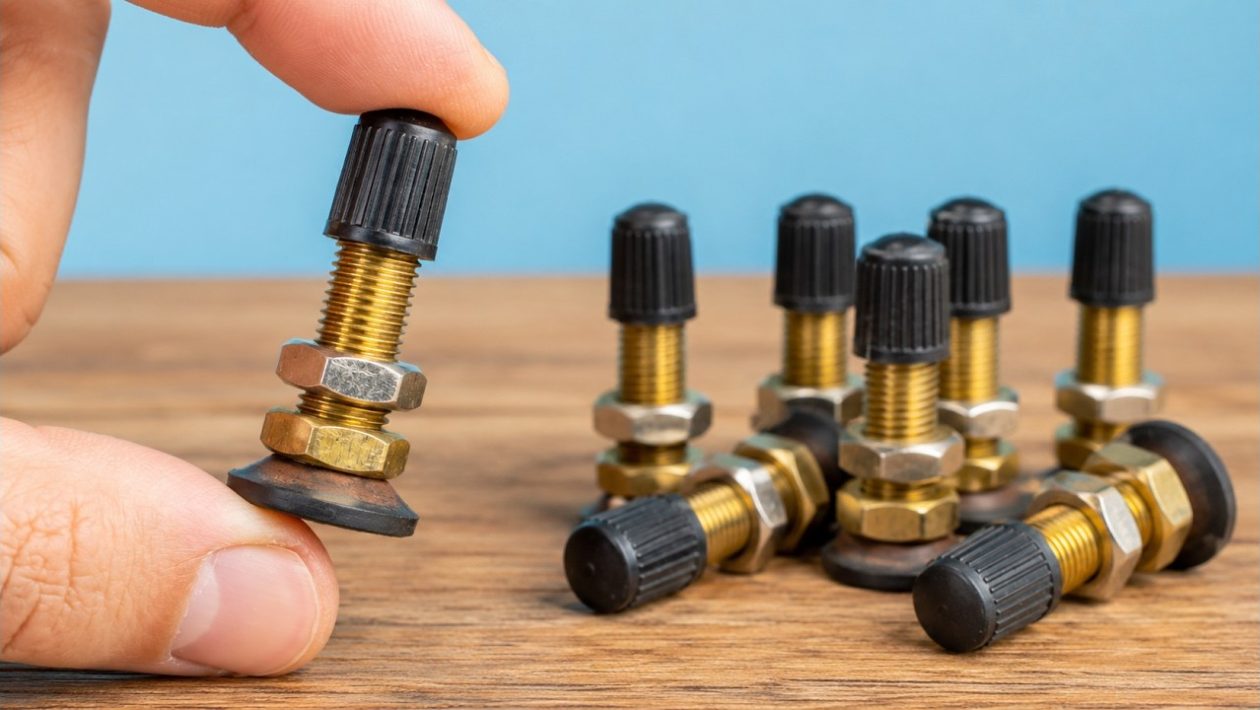
But treating them as trash is a missed opportunity for anyone with a workshop. Inside that weathered rubber casing sits a precision-engineered piece of brass hardware.
Standard Schrader valves are robust, one-way check valves designed to handle extreme weather, rotational force, and high pressure. Stripped of their rubber exterior, they become the foundation for a wide range of custom pneumatic tools.
Extracting the Brass Core
A standard snap-in tire valve is essentially a threaded brass tube encased in molded rubber. Getting to the usable hardware takes less than a minute.
Simply secure the valve in a bench vise and use a utility knife to slice away the rubber outer layer. Once the bulk of the rubber is removed, a wire wheel on a drill or grinder will strip the remaining residue.
You are left with a clean, threaded brass air fitting. The internal valve core—the small pin mechanism that actually holds the air—remains perfectly intact and functional.
Building Custom Pressurized Containers
The most practical use for a reclaimed tire valve is creating custom pressurized tanks. By drilling a carefully sized hole into a thick plastic or metal container, you can insert the valve and seal it with epoxy and rubber washers.
This allows you to pressurize ordinary containers using a standard bicycle pump or garage air compressor. Woodworkers frequently use this method to build highly efficient, refillable glue dispensers.
Mechanics use the exact same technique to build custom fluid extractors or pressurized brake bleeders. Instead of paying premium prices for specialized pneumatic tools, you can build them using PVC pipe and a recycled valve.
Creating Cheap Pressure Testing Kits
Diagnosing a leak in a plumbing system or an automotive turbocharger usually requires expensive testing equipment. A reclaimed tire valve offers a nearly free alternative.
By tapping a Schrader valve into a standard PVC end cap, you can create a custom pressure-test plug. You simply cap off the pipe or hose you want to test, attach your air chuck, and introduce a low amount of compressed air.
Listen for the hiss or spray the area with soapy water to find the leak. This simple trick turns a handful of discarded brass into diagnostic equipment that rivals commercial kits.
Understanding the Limits
While repurposed tire valves are incredibly useful, safety must dictate how you use them. A standard passenger car tire valve is typically rated for a maximum cold inflation pressure of 65 PSI.
However, the weak point in any DIY pneumatic project is rarely the valve itself. It is the container you attach it to.
Never pressurize brittle plastics or containers not designed to hold air, as they can rupture violently. Always regulate your air compressor down to a safe working pressure—usually 15 to 20 PSI—when testing custom setups.