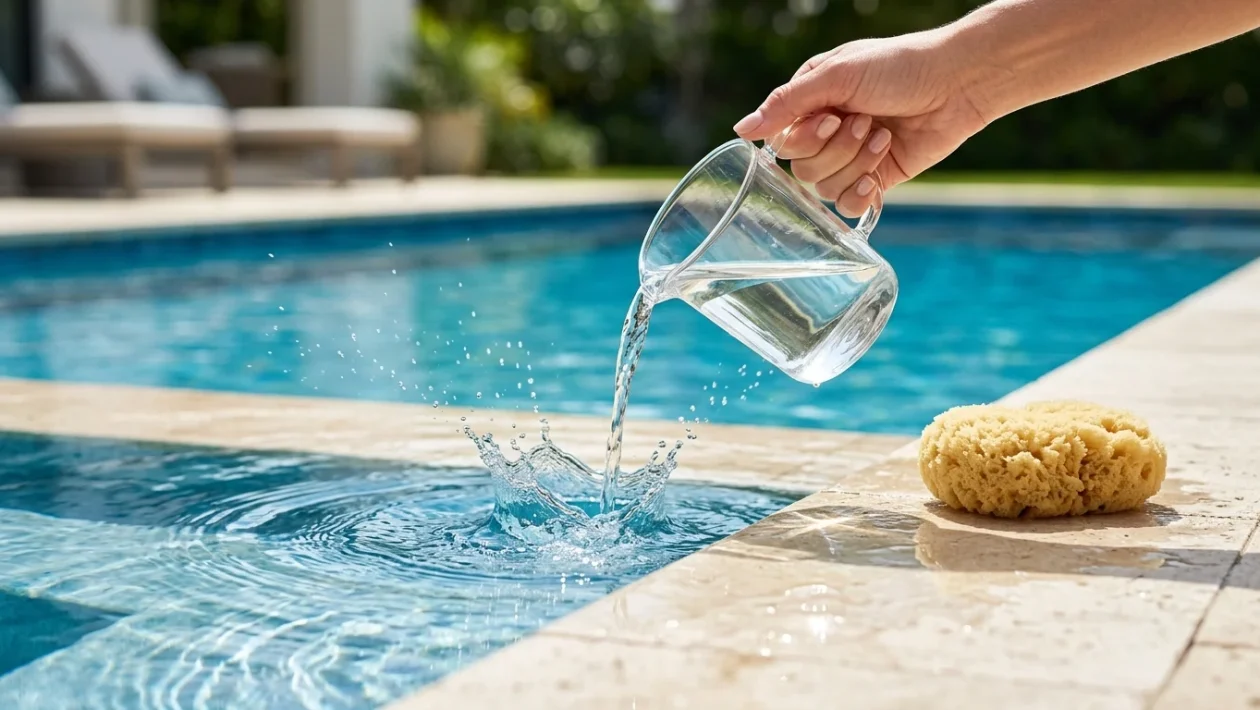
A sparkling blue residential swimming pool maintained with natural cleaning methods
Every week, a new DIY pool maintenance hack surfaces online. One of the most persistent trends involves pouring a cup of white vinegar directly into the water as a makeshift descaler. The logic seems sound: vinegar is cheap, lacks aggressive chemicals, and sits in almost every kitchen pantry.
A sparkling blue residential swimming pool reflecting sunlight.
However, pools react differently to this everyday household staple. The actual impact of white vinegar depends heavily on the pool’s total volume and the specific problem you are trying to solve. Before turning this into a weekly routine, it helps to understand exactly how vinegar alters your water chemistry.
The Real Function of White Vinegar in Pools
White vinegar is essentially diluted acetic acid. In theory, this mildly acidic compound has the potential to lower water pH.
When applied weekly in small doses, its primary benefit is preventing limescale buildup along the waterline. This specific zone constantly accumulates hard water deposits, body oils, and environmental dirt.
Vinegar also serves as a highly effective direct cleaning agent. When mixed with equal parts water and applied with a soft sponge or brush, it dissolves white stains along the pool edge before they fully harden. Once limescale dries and crystallizes on the tile, it becomes incredibly difficult to remove.
Tackling Algae and Organic Waste
Vinegar attacks green algae stains on pool walls in a similar fashion. Its natural acidity softens organic debris stuck to the surface, making it much easier to scrub away.
However, this pantry staple is not a miracle cure. Using vinegar cannot replace a heavy chlorine shock treatment when a serious algae bloom has already taken over the water.
Cost and Environmental Benefits
The main appeal of white vinegar is its ability to partially replace commercial descalers. It costs a fraction of specialty pool products and leaves no aggressive chemical residue behind.
This makes it an eco-friendly alternative to harsh treatments like hydrochloric acid or sodium bisulfate. Yet, this gentle nature is also its biggest limitation.
Commercial acids work quickly and measurably to alter water chemistry. Vinegar requires massive quantities to achieve identical chemical shifts.
The pH Myth in Large Pools
Many household hacks conveniently ignore a crucial detail about large-scale pool chemistry. Lowering the pH of a standard backyard swimming pool with vinegar would require pouring in dozens of gallons.
Relying on vinegar for massive chemical adjustments is impractical and financially absurd compared to buying a standard commercial pH decreaser. A single weekly cup might keep the waterline sparkling, but it barely moves the pH needle in a high-volume pool.
Genuine pH control still requires a proper testing kit and dedicated chemicals. Ultimately, that weekly glass of vinegar acts as a smart, localized cleaning routine rather than a serious water treatment strategy.