A vintage photograph representing young couples from the 1950s navigating relationship expectations.
Society has long romanticized the 1950s and 1960s as a golden era of marrying purely for love. However, modern psychology and sociology completely dismantle this narrative.
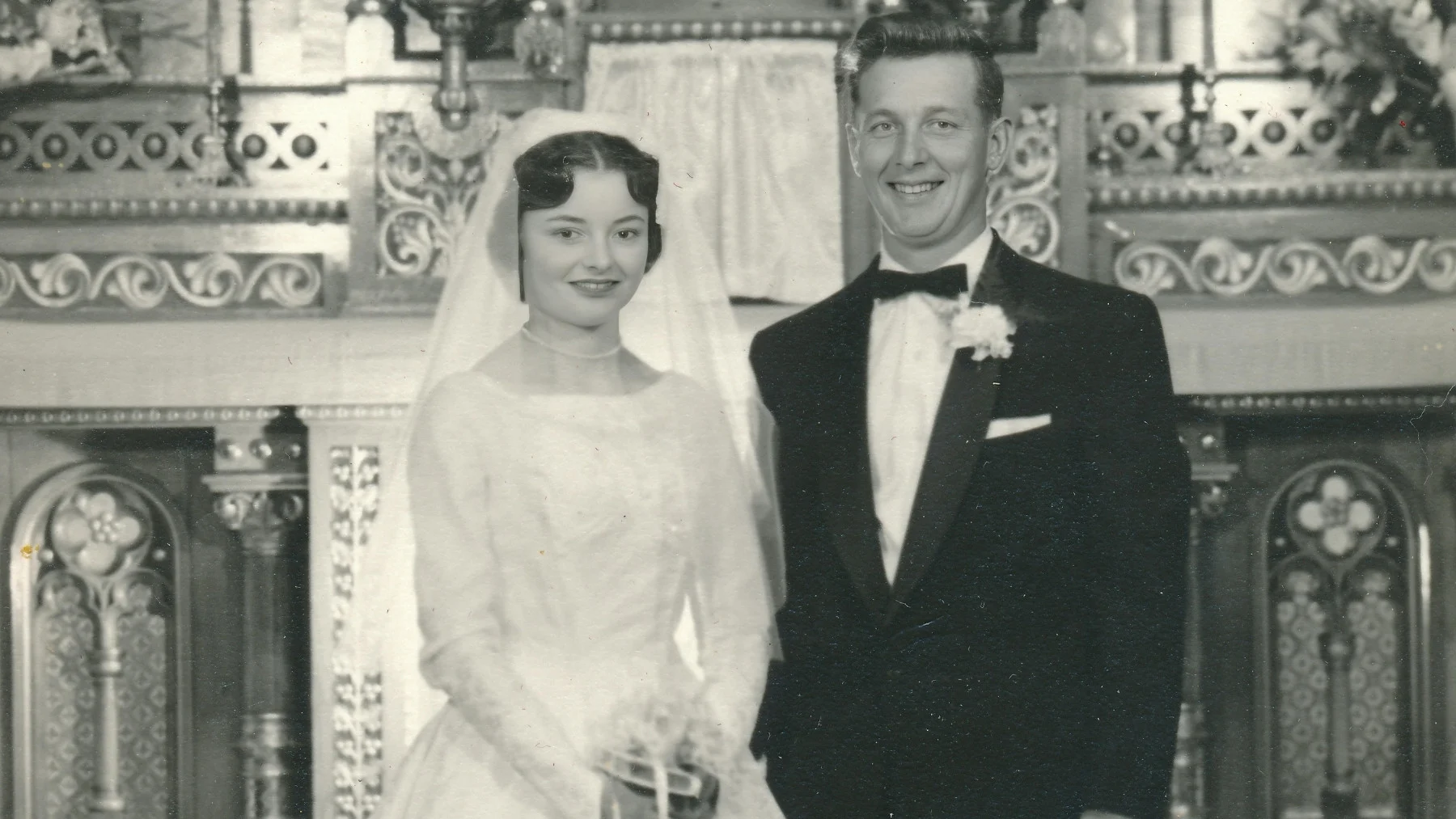
A vintage photograph representing young couples from the 1950s navigating relationship expectations.
Back then, marriage functioned as a calculated social and economic strategy to escape the family home. Leaving the nest before tying the knot was simply out of the question in post-war Spain.
The Ultimate Escape Route
During the post-war era, Spanish family structures were extremely rigid. The traditional nuclear family ruled with absolute authority, featuring a provider father and a homemaker mother.
Children remained under strict parental control until their wedding day. For young people—particularly women—saying “I do” was the only legitimate path to personal autonomy.
Economics Over Romance
Social expectations heavily conditioned women into early motherhood and defined rigid gender roles. But the driving force behind these rapid unions was often purely financial.
Renting or buying property as a single person was virtually impossible in many cities. Independence required material wealth, making marriage a necessary transaction to secure a physical home.
The 1956 book Cortesía y buenos modales by María Adela Oyuela, published by Compañía General Fabril Editora, highlighted these practicalities. Oyuela noted the historical weight of the dowry and the realistic concern over a partner’s economic standing.
She wrote that vestiges remained of an era where “marrying well” strictly meant marrying into a wealthy family.
The 1970s Cultural Shift
Everything began to change in the 1970s. As women entered the workforce and social movements gained traction, the rules of romantic engagement transformed entirely.
Today, people prioritize education, career stability, and personal development. Casually moving in together is the norm, and marriage is now driven by emotional choice rather than financial survival.
A 50-Year Love Story’s Secret
Despite the pragmatic nature of the era, genuine love stories did exist and endure. Elaine Spaulding, 80, and Arthur Aron, 79, met in the late 1960s and recently shared their secret to five decades of marriage with CNN.
Their strategy involves a strict, uninterrupted listening rule during arguments. “One of us talks for five minutes and the other doesn’t interrupt, doesn’t say a word, just listens,” Elaine explained. The listener can take notes but cannot speak.
They then pause the argument for 24 hours to let anger subside. This cooling-off period forces both partners to confront the actual pain they are causing the other person.
The Modern Data Breakdown
The shift from economic necessity to emotional choice has drastically delayed weddings in Spain. According to 2024 data from the National Statistics Institute (INE), the average marriage age hit 39.8 years for men and 37.2 for women.
Compare that to 1980, when the average age for tying the knot was just 25.5 years old.
Regional and European Comparisons
The 2024 average marriage age varies noticeably across Spain’s autonomous communities:
- Andalusia: 38.00
- Aragon: 38.23
- Asturias: 38.79
- Balearic Islands: 39.18
- Canary Islands: 40.30
- Cantabria: 38.96
- Castile and León: 37.85
- Castilla-La Mancha: 37.51
- Catalonia: 39.75
- Ceuta: 34.97
- Extremadura: 37.15
- Galicia: 38.48
- Madrid: 38.37
- Murcia: 37.50
- Navarre: 38.22
- Basque Country: 39.05
- La Rioja: 37.19
- Valencian Community: 38.46
- Melilla: 35.17
In 2005, the average age for a man’s first marriage in Spain was 31.5 years. At that time, countries like Sweden (34.7), Germany (32.6), and the UK (31.7) were already seeing much later marriages.
In less than two decades, Spain’s marriage age has surged so rapidly that it has now surpassed several of these European neighbors.