
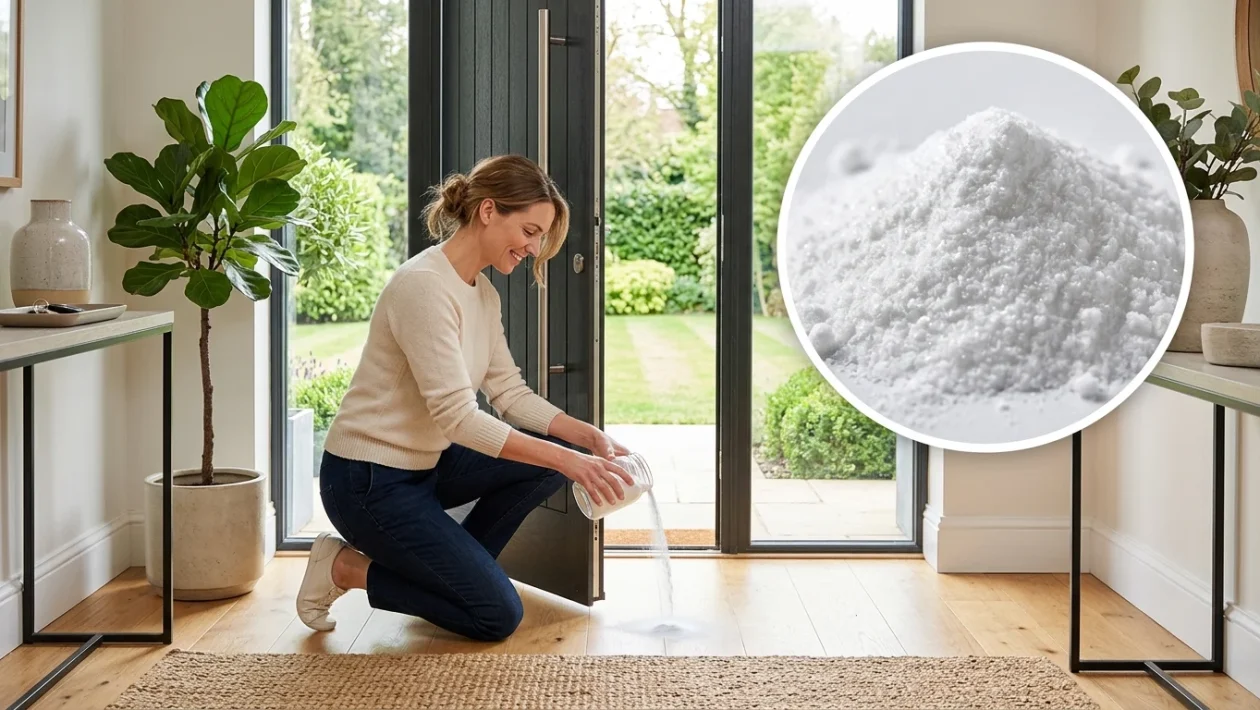
Your home’s entryway takes a daily beating. It absorbs dust, traps moisture, and collects whatever debris your shoes drag inside.
It also serves as a magnet for foul odors from nearby trash cans, damp umbrellas, shoe racks, and pets.
To combat this grime and smell, people have adopted a cheap, straightforward trick: placing baking soda near the front door.
A pile of baking soda used as a household cleaning and odor-neutralizing agent.
While this common pantry item neutralizes smells and aids in surface cleaning, it is not a cure-all.
Here is what placing baking soda at your entrance actually does—and what it cannot fix.
Neutralizing Stubborn Odors
Baking soda is mildly alkaline, allowing it to react with and neutralize the acidic compounds that cause bad smells.
Placing a small, open container of the powder tucked away in an entryway corner can absorb lingering odors from wet shoes or nearby garbage.
However, this only treats the symptom. If your entryway constantly smells, you must track down the root cause.
Persistent smells usually point to hidden mold, plumbing issues, or uncleaned pet accidents.
A Mild Abrasive for Thresholds
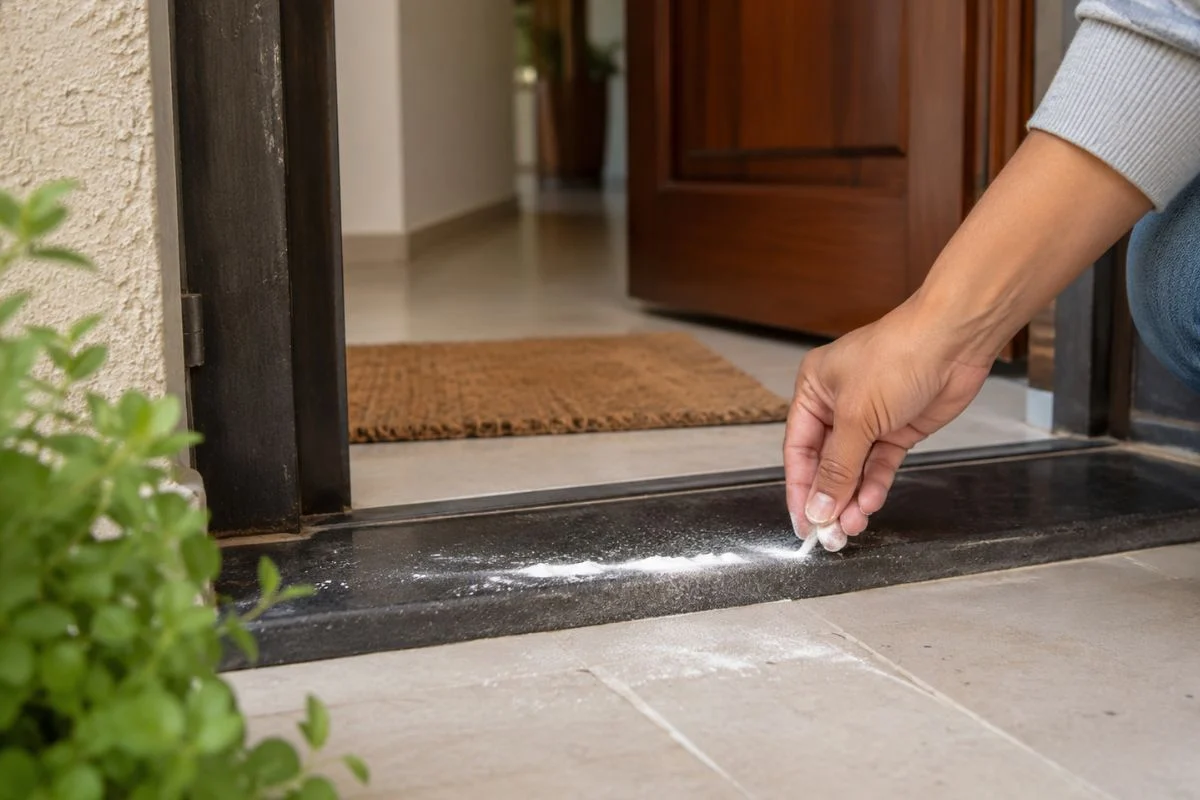
Beyond odor control, baking soda works as a gentle abrasive. It helps lift stubborn dirt and grime trapped on durable floor tiles and door thresholds.
You can apply a small amount using a damp cloth or a soft sponge to scrub problem areas.
Always rinse the surface thoroughly afterward to prevent chalky white streaks from drying on your floor.
You should also spot-test first. Baking soda can scratch or stain natural stone, dark tiles, and polished wood.
The Truth About Repelling Ants
Spreading baking soda along baseboards and door cracks is a widely shared hack for deterring ants.
Unfortunately, it is not a permanent solution for an active infestation.
Keeping insects out requires sealing structural entry points, wiping up food trails, and keeping the area sanitized.
Do not mix baking soda with sugar unless you know exactly what you are doing. While some use this mixture as a DIY bait, doing it incorrectly can attract a massive ant swarm right to your front door.
Limited Moisture Control
Baking soda can absorb a minor amount of ambient moisture in a small, enclosed space.
It will not, however, replace a proper dehumidifier.
Pouring powder by the door will not fix a leaky frame, rising damp, or structural mold. These problems require physical repairs.
In outdoor or exposed entryways, wind and rain will simply wash the powder away before it does any good.
Safety and Proper Usage
Never coat your entire entryway floor in baking soda. It is a waste of product and turns into a dangerous slip hazard the moment it gets wet.
Keep the powder out of reach of small children and pets. While it is a common baking ingredient, ingesting large quantities of raw baking soda can trigger health issues.
Never blindly mix it with other chemical household cleaners without checking for toxic reactions.
Use small, targeted amounts to tackle localized odors and light grime. It remains a helpful household tool, but it will never replace a mop or a structural repair.




