
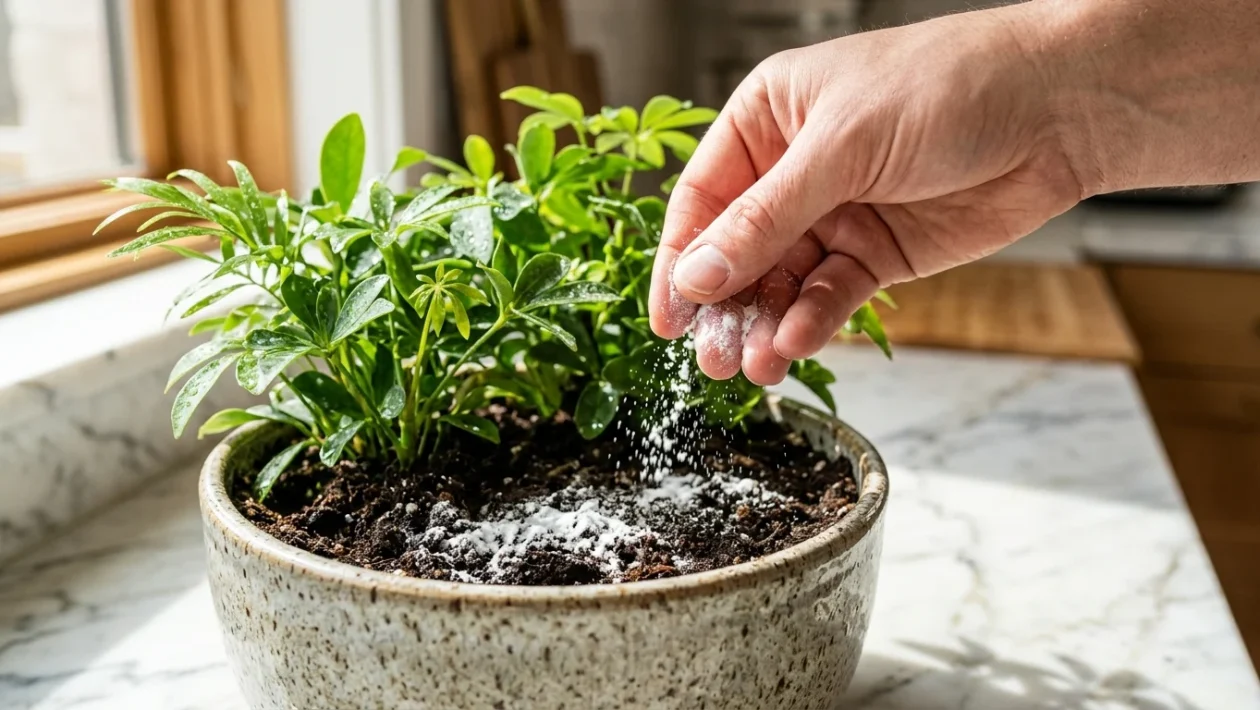
A gardener sprinkling white baking soda powder onto the soil of a healthy potted plant.
Maintaining outdoor spaces like patios and gardens requires consistent dedication. Over time, soil loses its quality and planted species begin to show visible signs of decay.
To reverse this damage, botanical experts recommend a highly accessible trick. Forgetting expensive solutions or complex treatments, the secret lies in an everyday white powder found in almost every kitchen. This common ingredient has become the ultimate method to revitalize pots and flowerbeds effortlessly.
The Science Behind the Strategy
The compound in question is baking soda. Sodium bicarbonate stands out for its remarkable chemical properties when applied to botany. Its ability to fight infections and stabilize the environment makes it an unbeatable resource for protecting gardens.
One of its primary advantages is improving substrate quality. Often, garden terrains develop overly high acidity levels that prevent roots from properly absorbing nutrients. Sprinkling baking soda rapidly neutralizes the soil’s pH, creating optimal conditions for plants to thrive without chemical fertilizers.
Shielding Foliage and Fighting Pests
Baking soda also protects the visible surface of plants. High humidity breeds fungal diseases that directly attack foliage and branches. Applying this powder halts the advance of these microorganisms, acting as a preventive shield that keeps leaves healthy and vibrant.
Simultaneously, it serves as a powerful ally for pest control. Instead of battling insects that devour young shoots, dusting the compound creates a natural barrier that drives away unwanted visitors. This repellent trait keeps various bugs at bay without applying toxic poisons to your vegetation.
Eliminating Unwanted Odors
A lesser-known benefit involves the olfactory hygiene of your outdoor space. Stagnant irrigation water and decomposing organic matter often cause the soil to emit strong, rancid smells.
Thanks to its proven absorption power, baking soda completely dissipates these annoying odors, leaving a much fresher environment.
Choosing this technique is a conscious step toward domestic ecology. Substituting harsh agrochemicals with a harmless method guarantees a safe environment for everyone in the home, including pets and local wildlife.


