
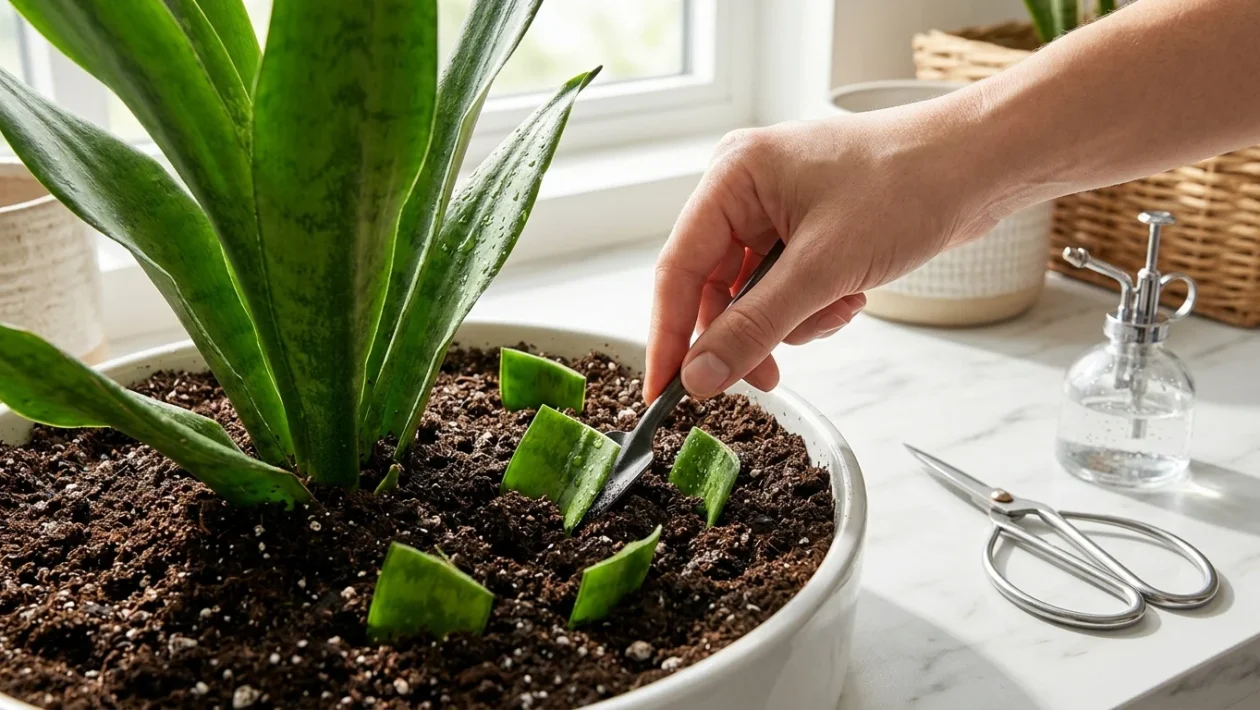
Small cuttings of a snake plant leaf placed in the soil of a potted houseplant.
A Natural Fertilizer Hiding in Plain Sight
The snake plant, scientifically known as Sansevieria, is a staple in interior design. Beyond its visual appeal, gardening experts have identified it as a powerful tool to boost the growth of other plants.
A simple natural trick involves burying small pieces of snake plant leaves into the soil of other potted plants. This method leverages the plant’s dense nutritional profile to strengthen neighboring vegetation.
Essential Nutrients and Minerals
Snake plant leaves are loaded with nitrogen, proteins, and chlorophyll. These elements are the core building blocks required for vigorous growth and rich green foliage.
As the leaf fragments decompose in the soil, they release a steady supply of magnesium, calcium, and potassium. This mineral trio is critical for stimulating new root development and encouraging blooming.
The breakdown process also adds carbon to the soil. This helps balance existing fertilizers and dramatically improves the physical structure of the potting mix.
Built-In Pest Control
One of the biggest advantages of the snake plant is its high concentration of saponins. This natural compound functions as a biological barrier against pests and fungal infections.
Mixing saponin-rich leaves into the soil limits the spread of harmful microorganisms that thrive in damp environments. This technique is highly recommended for indoor, balcony, or terrace plants where poor ventilation can lead to disease.
How to Apply the Technique
Start by selecting a snake plant leaf that is ready for pruning. Leaves with dry edges or minor sunburns are perfect for this process.
Using disinfected scissors, cut the leaf into very small, thin fragments. Distribute these pieces evenly around the base of your target plant.
Bury the fragments carefully into the topsoil, making sure not to disturb or damage the plant’s main root system. Always use a small amount at first, as an excess of leaf matter can block water drainage in the pot.
The Optimal Timing
Autumn and spring are the best seasons to apply this natural fertilizer. While you can do it during the summer, intense heat can actually slow down the natural decomposition process.
This technique is meant to act as a supplement. It must be paired with standard care, including proper watering schedules, adequate lighting, and high-quality potting soil.


