An Unlikely Orchard Secret
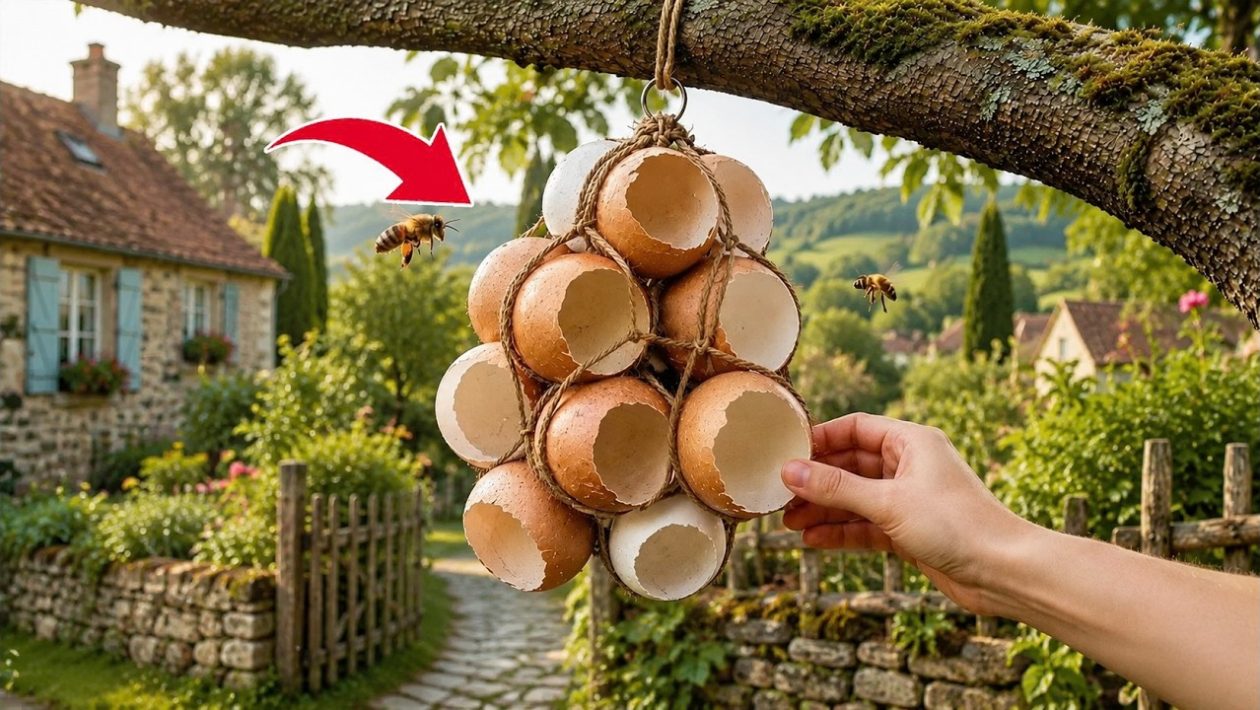
If you spot a neighbor’s fruit tree decorated with empty eggshells, they are not preparing for an out-of-season holiday. This unusual sight is actually a highly effective, time-tested agricultural technique.
For generations, farmers and backyard gardeners have utilized hanging eggshells to solve some of the most frustrating outdoor problems. It costs nothing, uses household waste, and eliminates the need for harsh chemical sprays.
The practice relies on visual deception and slow-release nutrients to protect vulnerable plants.
The Ultimate Territorial Decoy
Many garden pests, particularly the destructive cabbage white butterfly, are highly territorial. When these insects scout for a place to lay their eggs, they actively avoid locations that appear already occupied.
To a passing butterfly, a bright white eggshell suspended on a branch looks like a competing predator or a massive cluster of existing eggs. The pests simply move on to another yard.
This visual trick also works on certain small birds and deer. The unfamiliar white shapes swaying in the wind act as a silent, natural scarecrow.
Defeating Fungal Diseases
Orchard growers have long sworn by hanging eggshells to combat peach leaf curl. This fungal disease targets stone fruits, causing leaves to blister, turn red, and drop prematurely.
While modern agronomists debate the exact science, the traditional theory suggests that rainwater washes trace amounts of calcium and residual sulfur from the shells directly onto the leaves below.
This subtle shift in the plant’s surface pH creates an inhospitable environment for fungal spores to take hold during the wet spring months.
A Slow-Release Soil Booster
Eggshells are composed of roughly 95% calcium carbonate. Over time, wind and weather will naturally degrade the shells hanging in your trees.
As they crumble and fall to the ground, they land precisely at the tree’s drip line. This delivers a slow, steady stream of calcium directly into the root zone.
This extra calcium is vital for cellular growth and helps prevent common deficiencies like blossom end rot in nearby plants and vegetables.
How to Implement the Technique
Preparation is crucial. If you hang unwashed shells, the remaining yolk and egg whites will quickly rot, attracting raccoons, rats, and flies to your yard.
Rinse the inside of your cracked eggshells thoroughly with warm water. Let them dry completely in the sun for a day or two to eliminate any lingering odors.
Once dry, carefully poke a small hole in the top of the shell using a needle or a small nail. Thread a piece of garden twine or heavy-duty fishing line through the hole and tie a secure knot.
Hang the shells strategically around the outer canopy of your trees or near vulnerable vegetable beds. Ensure they have enough room to sway naturally in the breeze for maximum deterrent effect.