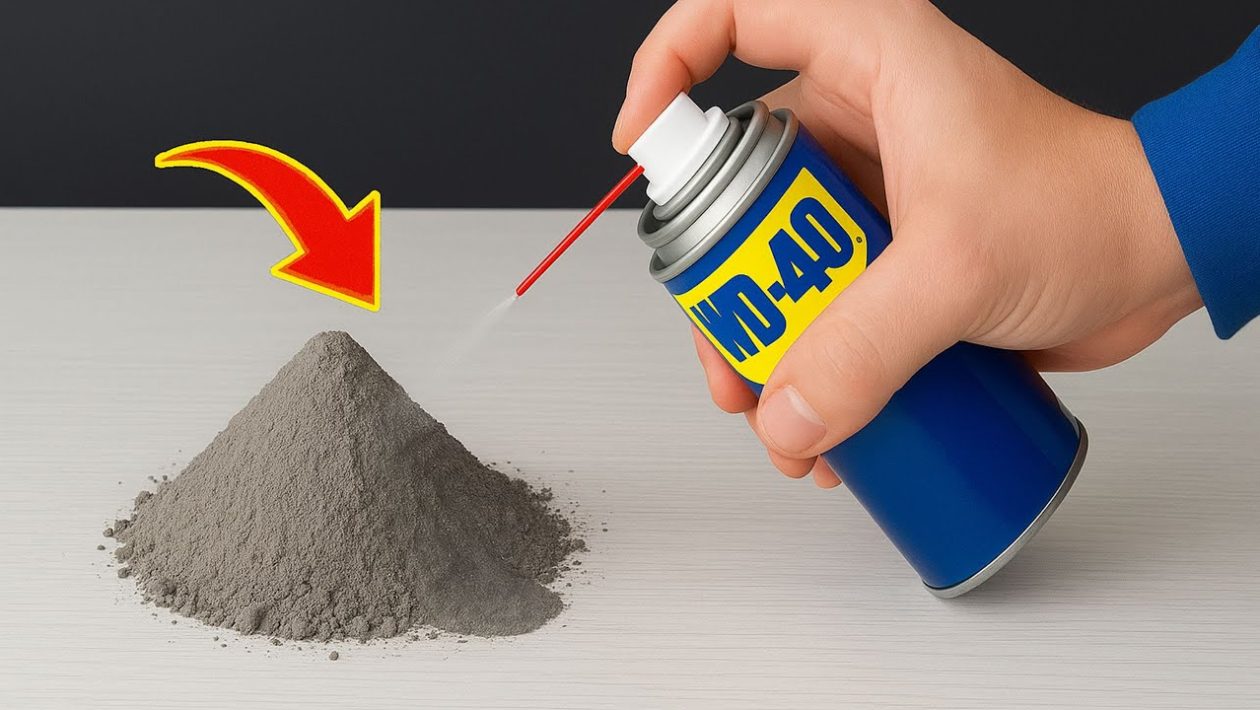
Mixing dry cement powder with WD-40 sounds like a chemical mistake. Cement requires water to initiate hydration, a process that allows it to cure into a rock-hard solid. WD-40, on the other hand, is a chemical lubricant designed specifically to displace water.
Yet, combining these two conflicting materials has become a highly effective technique in the DIY and crafting communities. When mixed together, the oil-based lubricant coats the cement particles instead of hydrating them. This creates a thick, pliable paste that repels water completely.
Creating Waterproof Seals
Standard concrete is naturally porous and absorbs moisture over time. A paste made entirely from WD-40 and cement powder acts completely differently. The heavy oil content creates a hydrophobic barrier.
Crafters use this unique putty to patch small leaks in decorative outdoor items like garden planters or statues. Because the oil repels rain and moisture, the patched area acts as a temporary, water-resistant sealant. It is easy to shape by hand and smooths out effortlessly.
The Perfect Mold Release Agent
Beyond mixing the two directly, WD-40 is a crucial companion for standard concrete crafting. Pouring wet cement into plastic, silicone, or wooden molds often results in the material sticking and breaking upon removal.
Coating the inside of a mold with a light layer of WD-40 creates a slick, protective barrier. The cement cures normally without binding to the edges. Once fully hardened, the finished concrete piece slides out of the mold effortlessly with perfect detail.
Tool Maintenance and Cleanup
Cement is notoriously difficult to clean off metal tools once it begins to dry. Mortar bonds tightly to steel trowels, floats, and mixing paddles. Spraying these tools with WD-40 before starting a project prevents the wet cement from sticking to the metal.
If cement has already begun to set on your tools, a heavy application of the lubricant helps loosen the grit. The penetrating oil creeps under the drying cement, making it easier to scrape off. This simple step extends the life of expensive masonry equipment.
Crucial Structural Limitations
While this mixture is excellent for crafts and small waterproofing hacks, it has serious functional limitations. Oil severely compromises the compressive strength of concrete. A WD-40 and cement paste will never achieve the structural integrity of a proper, water-hydrated mix.
Never use this combination for weight-bearing repairs, foundations, or structural walls. The resulting material is brittle under heavy pressure and is designed strictly for cosmetic fixes, crafts, and non-structural molding.
Safety and Application Tips
If you plan to experiment with this mixture for DIY projects, basic safety gear is essential. Dry cement powder contains silica dust and is highly alkaline, which can cause chemical burns on bare skin. WD-40 contains petroleum distillates that require proper ventilation.
Always mix these materials outdoors or in a well-ventilated garage. Wear heavy nitrile gloves to protect your hands from the abrasive powder and the chemical solvents.
Keep your batches small and apply the paste immediately. The oily consistency allows you to shape the material like modeling clay before it stiffens. Once molded or applied to a surface, leave it undisturbed in a dry area to fully set.