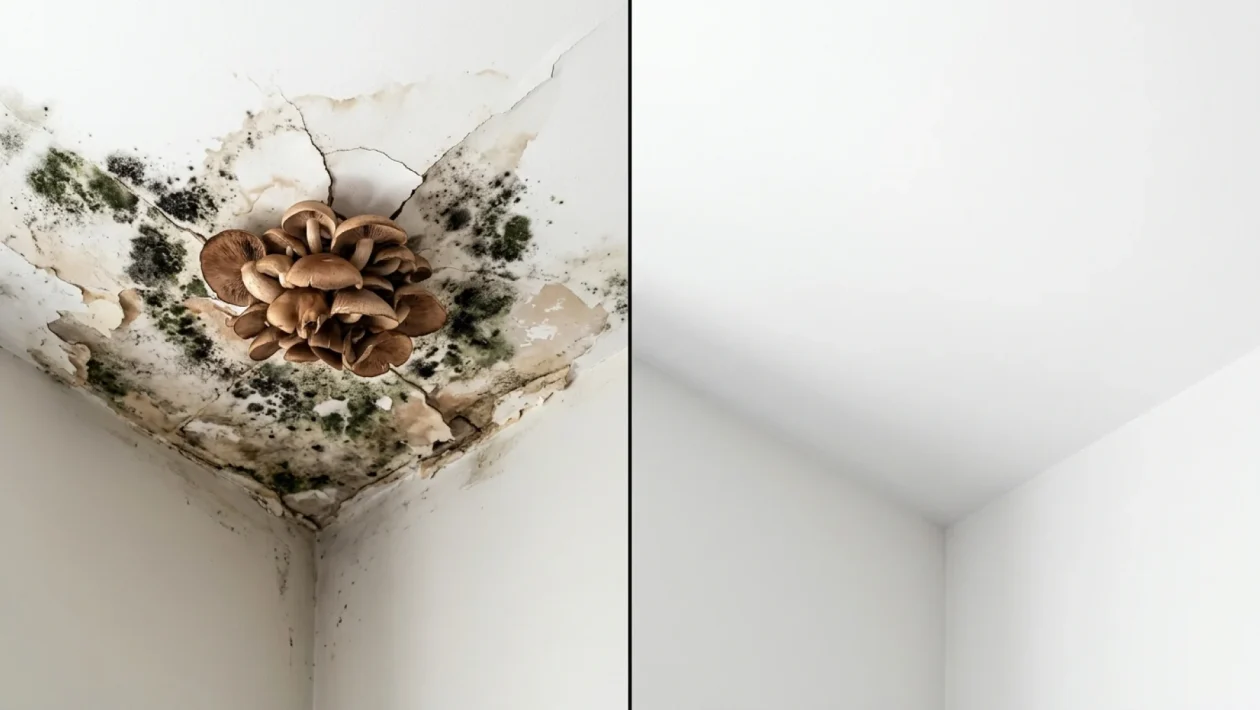
Imagine looking up at your living room ceiling and seeing a cluster of actual, fleshy mushrooms sprouting right through the drywall. It sounds like a bad horror movie, but for families dealing with untreated water leaks, this nightmare is reality. The moment fungi visibly breach your living space, you aren’t just dealing with a cosmetic issue—you are breathing in a biological hazard. We are going to break down exactly why these fungal invasions happen, the serious damage they do to your lungs, and the bulletproof steps you need to take to force a negligent landlord’s hand.
As we roll through the rainy weeks of May 2026, hidden water damage is rearing its ugly head in rental units across the continent. Here is a brutal reality check: the EPA reports that indoor air can be up to five times more polluted than outdoor air, and unchecked moisture is the absolute biggest offender. If you spot a fuzzy patch in the corner or a mushroom crowning through the plaster, you are already behind enemy lines.
Toxic Indoor Mold: The Anatomy of a Neglected Leak
Water always wins. When a roof leaks or a pipe drips behind a wall, moisture gets trapped in the dark, warm insulation. Add a little time, and you have the perfect recipe for toxic indoor mold.
Take a recent, terrifying case out of Albany, New York. A family noticed water leaking through their ceiling in September. Because the landlord assumed it was “just water damage” and stalled on professional remediation, the moisture festered. Months later, the mother woke up to literal mushrooms hanging from her ceiling.
When the landlord finally sent a handyman, the “fix” was just slicing the mushrooms off the ceiling. Listen to me: you cannot treat a systemic fungal infection with a putty knife. That is like putting a band-aid on a broken leg. The underlying mold—specifically Cladosporium, a notorious indoor allergen—was already thriving in the floorboards and drywall.
How Ceiling Mushrooms Wreck Your Health
We need to talk about the physical toll this takes on the human body. When you have visible fungi growing indoors, they are actively releasing millions of microscopic spores into your breathing air.
In the Albany case, the children living in that apartment ended up making repeated trips to the emergency room and pediatric pulmonologists. Their medical records cited severe sleep disruption, chronic inflammation, and worsening asthma directly linked to their living environment.
“I am aggressively treating their condition, however this will be futile unless they are removed from this toxic situation.”
That is a direct quote from the family’s ENT and allergy specialist. You cannot out-medicate bad air quality. Your home should be your sanctuary, not a petri dish that keeps your kids chronically sick.
And What Tenants Must Do: Fighting Back
If you are renting and spot mold or fungal growth, you cannot wait for a landlord to casually get around to it. Bureaucracy and cheap fixes will leave you breathing toxic air for months. You need a paper trail and a proactive game plan.
Here is exactly how you handle a negligent response to water damage:
- Document Everything Immediately: Take clear, timestamped photos and videos of the damage, the leaks, and any fungal growth. Buy a cheap digital hygrometer from Canadian Tire or Home Depot to log the indoor humidity levels.
- Demand Professional Remediation in Writing: Send your landlord a formal email or certified letter demanding a certified mold assessor inspect the property. Do not accept a regular handyman.
- Call Code Enforcement: If the landlord stalls for more than a few days, call your city’s building code enforcement or local health department. Force the city to cite the property.
- Seek Medical Documentation: If anyone in the home feels ill, go to the doctor and explicitly tell them you suspect mold exposure. Get their concerns in writing to build your legal case.
The Financial Reality of Proper Remediation
Landlords often drag their feet because doing the job right is expensive. But knowing the difference between a cheap cover-up and a real fix is your best defense.
| The Cheap “Landlord Special” | Proper Mold Remediation |
|---|---|
| Scraping off mushrooms and painting over the stain with bleach. (Fails within weeks). | Locating the leak, sealing the area, tearing out compromised drywall, and running commercial HEPA scrubbers. |
Expert FAQ Section
Can I just use bleach to kill the mold on my ceiling?
Absolutely not. Bleach only removes the surface color of the mold on porous materials like drywall. The root system remains intact, and the water inside the bleach will actually feed the mold, making it return aggressively in a few days.
Should I stop paying rent until the mold is fixed?
Never simply stop paying rent without legal guidance. Depending on your local tenancy laws, you usually need to place your rent into an approved escrow account. If you just withhold cash, the landlord can legally file for eviction, ruining your leverage.
How quickly can mold grow after a water leak?
It happens faster than you think. Under the right conditions, mold spores can germinate and begin growing on damp surfaces within 24 to 48 hours. By the time you see a mushroom, the internal structure is already heavily compromised.
🤝 Good luck out there, folks. Navigating a housing dispute while worrying about your family’s lungs is incredibly stressful, but knowing your rights is half the battle.
💡 Remember, nobody cares about your health as much as you do. Don’t let anyone convince you that a little dampness is “normal” for an older building.
📱 If you have dealt with a nightmare landlord or survived a crazy renovation issue, share your thoughts below. I read every single one of them!
👇 Stay dry, stay healthy, and don’t settle for a handyman when you need an expert.