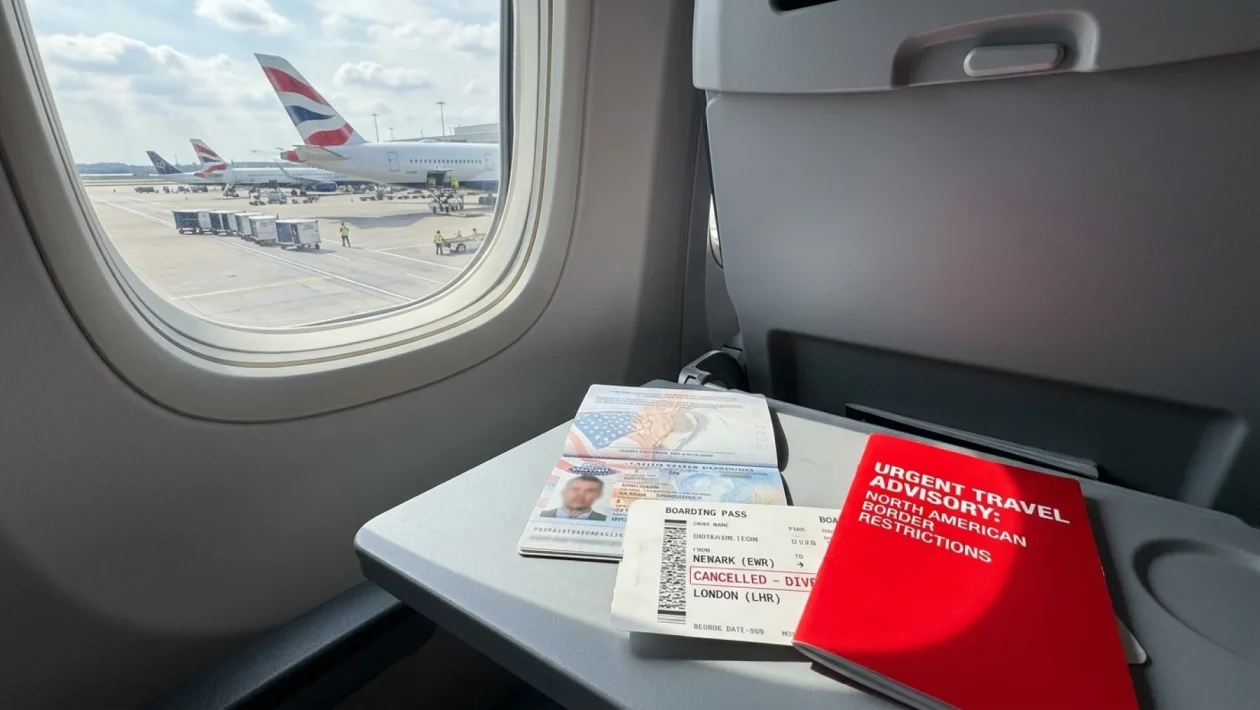
Imagine settling into your seat for the final descent into Detroit, only to look out the window and see the familiar skyline of Montreal instead. That is exactly what happened to passengers on an Air France flight from Paris this May, and it is all thanks to a fierce new wave of Ebola travel rules suddenly slamming U.S. borders. If you have any international travel plans this spring, you need to pay attention, because a missed memo could leave you stranded on the wrong side of the tarmac.
Right now, East Africa is battling a highly concerning Ebola outbreak, and the United States is pulling no punches when it comes to keeping it out of North America. They are actively denying airspace entry to specific foreign travelers mid-flight. Let’s break down exactly what is happening, why Canadian airports are taking the brunt of it, and how to bulletproof your own travel itinerary.
Understanding the New Ebola Travel Rules
The United States Customs and Border Protection isn’t messing around this time. The new mandate is incredibly specific, totally inflexible, and strictly enforced.
If you do not hold a U.S. passport, and you have stepped foot in Uganda, the Democratic Republic of Congo (DRC), or South Sudan within the last three weeks, you are not getting into the United States. Period.
Before you even think about heading to the departure gate, you need to do a thorough audit of your recent passport stamps. Here is a foolproof way to ensure you don’t get caught in the dragnet:
- Check your passport for any entry or exit stamps from the restricted East African nations within the last 21 days.
- Confirm the citizenship of every single person on your booking. Even one non-U.S. citizen with a recent African layover can flag the whole party.
- Contact your airline directly at least 48 hours before departure to verify that your route hasn’t been abruptly altered due to manifest checks.
Why US Border Restrictions Are Suddenly Enforced
This rapid border crackdown didn’t just come out of thin air. As of May 2026, health officials are tracking a deadly and fast-moving Ebola outbreak.
The numbers are sobering. Right now, there are approximately 600 suspected cases concentrated in those core three African nations, and public health agencies are terrified of a global spread.
It is the kind of situation that forces aviation authorities to make split-second decisions. When an international flight is found carrying a passenger who violates the mandate, the U.S. simply revokes landing privileges.
“In modern aviation, the moment a public health red flag goes up at the destination country, the aircraft becomes a flying liability. We don’t have time to negotiate mid-air; we just have to find the nearest friendly runway.”
The Ripple Effect Diverting Flights To Montreal
So, where does a massive transatlantic jet go when the U.S. slams the door shut? Montreal-Trudeau International Airport (YUL) has essentially become the de facto safety net.
Because Canada’s entry protocols differ slightly from the aggressive U.S. mandate, Montreal is taking in these diverted flights. It is a massive logistical headache that heavy hitters like Air Canada are watching closely, as sudden terminal congestion heavily impacts domestic schedules.
Getting diverted isn’t just an inconvenience; it is an expensive, exhausting ordeal for everyone involved. Just take a look at the massive differences between a standard landing and an emergency diversion.
| Flight Scenario | Impact on Travelers |
|---|---|
| Standard Arrival (Detroit) | Customs clearance in 45 mins, immediate onward connections. |
| Diverted Arrival (Montreal) | Stuck on the tarmac for hours, forced rebooking, overnight hotel costs. |
If you are flying near the U.S.-Canada border this week, pack your patience. The ripple effects of these grounded planes are causing delays across the entire eastern seaboard.
Frequently Asked Questions
Are Canadian citizens exempt from these rules?
No. Unless you hold a valid U.S. passport, you are subject to the exact same strict entry bans if you have visited the restricted African countries within the 21-day window.
Will my airline refund me if my flight is diverted?
If a flight is diverted due to government regulations or public health mandates, airlines generally consider it an “act of God” or out of their control. You will be rebooked, but full refunds are exceptionally rare.
Can I just drive across the border into the US instead?
The restriction applies to all land, sea, and air borders. U.S. Border Patrol agents at land crossings have full access to your digital travel history and will deny entry immediately.
🤝 Navigating international travel right now requires a bit more homework than usual, but staying informed is your absolute best defense against unexpected layovers.
💡 If you know anyone gearing up for a cross-border trip this spring, do them a massive favor and pass this information along.
📱 I would love to hear your own travel stories—have you ever been caught in a sudden flight diversion? Share your thoughts in the comments below.
👇 Good luck out there, pack some extra snacks in your carry-on, and always double-check those passport stamps before heading to the airport!