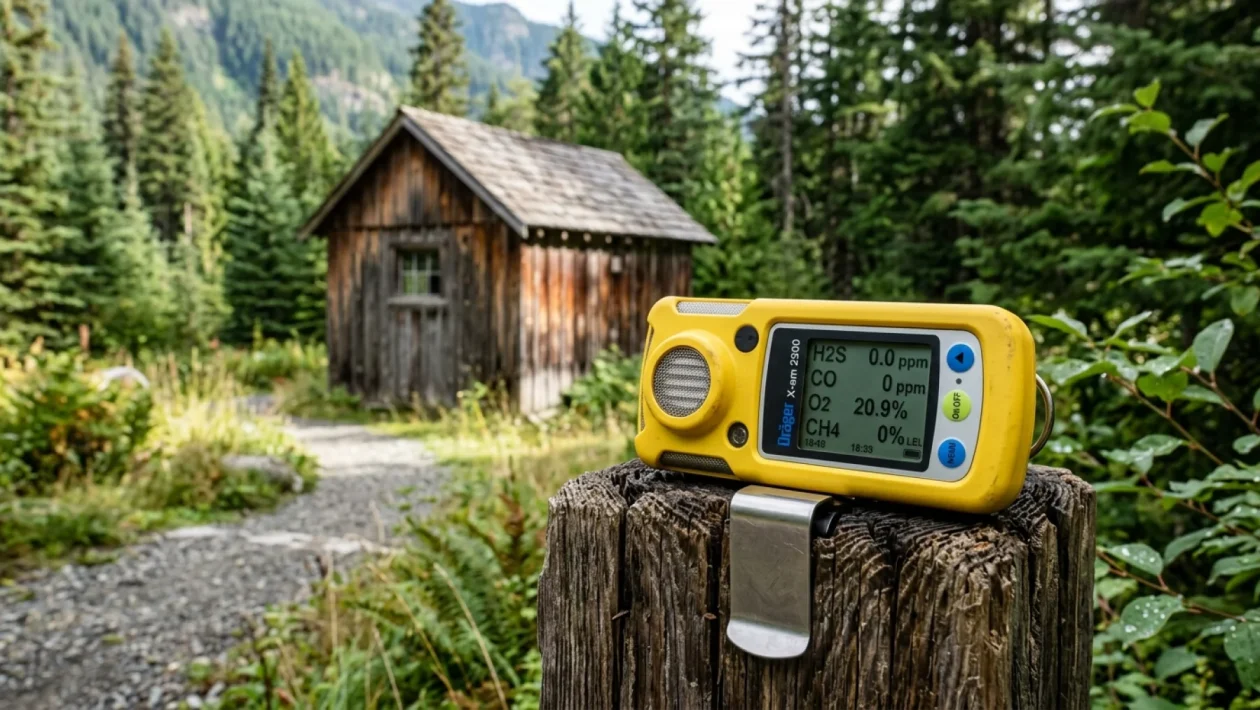
You walk into a seemingly normal shed, take a breath, and instantly collapse. No warning, no smell, no visible threat. That invisible killer—oxygen depletion—is exactly what triggered the Sullivan Mine tragedy two decades ago in Kimberley, B.C., stealing four lives in a matter of minutes. Today, 20 years later in May 2026, we aren’t just looking back at the heartbreak of that day. We’re looking at exactly how the profound loss of these everyday heroes ripped up the rulebook on workplace hazards and forced a massive overhaul of confined-space safety across North America.
The Sullivan Mine Tragedy: What Actually Happened That Day?
May 17, 2006. It started as a routine water monitoring run at a decommissioned mine site. Doug Erickson, an environmental consultant, collapsed inside a water sampling hut. Bob Newcombe went in to check on him. Down he went. When B.C. Emergency Health Services paramedics Kim Weitzel and Shawn Currier rushed in to save them, the invisible void of oxygen took them too.
Four people went to work. Four people didn’t come home.
A provincial investigation later confirmed the chilling truth: the building was essentially an oxygen vacuum. Normal, healthy air sits at exactly 20.9% oxygen. Drop that below 19.5%, and your body goes into immediate, life-threatening crisis mode. These preventable deaths forced organizations like WorkSafeBC and safety boards nationwide to take a hard, unforgiving look at how we approach unventilated environments.
20 Years Later: A Community That Refuses to Forget
Kimberley isn’t a town that just moves on and forgets its own. The impact of losing these four community pillars sent shockwaves through the region. George Weitzel, Kim’s husband, still remembers the sheer “wow factor” of a town shutting down its businesses to pack the local civic arena in mourning.
For George, the paramedic community was Kim’s second family. Fast forward to today, and that bond hasn’t cracked one bit. Plaques, photos, and memorial benches ensure their names echo through the local ambulance station.
It’s a clear testament to the fact that while time heals, true communities actively keep the legacy alive by sharing the stories of those they lost.
How 4 Lives Changed Confined Space Safety Forever
When an incident like the Sullivan Mine tragedy happens, the old protocols get thrown straight in the trash. The tragic loss of Weitzel, Currier, Erickson, and Newcombe fundamentally altered how paramedics and contractors approach unknown atmospheres.
Here is the modern step-by-step process emergency crews use today when approaching a potentially compromised environment:
- Stop and Assess: First responders now treat every enclosed, unventilated space as an immediate atmospheric hazard until proven otherwise. Nobody rushes in blindly anymore.
- Deploy Gas Monitors: Crews strap on personal, multi-gas detectors that loudly alarm if oxygen dips below safe levels or if toxic gases are present.
- Ventilate the Zone: If the air is bad, industrial blowers and extraction fans are deployed to force fresh air into the confined space.
- Suit Up: If an entry is absolutely critical before ventilation clears the air, responders must wear Self-Contained Breathing Apparatus (SCBA) gear.
Let’s break down the essential gear that became strict standard issue after incidents like this forced the industry’s hand:
| Safety Equipment | Primary Function |
|---|---|
| Personal Gas Monitors | Clips to the chest; alarms instantly if oxygen levels drop. |
| SCBA Tanks | Provides an independent, safe air supply for the responder. |
| Mechanical Ventilators | Forces hazardous air out and pushes clean, breathable air in. |
Ultimately, it’s not just about buying better gear; it’s about a total mental shift on the job site.
“We’ve learned immensely about accessing places that may have an atmospheric challenge. We wear gas monitors and we’re more in tuned with the tragic events that may occur.” — Grant Farquhar, Primary Care Paramedic
Frequently Asked Questions
What is oxygen depletion in a confined space?
Oxygen depletion occurs when breathable oxygen in a tight area is displaced by another gas or consumed by a chemical reaction, like rusting metal or rotting organic matter. It is entirely invisible and odorless.
Can an oxygen-depleted room be detected without equipment?
No. You cannot see, smell, or taste an oxygen-deficient atmosphere. You won’t know you’re in danger until you lose consciousness. This is why mandatory gas monitors are an absolute lifesaver for today’s workers.
🤝 Good luck trying to find a tighter-knit town than Kimberley, B.C., when the chips are down. Two decades later, their resilience is a masterclass in turning unspeakable tragedy into lifelong vigilance.
💡 The lives of Kim Weitzel, Shawn Currier, Doug Erickson, and Bob Newcombe weren’t lost in vain. Their legacy is quite literally strapped to the chest of every single first responder who walks into the unknown today.
📱 If you work in the trades, emergency services, or industrial contracting, take a second today to check your monitors and review your confined space protocols.
👇 Please share your thoughts or your own safety stories in the comments below. Let’s keep this conversation going and ensure everyone gets home after their shift!