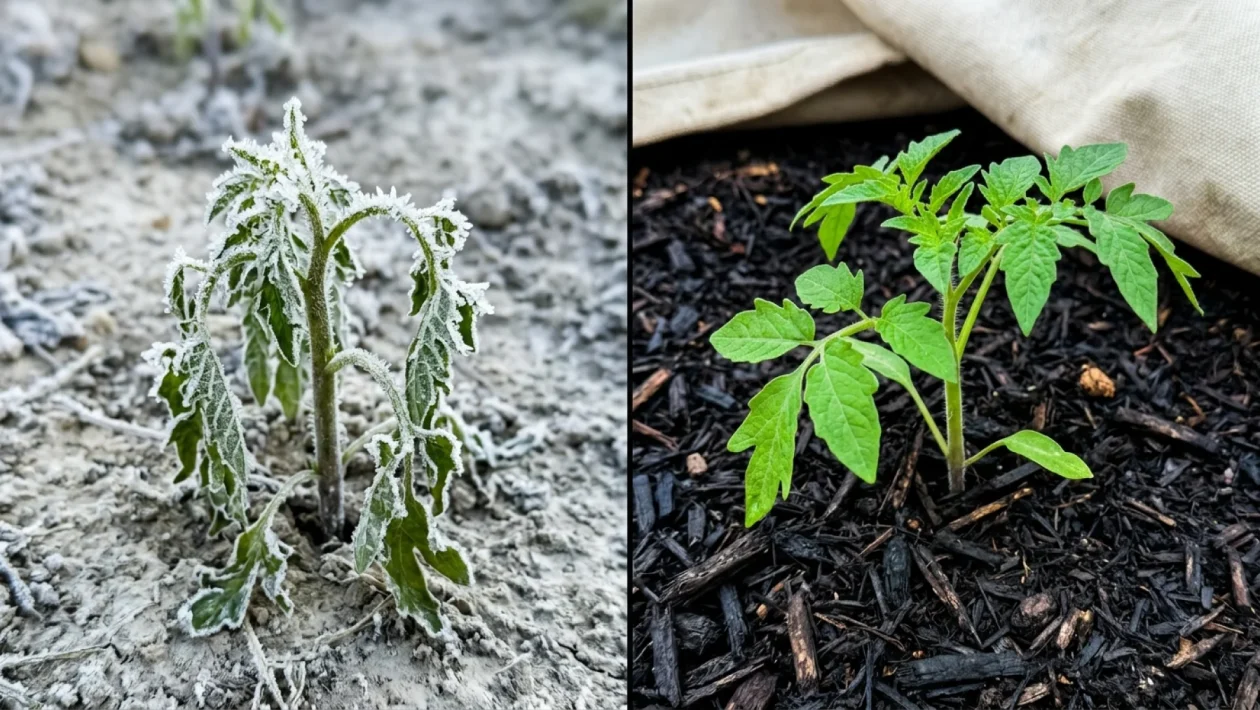
You just dropped a small fortune on tender green sprouts, fired up the grill, and finally packed away your winter coat. Suddenly, the local forecast drops an absolute bombshell: temperatures are plummeting below zero by midnight. This kind of brutal temperature plunge will obliterate your landscaping budget overnight if you do not take immediate action. I am going to show you exactly how to bulletproof your yard against this vicious environmental whiplash.
Spring Frost Survival
The transition from spring into early summer is notoriously dangerous for any homeowner or gardener. We get lulled into a false sense of security by a few glorious days of sunshine.
When tender plants are exposed to unseasonable warmth, they rapidly push out new, highly vulnerable growth. The true danger of a sudden freeze comes down to basic physics.
Here is a hard fact that keeps farmers awake at night: when water freezes, it expands by roughly nine percent. If your newly planted tomatoes are full of moisture, a sudden frost will literally blow their microscopic cell walls apart from the inside out.
This is why mastering your Spring Frost Survival strategy is non-negotiable for anyone who takes pride in their property.
After Record-Breaking Heat
We are currently living through some of the wildest temperature swings on record. Just look at the absolute chaos that hit New Brunswick in May 2026.
Communities completely smashed historical daily high-temperature records, with Fredericton soaring to a blistering 31.3°C. People were cranking their air conditioners and treating it like the middle of July.
Literally 24 hours later, Environment Canada slapped the entire province with a massive frost advisory. Temperatures were expected to violently crash down to -2°C in northwestern regions.
“During the months of March, April and May, we have these large swings in temperature as we transition from winter into summer. It looks like it is just the transition of a really warm air mass to a cold one.” — Jill Maepea, Environment Canada Meteorologist
That quote perfectly captures the reality of North American weather. You cannot trust a warm afternoon, because a cold air mass is always lurking just over the horizon.
How To Save Your Garden
When the temperature drops like a stone, you need to act fast. You do not need expensive commercial greenhouse equipment, but you do need the right materials.
If I see a frost warning, I immediately head to the garage. A heavy-duty tarp from Canadian Tire or a thick layer of Scotts premium mulch can be the difference between life and death for your plants.
Here is my battle-tested, rapid-response plan to lock down your yard before the ice sets in:
- Hydrate the soil heavily: Water your plants deeply in the late afternoon. Wet soil absorbs heat during the day and radiates it upward throughout the freezing night.
- Erect a protective barrier: Drape old blankets, burlap, or heavy tarps over your most vulnerable plants. Ensure the cover touches the ground to trap the rising radiant heat from the soil.
- Remove covers at dawn: The second the morning sun hits your yard and temperatures rise above freezing, pull the covers off. Leaving them on too long will essentially cook your plants.
Not all covers are created equal. You need to know what to throw over your precious landscaping when the clock is ticking.
| Cover Material | Verdict |
|---|---|
| Old Bed Sheets & Blankets | Excellent. Highly breathable and traps heat efficiently without crushing tender stems. |
| Clear Plastic Sheeting | Dangerous. Traps moisture which can freeze against leaves, causing severe burn damage. |
| Burlap Sacks | Very Good. Perfect for wrapping around small trees and shrubs to block freezing winds. |
| Inverted Cardboard Boxes | Great. A fast, free solution for small, individual potted plants on your patio. |
Frequently Asked Questions
Can frost damage my outdoor plumbing?
Yes. Even in late spring, a sudden drop to -2°C can freeze water left inside outdoor hoses. Always disconnect your garden hoses from the spigot when a severe frost advisory is issued to prevent split pipes.
At what temperature do plants actually die?
A “light frost” happens between 0°C and -2°C, which kills tender plants like tomatoes and peppers. A “hard freeze” occurs below -2°C and will severely damage even hardy spring perennials if they aren’t properly protected.
Should I prune frost-damaged leaves right away?
Absolutely not. Leave the dead, black foliage on the plant for a few weeks. That dead material actually acts as an insulating layer against the next potential spring frost.
🤝 Good luck out there, folks! Protecting your property from unpredictable spring weather takes a bit of elbow grease, but the payoff is a thriving yard all summer long.
💡 Remember to always keep an emergency stack of old blankets in the shed. Preparation is the ultimate defense when the thermometer starts diving.
📱 Share your thoughts and your own survival tips with your neighbors. A strong community is the best tool we have against extreme weather.
👇 Drop a comment below if you managed to save your garden from the latest freeze, and let me know what cover materials worked best for you!