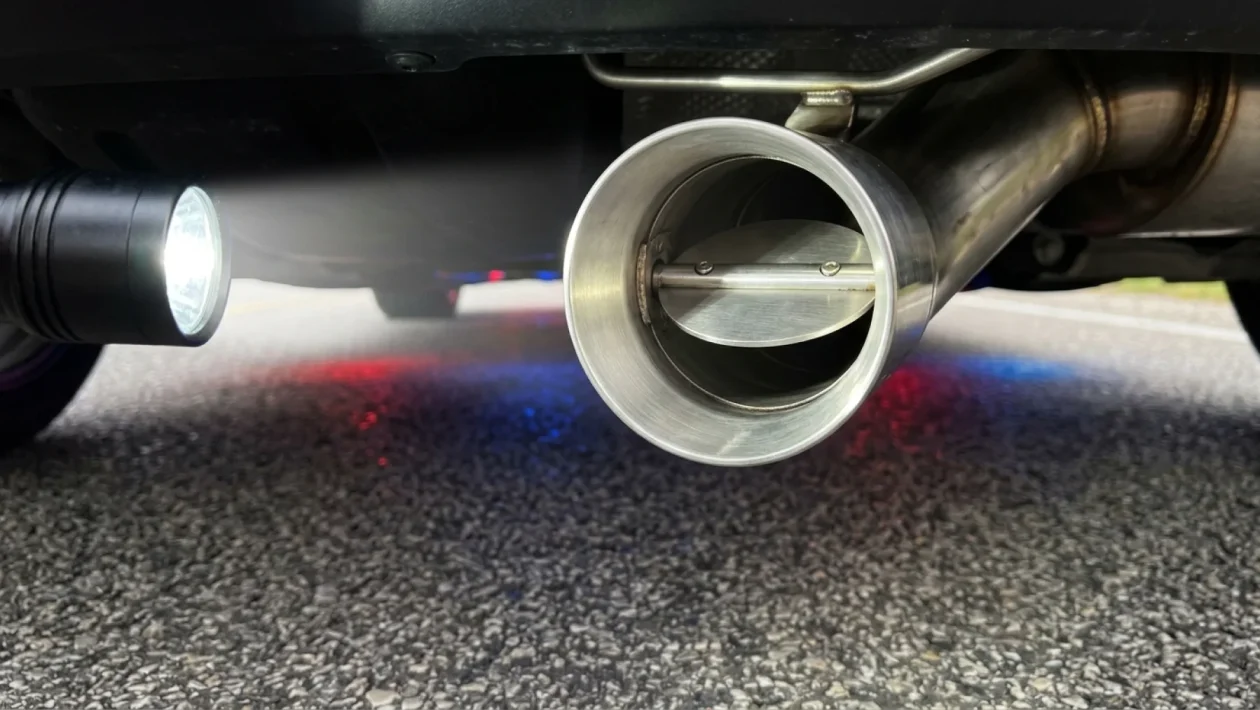
You drop into the driver’s seat, tap a button on your center console, and your quiet commuter car suddenly sounds like a fire-breathing track monster. It’s intoxicating, it’s undeniably fun, and if you’re cruising through town this May 2026, it’s a fast track to flashing red and blue lights in your rearview mirror. Police departments are launching massive enforcement blitzes targeting valved exhaust systems, catching thousands of unsuspecting drivers off guard. I’m going to break down exactly why this highly popular, often factory-installed feature is getting drivers busted—and how you can navigate the grey area of car customization without draining your wallet.
The Tech: Valved Exhaust Systems
If you’ve spent any time wrenching in the garage or browsing aftermarket parts from brands like MagnaFlow, you already know the appeal of a dual-personality exhaust. Instead of committing to an aggressively loud car 24/7, modern drivers are turning to smart technology.
These setups, often called exhaust diverters, allow you to control the volume of your engine on the fly. Here is exactly how the magic happens under your floorboards:
- The Trigger: The driver pushes a dashboard button or switches the vehicle into a high-performance “track” mode.
- The Actuator: A small electronic or vacuum-operated butterfly valve opens up inside the exhaust piping.
- The Bypass: Exhaust gases completely skip the sound-deadening muffler, dumping raw, unfiltered engine roar directly onto the pavement.
The Debate: Why Your “Legal” Sports Car Modification Is Under Fire
Here is where the massive frustration lies for the average gearhead. You might be thinking: Hey, I bought my Ford Raptor straight off the dealership lot with this exact feature installed!
It’s true. Automakers are increasingly rolling out high-end vehicles with stock valved exhausts, marketing them as the best of both worlds. Drivers argue that these switches actually prevent neighborhood noise complaints during early morning cold starts.
However, law enforcement views things very differently. In the eyes of the law, simply possessing the ability to bypass a mandated safety device is a major red flag.
“It’s a much better solution than what we saw 20 years ago when guys were straight-piping everything and making a constant ruckus. Now, when you don’t want to anger your neighbours, you put it in comfort mode. But the law hasn’t caught up to the technology.”
Just because you can buy it on a showroom floor doesn’t automatically mean you have the legal right to engage that technology on public roads.
The Consequence: How It Brings A $220 Police Ticket
If you get pulled over during a roadside blitz, officers aren’t just looking at window tint and lowered suspensions. They are literally getting down on their hands and knees with flashlights to inspect your tailpipes.
Here is a shocking hard fact: Under Ontario’s Highway Traffic Act, there is zero specific decibel limit written into the law. None. Whether your car gets a ticket comes down entirely to the roadside officer’s personal discretion.
If an officer decides your exhaust creates “excessive or unusual noise,” or if they spot an electronic bypass device, you are getting slapped with a $220 fine immediately.
| The Enthusiast’s Perspective | The Legal Reality |
|---|---|
| A factory-installed, premium vehicle feature. | Any system that bypasses a muffler is strictly illegal. |
| Allows for quiet, respectful driving in residential zones. | Viewed as a tool for disruptive parking lot “takeovers”. |
Frequently Asked Questions
Are “muffler deletes” treated the same as valved systems?
Actually, they are worse. A muffler delete physically removes the silencing equipment permanently. While valved systems are at least quiet when closed, both are considered illegal modifications if they increase standard noise levels.
Can I fight an exhaust noise ticket in court?
You can try, but it’s an uphill battle. Because the law relies on the officer’s subjective definition of “excessive noise,” fighting it requires proving the officer’s judgment was fundamentally flawed, which is very difficult to do without hard decibel evidence.
🤝 Share your thoughts with the local automotive community in the comments—have you been ticketed for a stock exhaust system?
💡 If you’re building your dream project car, always double-check local highway regulations before installing premium aftermarket parts.
📱 Follow our page for more weekly garage tips, wrenching guides, and legal breakdowns.
👇 Good luck out there on the asphalt, and remember to keep those revs low when you’re rolling through the suburbs!