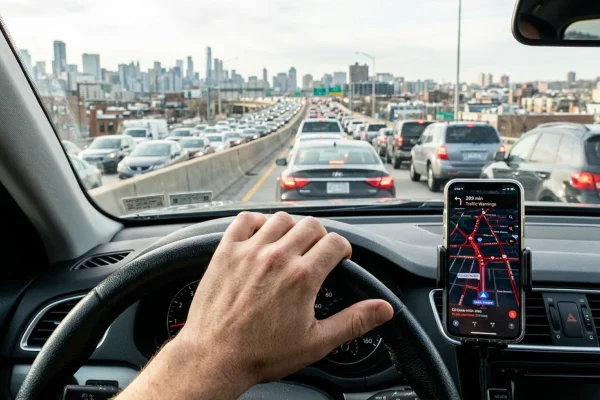
You are standing on a rain-slicked curb, staring at a digital sign that has promised your bus is “2 minutes away” for the last quarter-hour. Canadian public transit is currently bleeding riders, bleeding money, and testing the sanity of millions of daily commuters. The system isn’t just sputtering; in many places, it is fundamentally broken. But do not trade your metro pass for a car loan just yet, because the blueprint to fix our sprawling urban gridlock is already on the table.
Why Canadian public transit is collapsing
Let’s pop the hood on this mess. The core issue isn’t just lazy scheduling—it is a catastrophic structural failure in how we fund our rides.
Historically, transit in this country relied heavily on the farebox. When the world shifted a few years ago, that reliable revenue evaporated practically overnight.
Now, as we push through spring 2026, systems are caught in a brutal catch-22. Fares are up, but service is slashed to save cash.
Consider the hard truth: Metro Vancouver’s TransLink recently stared down a massive $600 million annual funding gap, threatening to cut up to half of its bus service. You simply cannot build a world-class economy on a transit system that barely affords its own gas.
The struggle in our major cities
If you live in Toronto, Montreal, or Calgary, you know the daily grind is getting noticeably rougher.
Major cities are expanding outward at breakneck speed, but the transit infrastructure is stuck firmly in the 1990s.
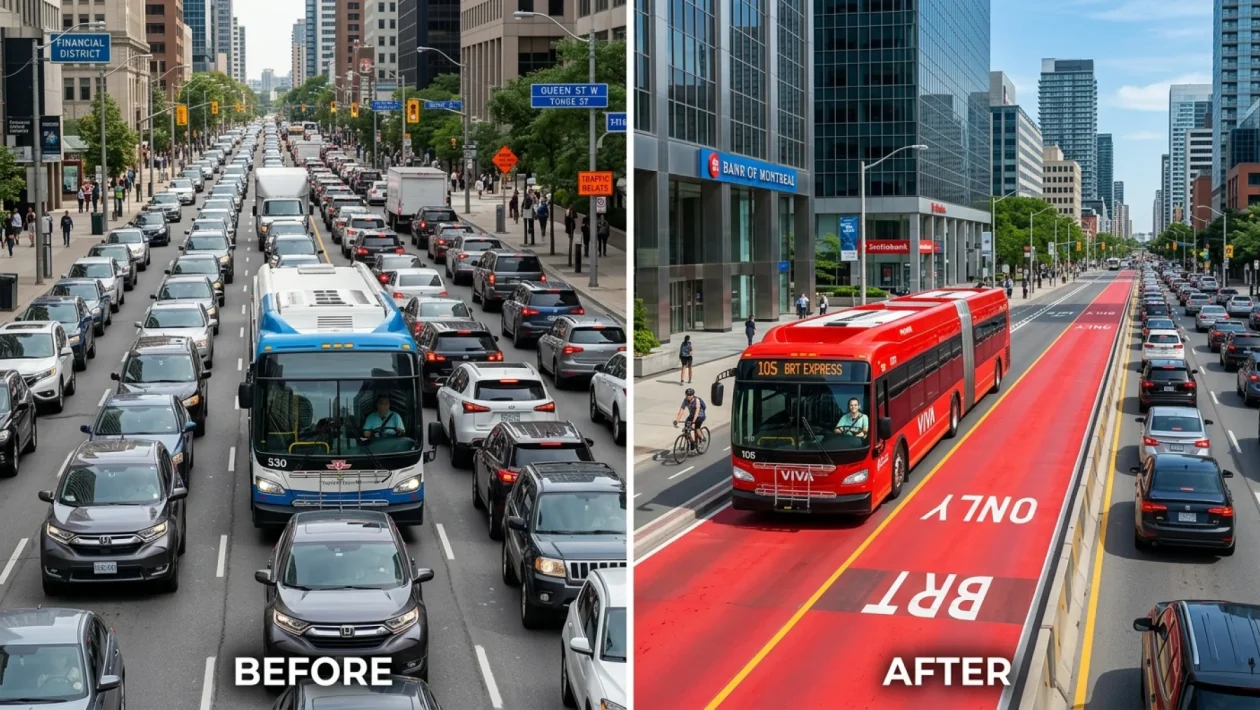
We are still forcing heavily loaded streetcars and buses to share lanes with single-occupant SUVs. It is like trying to drain a swimming pool with a garden hose.
“You cannot solve 21st-century urban density with 20th-century traffic geometry. If transit doesn’t get priority on the asphalt, it will always be the loser’s option.” – Marcus Lin, Lead Urban Strategist at the Canadian Transit Institute.
Even heavy-hitters like the TTC (Toronto Transit Commission) and regional agencies like Metrolinx are struggling to keep rolling stock modern while managing decades of deferred maintenance.
Here is a quick look at why the old way is failing us, and what the new standard needs to be:
| The Old Broken Way | The Modern Fix |
|---|---|
| Buses stuck in mixed traffic | Dedicated bus rapid transit (BRT) lanes |
| Over-reliance on rider fares | Stable, multi-level government funding |
| Sprawling, infrequent routes | High-frequency urban transit corridors |
Here is how we fix the urban gridlock
Enough doom and gloom. As any experienced handyman will tell you, knowing what is broken is half the job.
We do not need to invent flying cars to fix our cities. We just need the political backbone to implement proven, high-efficiency transit solutions.
Here is exactly how we get our cities moving again without breaking the bank:
- Paint the roads red: Give buses dedicated, enforcement-camera-monitored lanes. If a bus carrying sixty people is stuck behind one guy in a sedan, the system has failed.
- Flip the funding model: Move away from a fare-dependent model. Transit needs to be funded like fire departments and roads—as essential public infrastructure through stable tax subsidies.
- Prioritize signal preemption: Install smart tech so traffic lights automatically turn green for approaching buses and streetcars. It is incredibly cheap to install and shaves massive time off daily commutes.
- Build density near stations: Stop building single-family homes next to billion-dollar subway stops. We need mid-rise apartments right where the trains pull in to guarantee immediate ridership.
It is not rocket science. It is just basic urban plumbing, and it is time we got to work.
FAQ: Understanding the transit crisis
Why is my local transit pass getting more expensive?
Because transit agencies are desperately trying to plug massive operational deficits. Without reliable provincial and federal funding, the financial burden falls directly onto the daily rider.
Will building more highways fix the gridlock?
Absolutely not. More lanes simply invite more cars—a proven concept known as induced demand. Investing that same money into rail or Bus Rapid Transit moves up to ten times more people per hour.
Is public transit safe right now?
Yes, statistically it is incredibly safe compared to driving. However, agencies are actively boosting security presence and deploying mental health outreach teams to ensure riders feel completely comfortable at all hours.
💡 Fixing our transit isn’t just about saving five minutes on your morning commute; it is about keeping our cities livable, affordable, and highly competitive on the global stage.
🤝 We have the tools, the technology, and the hardworking crews ready to lay the tracks and drive the routes.
📱 Now it is up to us to hold our local leaders accountable and demand a system that actually respects your time and tax dollars.
👇 Share your thoughts in the comments below—what is the craziest transit delay you have experienced lately, and how would you personally fix it?