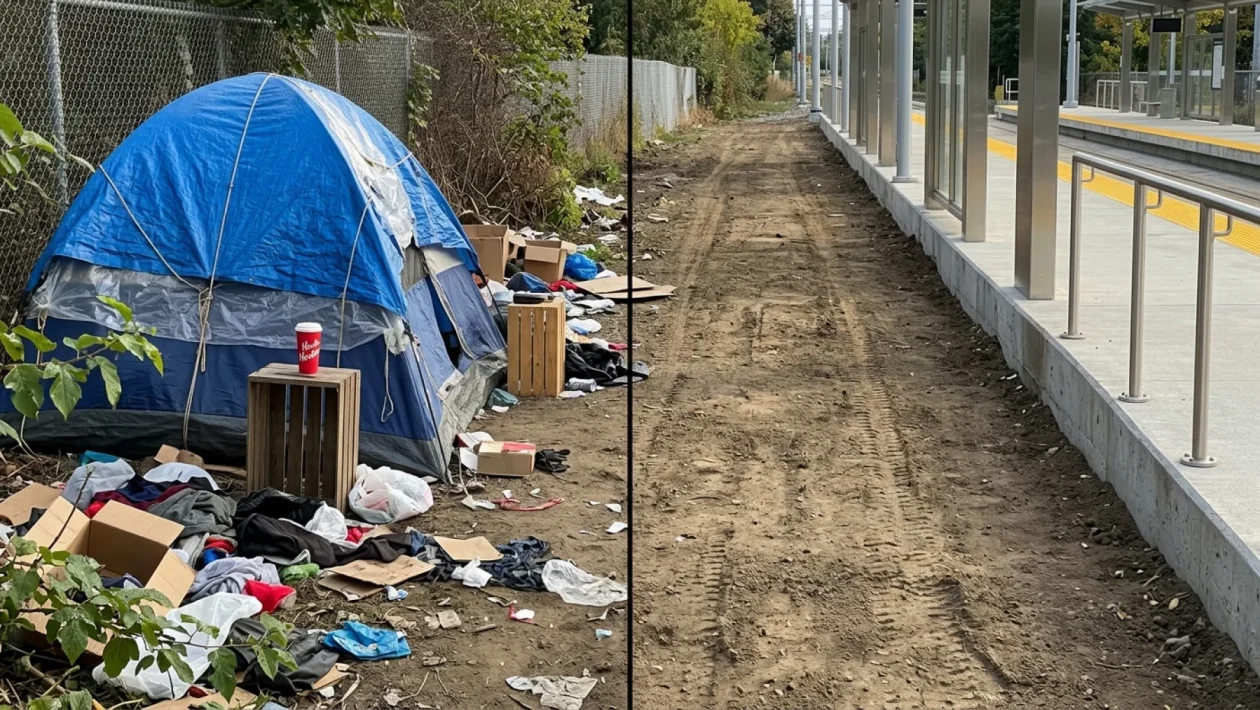
Sweeping dirt under the rug doesn’t clean the house, and dismantling a few tents doesn’t cure a systemic failure. When city crews recently cleared out the sprawling homeless camp near Ottawa’s Bayview LRT station, they carted away massive piles of garbage, over a dozen propane tanks, and a staggering 2,000 discarded needles. But simply moving desperate people off a transit pathway doesn’t make them disappear.
We are looking at a fundamentally broken system where affordable housing and healthcare are completely out of sync. If we want to actually fix this—rather than just patching the drywall every spring—we need to stop chasing symptoms and start pouring a solid foundation of supportive housing combined with frontline medical care.
Ottawa Encampment Crisis
To understand the sheer scale of the Ottawa Encampment Crisis, you have to look at the raw numbers. It is not just a handful of people down on their luck. Between 2021 and 2025 alone, a jaw-dropping 725 encampments were identified in the downtown core.
This isn’t just a housing issue; it’s a lethal public health emergency. In 2024, the city recorded at least 940 overdose-related emergency room visits and nearly 170 tragic deaths. When the Ottawa Mission reports being over capacity for eight and a half years straight, it becomes obvious that the safety net hasn’t just frayed—it has completely snapped.
Why Clearing Tents
Tearing down a campsite is like putting a band-aid on a busted plumbing pipe. The recent cleanup west of the Trillium Pathway was technically thorough, but it was purely reactive. The city previously dismantled this exact same site back in 2019, only for it to be repopulated.
When you close the places where vulnerable people can safely consume drugs, they don’t stop using. They just take it outside. The province’s decision to pull funding for supervised drug consumption sites has directly forced this activity into our parks and pathways.
Near Bayview LRT
For the average commuter gripping a Tim Hortons double-double on their way to work, navigating around discarded needles and makeshift shelters is jarring. The Bayview LRT station is a major transit hub, and the visible struggle happening right beside it highlights the collision between everyday city life and extreme poverty.
But visibility shouldn’t just spark frustration; it should spark action. When residents are forced to live in the brush behind a train station, it proves that our traditional shelter system—which simply doesn’t work for everyone—is failing our most vulnerable neighbors.
Ignores The Real Problem
The core issue is that Ontario is shifting gears away from harm reduction. By June 13, the provincial government will cut funding to supervised consumption sites, moving entirely toward an abstinence-based Homelessness and Addiction Recovery Treatment (HART) model.
While the goal of recovery is noble, pulling the plug on harm reduction overnight leaves heavy users completely stranded. As one advocate bluntly put it, people will die without these critical interim supports.
“These are all signs of a crisis. They go far beyond garbage and far beyond needles that are discarded. This is really about human beings that are not getting the housing and the health care that they deserve.” — Ariel Troster, Somerset Ward Councillor
To understand what this shift actually means on the ground, here is a breakdown of the two approaches:
| Supervised Consumption Sites | HART Hubs (New Model) |
|---|---|
| Supervised drug use with trained medical staff | Strictly abstinence-based treatment |
| Provides needle exchange to prevent disease | No needle exchange programs offered |
| Focuses on immediate harm reduction & survival | Focuses on long-term recovery & treatment |
So, how do we actually fix the root cause instead of just playing whack-a-mole with tents every spring? We need a heavy-duty approach:
- Fast-Track Supportive Housing: Mayor Mark Sutcliffe’s new supportive housing fund aims to double the construction rate. We need to build those 550 supportive units immediately to clear the 450-person waitlist within five years.
- Integrate On-Site Healthcare: Bricks and mortar aren’t enough. We must provide embedded mental health and addiction support directly within these new housing units to keep people stabilized.
- Re-Evaluate Interim Harm Reduction: Until those HART Hubs and housing units are fully operational, the province needs to bridge the gap so users aren’t forced back onto transit pathways.
Frequently Asked Questions
Why can’t people in encampments just go to a shelter?
Shelters like the Ottawa Mission have been vastly over-capacity for nearly a decade. Furthermore, traditional shelters often cannot accommodate individuals with severe, active addiction issues or those who struggle with the high-stress environment of crowded congregate living.
What is a HART Hub?
HART stands for Homelessness and Addiction Recovery Treatment. It is the Ontario government’s new abstinence-based model. While it connects people to health-care programs and housing, it strictly forbids supervised drug consumption and needle exchanges.
Are encampment cleanups permanent?
History shows they are not. The Bayview LRT site was cleared in 2019, only to return. Without permanent, supportive housing to transition these individuals into, encampments simply shuffle from one neighborhood to another.
🤝 We have to stop treating homelessness like a landscaping issue. Moving people out of sight doesn’t solve the fact that they have nowhere else to go.
💡 Real solutions require heavy lifting from all levels of government, focusing heavily on permanent, supportive housing models that treat addiction as a healthcare crisis rather than a criminal one.
📱 Share your thoughts with your local representatives and demand proactive investments in our communities.
👇 Good luck out there, and let’s keep pushing for a city where everyone has a safe place to call home.