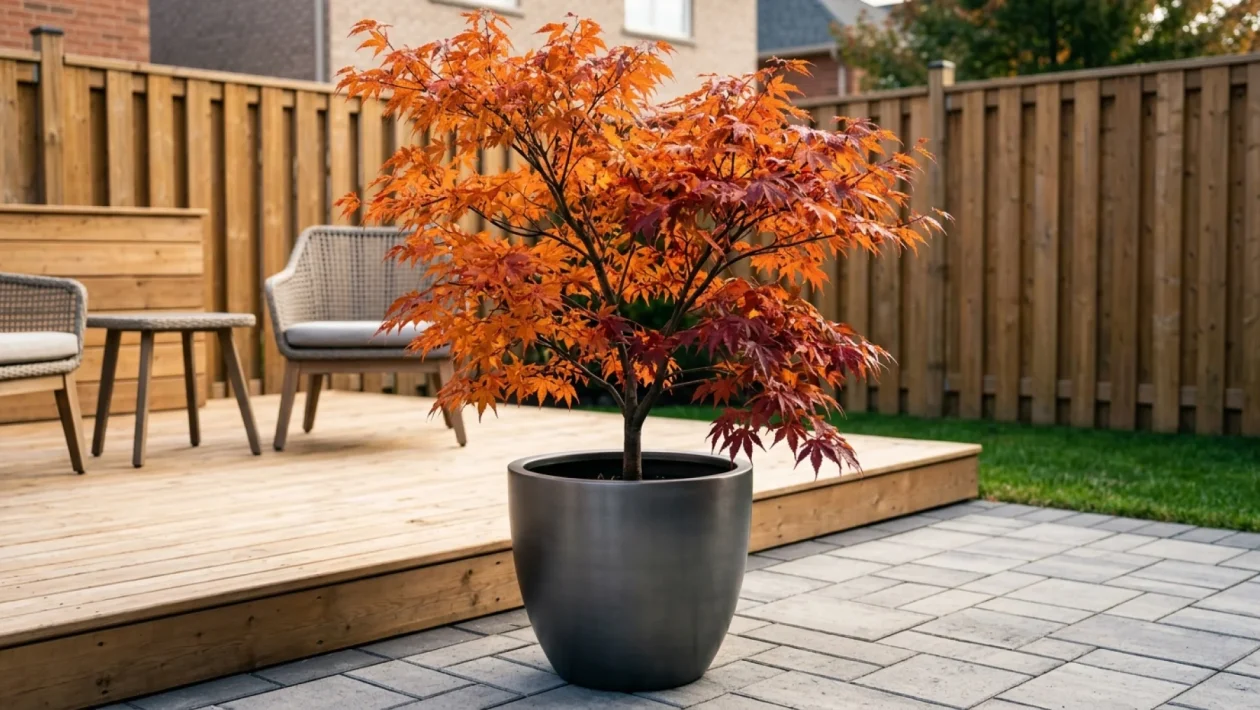
You want a backyard oasis, not an excavation site. Too many homeowners plant a cute little sapling near their deck, only to watch it turn into an overgrown monster that rips up the interlocking stone and strangles the plumbing. We’re putting a stop to that right now. If you are working with limited square footage, you need vegetation that actually respects your property line. The ultimate solution lies in choosing specific, non-invasive species designed for tight urban living.
Small Patio Trees
Having a tiny yard doesn’t mean you have to settle for a sterile, concrete box. Small patio trees are the ultimate landscaping cheat code for maximizing tight spaces. They bring vital shade, natural privacy, and serious curb appeal without overwhelming your limited square footage.
The trick is sourcing the right genetics before you dig a single hole. I always tell folks browsing the garden center at places like Sheridan Nurseries or Home Depot Canada to read the plant tags incredibly carefully. You want a tree that acts like a polite guest, not a hostile invader.
3 Cold-Resistant Varieties
Let’s talk about survival. We need trees that can take a beating from Mother Nature and still look incredible. First up is the Crape Myrtle. Known for explosive pink, white, and purple blooms, newer cold-hardy cultivars bring serious color up north while keeping a very tight, manageable footprint.
Next is the legendary Japanese Maple. This is your absolute showstopper. Its delicate leaves transition into blazing reds and fiery oranges in the fall, making it a spectacular focal point that easily survives harsh winters with minimal fuss.
Finally, look into the Dwarf Olive tree. It brings a sleek, Mediterranean aesthetic to your modern patio. It is highly drought-tolerant and handles wind like a champ. If you live in a deep-freeze zone, simply keep it in a heavy-duty planter and slide it into the garage during the most brutal winter weeks.
Medium-Sized Growth Habits
You need a tree that naturally hits the brakes before it crashes into your eavestroughs. Medium-sized varieties are specifically cultivated to reach a highly manageable ceiling. This means you will not be spending your precious weekends perched on a wobbly ladder with a pole saw.
Low maintenance is the name of the game here. Check out this quick breakdown of what to expect from our top three patio favorites:
| Tree Species | Best Feature |
|---|---|
| Crape Myrtle | Massive summer blooms, low debris |
| Japanese Maple | Incredible autumn color, elegant shape |
| Dwarf Olive | Drought tolerant, wind resistant |
That Won’t Destroy Your Yard
Aggressive roots are the silent killers of property value. In fact, repairing foundation, pipe, and patio damage caused by invasive tree roots costs North American homeowners a staggering average of $4,500. The three trees we’ve highlighted have compact, fibrous root systems that won’t wage a subterranean war on your plumbing.
“The single biggest mistake homeowners make is ignoring the mature spread of a root system. Choosing a compact variety with a fibrous root base is the absolute best way to protect your hardscaping long-term.” – Dave MacLeod, Master Landscaper
To guarantee your interlocking brick or stamped concrete stays perfectly level, follow this foolproof planting process for small patio trees:
- Measure the clearance: Ensure you have at least three feet of distance from any underground utility lines or foundation walls.
- Dig the proper footprint: Dig a hole twice as wide as the root ball, but exactly the same depth. Never plant too deep.
- Install a root barrier: For extra peace of mind near stonework, drop a high-density plastic root barrier into the side of the hole closest to the patio.
- Backfill and soak: Fill the hole with a mix of native soil and rich compost, then water deeply to eliminate hidden air pockets.
Frequently Asked Questions
Can I keep these trees in pots year-round?
Absolutely. The Japanese Maple and Dwarf Olive actually thrive in large containers. Just make sure the pot has excellent drainage holes and is made of a frost-resistant material like thick fiberglass or high-density resin to prevent cracking during winter thaws.
How much sun do these compact trees actually need?
It completely varies by species. Crape Myrtles and Dwarf Olives want full, baking sun to perform their best and produce blooms. Japanese Maples, however, strongly prefer dappled light or morning sun, as harsh afternoon rays will quickly scorch their delicate foliage.
🤝 Landscaping a small space doesn’t have to be a stressful, expensive guessing game. By choosing the right compact species, you get all the lush backyard beauty without the structural headaches.
💡 Start small, think long-term. Grab a solid planter, pick a spot with the right sunlight, and enjoy building your new personal outdoor retreat.
📱 Share your thoughts in the comments below! Have you tried growing a Japanese Maple on your deck, or are you totally on team Crape Myrtle?
👇 Good luck with your spring planting upgrades, and I’ll catch you guys in the next project breakdown!