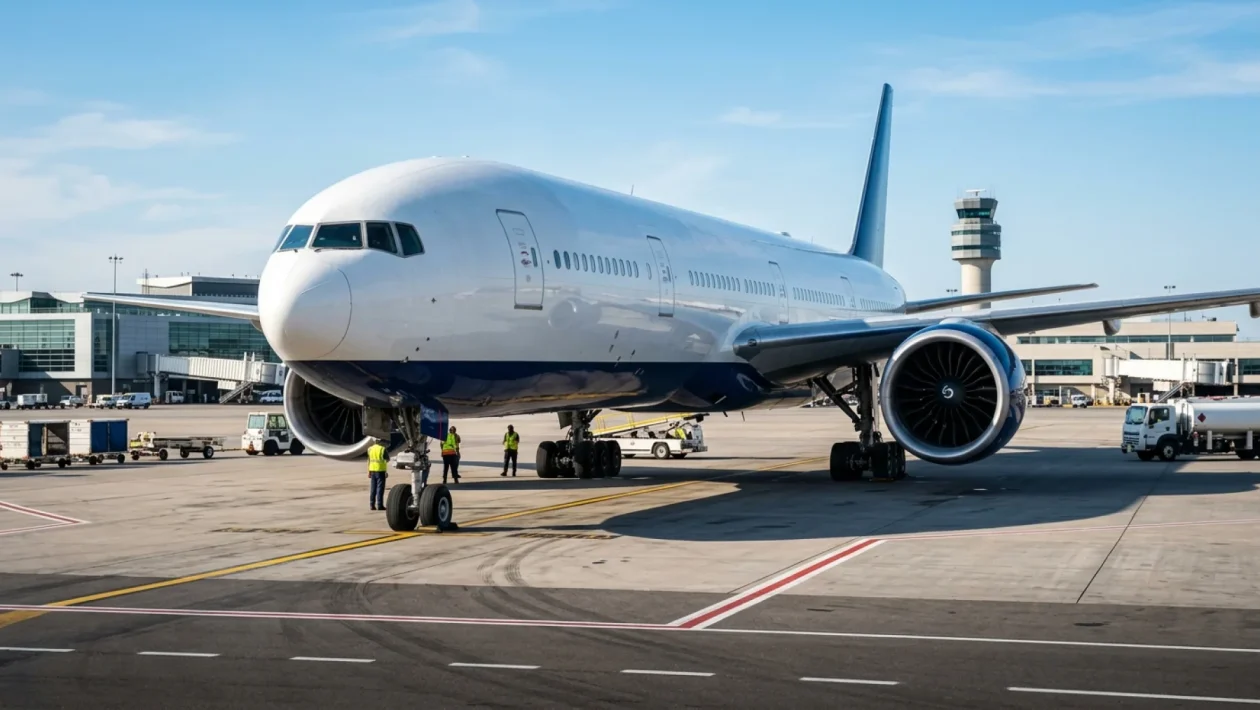
Imagine cruising at 35,000 feet, sipping lukewarm coffee, completely unaware that US authorities have just slammed the airspace door shut on your flight.
That is exactly what happened to passengers on Air France Flight 378 heading to Detroit this May.
Because of a single passenger and sweeping new Ebola travel rules, the US Department of Homeland Security forced the massive jet to pull a mid-air U-turn and touch down in Montreal.
Here is exactly how one missed screening triggers an international aviation scramble, and what you need to know before your next cross-border flight.
Ebola Travel Rules: The New Border Reality For 2026
We are living in an era where global health dictates aviation traffic.
To combat the rare Bundibugyo strain of Ebola, the US Centers for Disease Control (CDC) quietly rolled out a massive travel net.
If you hold a non-US passport and have recently touched ground in the Democratic Republic of the Congo, Uganda, or South Sudan, you are flagged.
You cannot just breeze through standard customs in Detroit or Chicago anymore.
Instead, these travelers are legally required to land at Washington Dulles International Airport, the designated fortress equipped with specialized health screening teams.
| Traveler Category | 2026 U.S. Entry Protocol |
|---|---|
| Standard International Arrivals | Standard CBP clearance at any US port of entry. |
| Recent Travel to DRC, Uganda, South Sudan | Mandatory routing to Washington Dulles for CDC screening. |
Why US Border Patrol Stepped In Mid-Air
Aviation security does not wait for wheels down.
When the Air France manifest was transmitted to US Customs and Border Protection (CBP) mid-flight, alarms went off.
A passenger from the Congo had boarded the Detroit-bound flight in Paris, completely bypassing the Washington Dulles requirement.
It is a stark reminder of a brutal aviation reality: a single international flight diversion can cost an airline upwards of $100,000 in fuel, ground logistics, and cascading delays.
Detroit did not have the CDC quarantine setup, so the US federal government instantly revoked the aircraft’s clearance to enter American skies.
Forced An Air France Jet Into Montreal: The Canadian Safety Net
When the US shuts its doors, Canada is almost always the backup plan.
Montreal’s Pierre Elliott Trudeau International Airport acts as a massive strategic overflow valve for North American airspace.
Once Flight 378 touched down in Montreal, it wasn’t a chaotic medical emergency.
In fact, the airline was quick to note there was zero medical panic onboard.
It was a pure regulatory intercept handled with clinical precision by the Public Health Agency of Canada.
Just like when Air Canada or WestJet have to divert due to mechanical faults, the ground teams isolate the aircraft, assess the risk, and extract the flagged individual.
How Airspace Diverts Work (When Things Go Sideways)
Diverting a commercial airliner is an incredibly complex mechanical ballet.
Here is the exact playbook air traffic control uses when a flight loses its border clearance:
- Manifest Flag: Border agencies scan passenger lists mid-flight and detect a strict regulatory violation.
- Airspace Denial: Air Traffic Control (ATC) immediately contacts the cockpit, revoking clearance to the original destination.
- Alternative Routing: Pilots calculate fuel reserves and coordinate with ATC to find the nearest equipped international airport.
- Ground Isolation: The aircraft lands and parks on a remote tarmac, away from the main terminal, awaiting local health and border officials.
“When a public health directive overrides a flight plan, the cockpit becomes secondary to border security. The aircraft isn’t landing where it wants; it’s landing where it’s told to.” – Capt. David Henderson, former commercial pilot and aviation consultant.
Frequently Asked Questions
Was the diverted passenger actually sick?
No. A Canadian quarantine officer assessed the traveler in Montreal and confirmed they were completely asymptomatic. The diversion was strictly a regulatory enforcement, not an active medical emergency.
What happened to the remaining passengers?
After the flagged passenger was removed and documented, the flight was cleared by Canadian authorities. The aircraft refueled and safely landed in Detroit just three hours behind schedule.
Are my upcoming flights at risk of similar diversions?
Only if your flight manifest contains a critical error involving high-watch security or health zones. Airlines usually catch this at the departure gate, making mid-air diversions rare but highly disruptive when they do occur.
🤝 It is wild how connected the world really is, where a paperwork oversight in Paris causes a massive jet to unexpectedly park in Montreal.
💡 The next time you are complaining about a delayed boarding process, remember that gate agents are actively preventing these massive mid-air logistical nightmares.
📱 I would love to hear your craziest travel stories. Have you ever been on a flight that was forced to divert at the last minute?
👇 Share your thoughts below, and safe travels out there this spring!