Getting into a Grand Slam main draw is like trying to crack a bank vault with a toothpick. It is a brutal, unforgiving grind where one bad bounce on the crushed red brick can send you packing. Laval’s own Alexis Galarneau just lived that nightmare, falling agonizingly short in the final round of qualifying for Roland Garros 2026. But before you hit the panic button on Canadian tennis this spring, take a breath. While Galarneau’s exit stings, our main draw roster is absolutely stacked and ready for war in Paris.
Roland Garros 2026: Galarneau’s Heartbreak
If you’ve ever poured your absolute soul into a project only to watch it crumble at the finish line, you know exactly how the 27-year-old Quebecer is feeling right now. Galarneau fought tooth and nail in the third round of qualifying but ultimately dropped a 5-7, 6-2, 7-5 thriller to Italy’s 19-year-old phenom, Federico Cina.
The margins in professional tennis are razor-thin. Cina managed to convert five break points during the match, while Galarneau only capitalized on three. That tiny differential is all it takes to separate a massive payday from a tough flight home.
Here is a harsh reality check: historically, the player who claims the grueling first set in a men’s clay-court qualifier goes on to win the match nearly 78% of the time. When Galarneau dropped that tight 7-5 opener, he was instantly fighting an uphill battle against both his opponent and the statistics.
“The final round of Grand Slam qualifying is arguably the most pressure-packed match in all of tennis. You aren’t just playing for ranking points; you are literally playing for your livelihood and career milestones.”
Canada’s Elite Draw
Despite the tough break in the qualifiers, the Canadian maple leaf will be flying high and proud in Paris. Five of our heavy hitters bypassed the qualifying gauntlet completely and are locked into the main draw.
Whether they are stringing up fresh rackets or dialing in their footwork, these Canucks are primed for action. If you plan on catching the action, you’ll want to fire up your TSN app this Sunday. The first-round matchups are already set, and they are guaranteed blockbusters.
| Canadian Player (Seed) | First Round Opponent |
|---|---|
| Felix Auger-Aliassime (4th) | Daniel Altmaier (GER) |
| Gabriel Diallo | James Duckworth (AUS) |
| Denis Shapovalov | Qualifier / Lucky Loser |
| Victoria Mboko (9th) | Nikola Bartunkova (CZE) |
| Leylah Fernandez (24th) | Alycia Parks (USA) |
Surviving The Clay
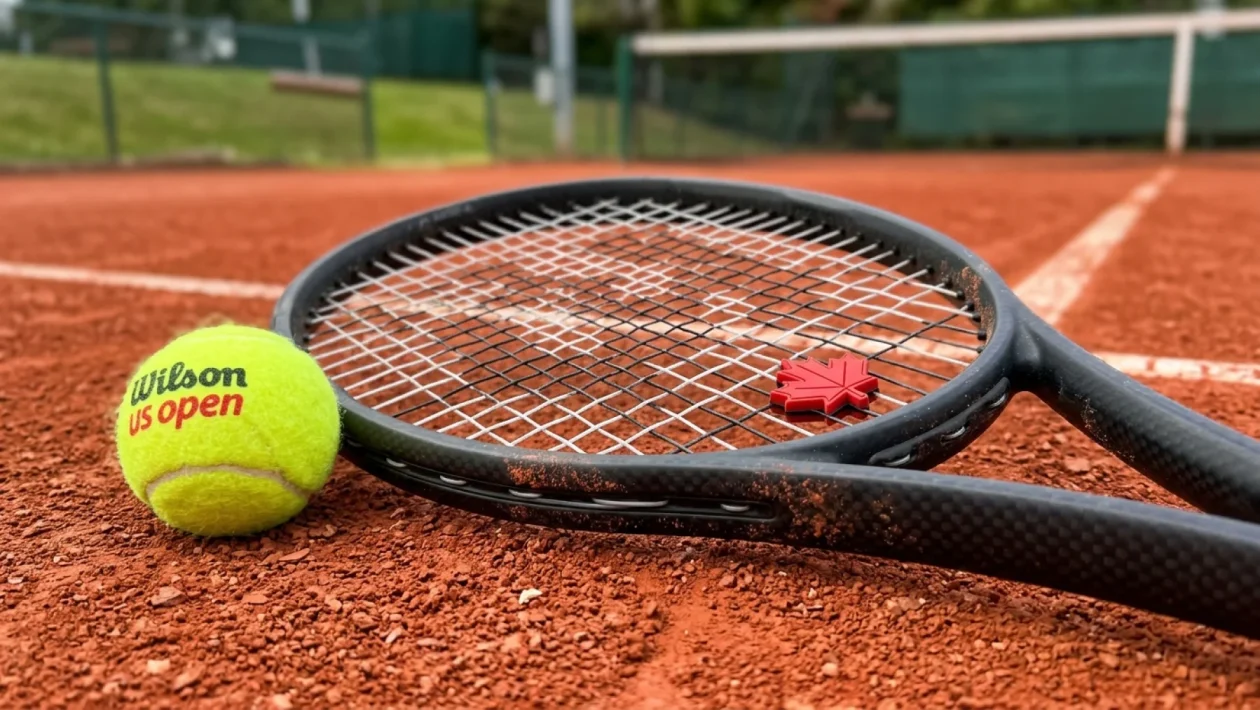
You cannot just walk onto a European clay court and play your standard North American hard-court game. The crushed red brick demands a completely different blueprint for success.
Players who are used to blasting flat winners have to re-engineer their mechanics overnight. It is like taking a high-speed sports car and trying to drive it through thick mud—you need a different set of tires. Here is the ultimate playbook for surviving the dirt:
- Master the Slide: On hard courts, you plant and push. On clay, you must slide into your defensive shots to maintain balance while hitting.
- Maximize Heavy Topspin: The clay grips the ball, making it bounce incredibly high. Players using a Babolat Pure Aero or similar spin-friendly setups will rip the ball to push their opponents deep behind the baseline.
- Build Ultimate Endurance: Rallies on clay last 30% to 40% longer than on grass or hard courts. If your cardio isn’t completely bulletproof, the red dirt will expose you by the third set.
Frequently Asked Questions
Why is the final round of Grand Slam qualifying so important?
Winning the third round of qualifying secures a spot in the main draw of a Grand Slam. This guarantees a massive boost in ranking points and a minimum payout of tens of thousands of dollars, which is vital for funding a pro tennis career.
Who is the top-ranked Canadian at the 2026 French Open?
On the men’s side, Montreal’s Felix Auger-Aliassime enters the tournament as the powerhouse 4th seed. On the women’s side, Burlington’s Victoria Mboko holds the impressive 9th seed.
How does clay court tennis differ from hard court?
Clay courts slow down the speed of the ball and produce a much higher bounce. This neutralizes big servers and rewards players with immense stamina, heavy topspin, and superior tactical patience.
🎾 Let’s wrap this up! The beauty of Grand Slam tennis is that it offers zero guarantees, making the triumphs that much sweeter.
🍁 While we feel for Alexis Galarneau, the stage is set for players like Auger-Aliassime and Fernandez to make a deep, unforgettable run this spring.
📺 Make sure you block off some time on Sunday to catch the opening rounds and support our homegrown talent on the world stage.
👇 Share your thoughts in the comments below—who do you think will make the deepest run in Paris this year? Good luck to all our Canadians!