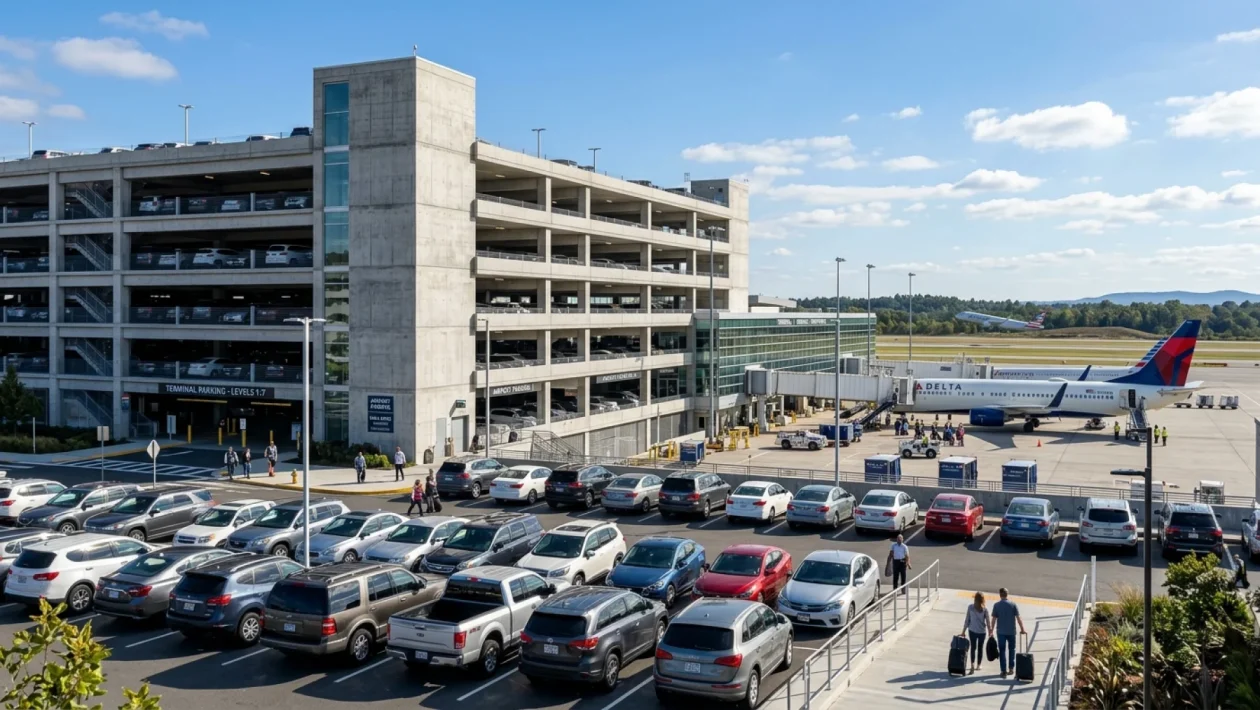
In a significant pivot for Newfoundland and Labrador’s primary aviation hub, the St. John’s Airport Authority has officially paused its highly anticipated arrivals expansion to address a more pressing logistical crisis: parking capacity. Despite recently adding hundreds of new surface-level spots, passenger demand heading into the busy Spring 2026 travel season has vastly outpaced the available infrastructure. As a result, airport planners are now actively fast-tracking a multi-level parking garage to accommodate the surging volume of domestic and international travelers, fundamentally reshaping the immediate future of infrastructure development at YYT.
St. John’s Airport: Parking Timeline and Expansion Plans
For travelers relying on the St. John’s Airport, the sudden shift in development priorities directly answers a persistent frustration. The promise of a modernized arrivals terminal has been placed on the back burner as the St. John’s International Airport Authority (SJIAA) tackles the immediate reality of overwhelmed surface parking lots. The recent addition of hundreds of ground-level parking spaces served only as a temporary bandage. As air traffic volumes rebound fiercely across Atlantic Canada, the existing footprint simply cannot support the daily influx of vehicles.
To understand how this infrastructure pivot will unfold, here is the verified timeline and strategic action plan for the upcoming parking facility:
- Late 2024 to 2025: A sharp post-pandemic resurgence in regional travel leads to consistent capacity warnings in the long-term parking sectors at YYT.
- Early 2026: The airport introduces several hundred newly paved surface spots. However, operational audits quickly reveal these are absorbed almost instantly during peak morning departure banks.
- May 2026: Planners officially pause the multi-million-dollar expansion of the arrivals hall, citing that parking has become the critical bottleneck for passenger experience.
- Late 2026 (Projected): The airport authority is expected to release the tender for the architectural design and structural engineering of a multi-story parking garage.
- 2027 and Beyond: Construction is anticipated to begin, focusing on minimizing disruptions to current traffic flows while establishing a vertical parking solution capable of weathering harsh Newfoundland winters.
Why the Arrivals Expansion Was Paused
The decision to halt the arrivals terminal expansion is rooted in hard data and regional realities. While a spacious, modernized baggage claim and greeting area looks fantastic on paper, it does little good if passengers cannot safely and legally leave their vehicles before their flights. In the aviation industry, parking is not merely an amenity; it is a vital operational necessity and a foundational pillar of non-aeronautical revenue.
Building a vertical structure presents unique advantages tailored specifically to the climate of Newfoundland and Labrador. Surface lots in St. John’s require immense maintenance budgets. Snow clearing during heavy North Atlantic winter storms reduces available capacity, as snowbanks inevitably swallow vital parking spaces. A multi-level parking garage mitigates this issue, providing covered areas that reduce snow removal costs, protect travelers’ vehicles from the elements, and drastically shrink the physical footprint required to park thousands of cars.
“While enhancing the arrivals experience remains a long-term strategic goal, our immediate operational data shows that passengers are struggling to find parking during peak travel corridors. We must pivot our capital resources to where the immediate operational bottleneck lies to ensure regional connectivity is not hindered.”
Furthermore, parking revenues are historically the most robust financial engines for regional airports. By prioritizing the parking garage, the St. John’s Airport is effectively investing in an asset that will generate the sustainable, long-term capital required to eventually fund the paused arrivals terminal without passing exorbitant costs onto the airlines.
The Local Impact on Newfoundland Travelers
The immediate reaction across local social media and among frequent flyers on the Avalon Peninsula has been a mix of relief and logistical concern. For residents of Mount Pearl, Conception Bay South, and rural communities who must drive hours to reach the airport, guaranteed parking is essential. Unlike major mainland hubs like Toronto Pearson or Vancouver International, St. John’s lacks a massive, interconnected light-rail transit system. Driving personal vehicles or taking a taxi are the primary modes of airport access.
The transition period toward building the new garage will likely introduce temporary friction. Here is how the shift is impacting the local travel ecosystem in May 2026:
- Increased Competition for Spots: Until the new garage is erected, travelers are advised to arrive significantly earlier or pre-book spots to avoid being turned away during peak morning flights to Halifax or Toronto.
- Rise in Rideshare Utilization: The scarcity of long-term parking has driven a localized spike in the use of rideshare applications and traditional taxi services, creating new traffic patterns at the departure curb.
- Off-Site Parking Demand: Private enterprise may step in, with local businesses near the airport boundary potentially offering unofficial park-and-ride shuttle services to capitalize on the overflow.
- Economic Spin-off: The upcoming construction of a massive concrete and steel parking structure will inject significant capital into the local construction sector, providing years of employment for local tradespeople.
Broader Aviation Trends in Atlantic Canada
The situation at the St. John’s Airport is reflective of a wider logistical puzzle currently unfolding across Atlantic Canada’s transportation sector. As regional economies stabilize, provincial airports are being forced to rethink their physical limitations. For instance, while officials at the Charlottetown Airport in Prince Edward Island recently noted a slight dip in 2025 passenger numbers, they remain highly optimistic about a rebound, facing similar questions about infrastructure scaling. Likewise, the persistent calls by the opposition in the P.E.I. government regarding the lack of a comprehensive Maritime-wide air service highlight the intense pressure on existing hubs like YYT to operate flawlessly.
As St. John’s serves as the vital gateway to the province—handling everyone from rotational offshore oil workers to international tourists exploring the rugged coastlines—the efficiency of the airport dictates the economic flow of the region. A parking shortage is not just a minor inconvenience; it is an economic choke point.
What to Expect Next at YYT Airport
As we move deeper into the Spring 2026 travel season, passengers departing from St. John’s must practice proactive travel planning. The St. John’s International Airport Authority is expected to launch a comprehensive public awareness campaign detailing temporary parking zones and drop-off protocols to ease the strain on the existing surface lots.
In the long term, the construction of the parking garage will modernize the gateway to Newfoundland and Labrador. It represents a mature step in urban planning, acknowledging that while sprawling surface lots are cheaper to build initially, vertical density is the only sustainable way forward for an island constrained by rocky geography and severe weather. The paused arrivals expansion will undoubtedly see the light of day in the future, but for now, the absolute priority is ensuring that every traveler has a secure place to park their car before taking to the skies.