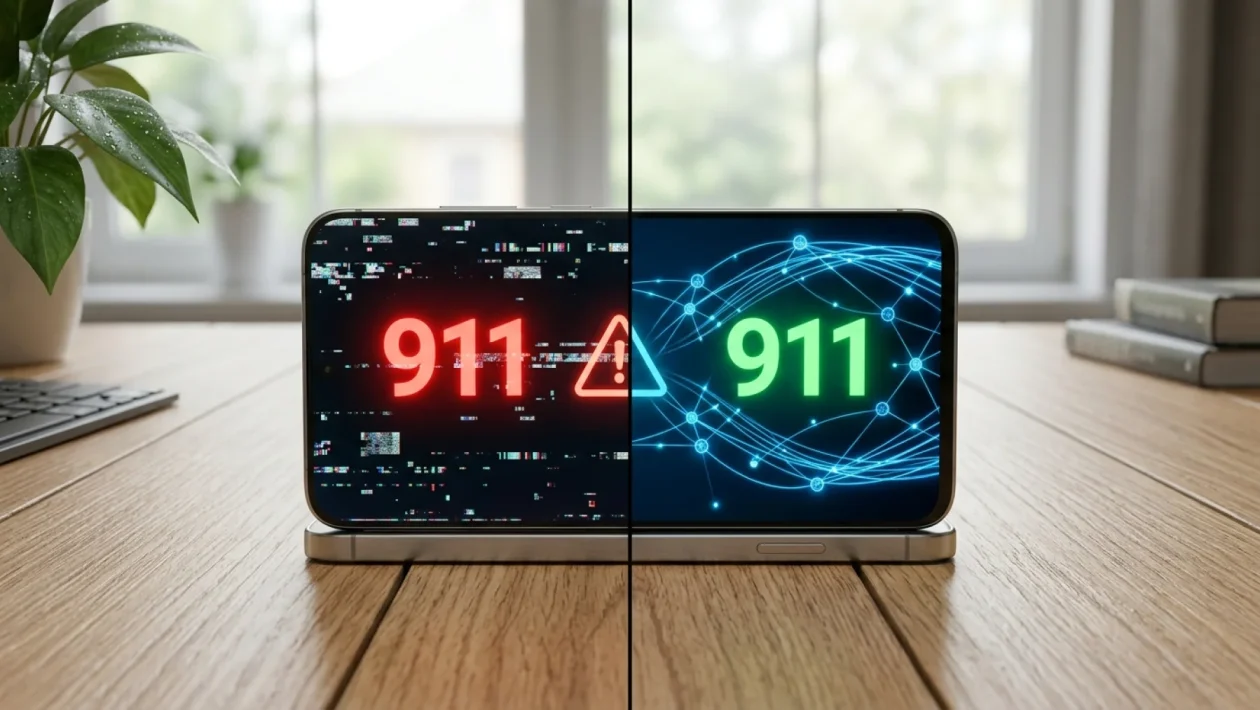
Imagine dialing 911 in a blind panic, only to be answered by a dispatcher in a completely different city. That terrifying scenario became a reality for over 200 people in Canada’s largest city this week during a bizarre half-hour window. But before you lose sleep over our emergency response capabilities, you need to understand the hidden safety nets keeping our phone lines alive. We are going to break down exactly what caused this digital hiccup and how an impending, massive tech overhaul is set to bulletproof your lifeline to first responders.
Look, we all expect the system to be flawless. When you pick up the phone on the worst day of your life, you need an immediate answer. System reliability isn’t a luxury; it’s a matter of life and death.
Toronto 911 Glitch
Just before lunch on a Tuesday in May 2026, the Toronto Police Service (TPS) communications center experienced a sudden technical hurdle. Between 11:45 a.m. and 12:15 p.m., the system simply couldn’t route every incoming call to a local operator.
The system essentially bottlenecked. Just over 200 desperate calls hit a digital brick wall.
But the calls didn’t just ring out into the void. The local infrastructure recognized the failure immediately. Rather than dropping the connections, the network triggered an automatic override.
Why Emergency Calls Rerouted
This is where the magic of modern telecommunications comes into play. Major network providers like Bell and Rogers have built-in redundancies for precisely this kind of nightmare scenario.
If the primary switchboard goes dark, the system doesn’t just give up. It aggressively hunts for the next available emergency center. In this case, Peel Regional Police stepped up to the plate, catching the overflow of Toronto’s emergency traffic.
“When a primary emergency node experiences a localized failure, the network’s fail-safes immediately throw the calls to the nearest neighboring system. It’s a digital safety net that prevents a technical glitch from becoming a human tragedy.”
It’s actually incredible when you consider the sheer volume of data moving through the airwaves. A surprising hard fact: North American 911 dispatch centers process an estimated 240 million calls every single year, making these automated safety valves absolutely critical.
Here is exactly how the automatic rerouting process keeps you safe when local networks fail:
- Instant Detection: The central telecom hub registers a drop in server response time at the primary 911 center.
- Immediate Diversion: Incoming calls are instantaneously bounced to a pre-approved secondary agency (like a neighboring city’s police force).
- Triage and Transfer: The secondary dispatcher gathers the critical details and relays the incident back to the primary city’s active tactical units via secure radio channels.
- System Restoration: Once the technical issue is cleared, the telecom hub automatically reroutes traffic back to the primary center.
How Digital Upgrades Fix It
The root of these intermittent routing issues usually boils down to aging infrastructure. For decades, emergency services relied on traditional analog phone lines.
However, Toronto is aggressively pushing toward a Next-Generation 911 (NG911) digital network. By replacing old copper-wire tech with advanced cloud-based digital infrastructure, they are actively aiming to eliminate these blind spots.
They are even starting to utilize Artificial Intelligence to triage non-emergency calls, freeing up human dispatchers. Combined with a recent hiring blitz, Toronto police recently reported average wait times dropping to a staggering three seconds.
| Analog 911 Systems | Next-Gen Digital 911 |
|---|---|
| Prone to localized hardware failures and bottlenecks. | Cloud-based routing with infinite dynamic fail-safes. |
| Voice-only capabilities with limited location tracking. | Supports text, video, and pinpoint GPS data. |
Upgrading the backbone of an entire city’s emergency network isn’t cheap or easy, but it is the ultimate fix to ensure a dropped call never costs a life.
Frequently Asked Questions
Was anyone left without help during the outage?
No. While the calls were answered by an agency outside of Toronto, the established redundancies meant that every single call was received, processed, and relayed to local first responders.
Will my cell phone still connect to 911 if my specific carrier has an outage?
Yes. By law, any mobile phone must connect to 911 using any available network tower, regardless of whether you subscribe to that specific carrier or even have an active SIM card.
Is AI actually answering 911 calls now?
Not for life-or-death emergencies. AI is currently being tested and implemented primarily to handle non-emergency administrative lines, ensuring human dispatchers are kept entirely free for actual 911 emergencies.
🤝 We all rely on these unseen digital safety nets every single day, often without giving them a second thought.
💡 Upgrading to digital infrastructure is like replacing a leaky roof on your house; it’s a massive pain right now, but it’s going to keep you safe when the real storm hits.
📱 Share your thoughts on this infrastructure shift with your friends and family, because staying informed is the best way to stay prepared.
👇 Good luck out there, stay safe, and rest easy knowing that even when the machines hiccup, the backup plans are ready to catch you!