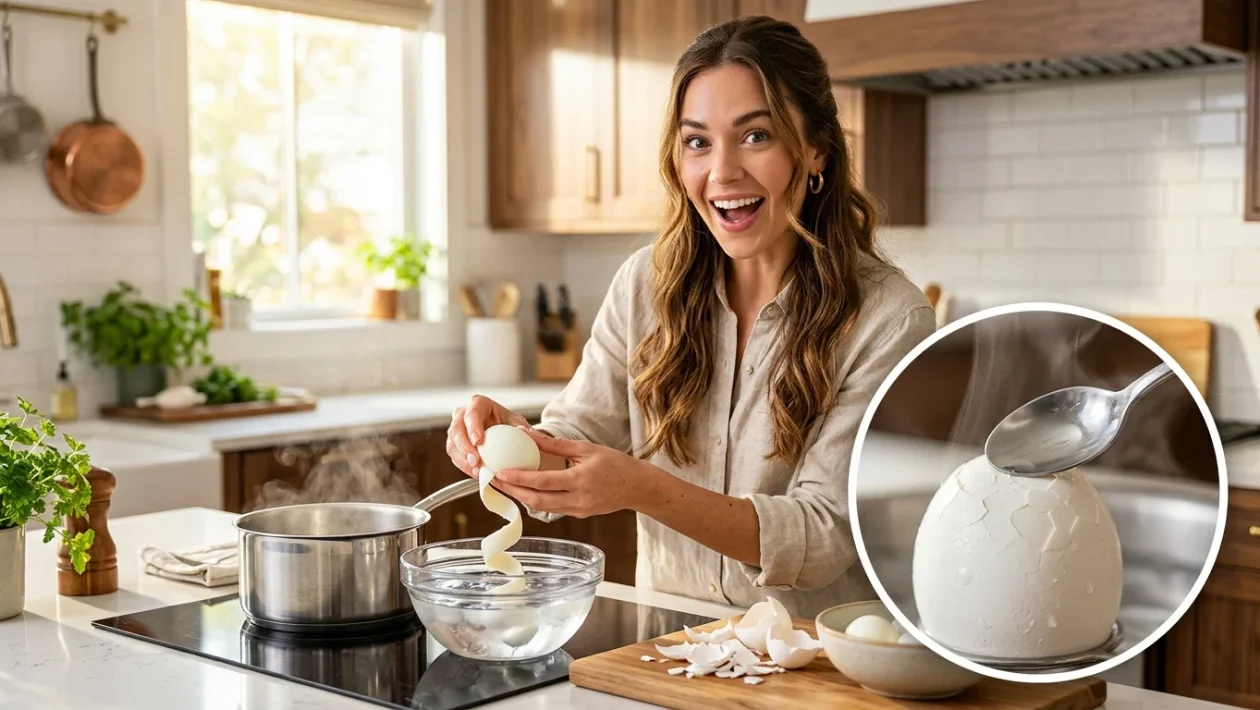
For over 30 years, food and travel journalist Jill Schildhouse battled a kitchen nuisance familiar to many: peeling hard-boiled eggs. Regardless of the tricks she tried, peeling remained a gamble. Tiny shards of shell clung stubbornly to the egg, taking unsightly chunks of white along with them.
The result was often a batch of lopsided deviled eggs or battered whites ultimately relegated to egg salad.
The Flawed Kitchen Hacks
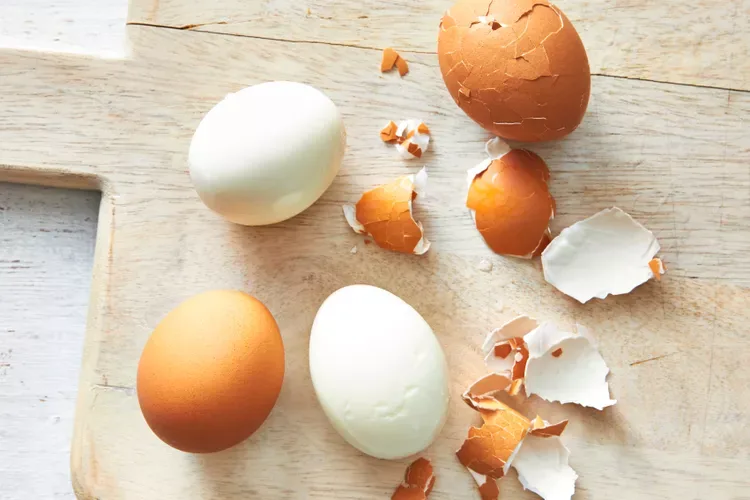
A cleanly peeled hard-boiled egg ready to be prepared for serving.
Internet hacks and old wives’ tales promise a perfect peel, but they rarely deliver consistent results. Schildhouse tested a gauntlet of popular methods to solve the problem.
- Boiling older eggs
- Adding vinegar to the water
- Adding baking soda to the pot
- Starting the eggs in cold water
- Peeling them under a running faucet
None of these techniques proved reliable. After extensive trial and error, Schildhouse discovered that the actual solution requires no additives or fancy gadgets.
The Hot Water Strategy
The foolproof method comes down to a precise two-step mechanical process, beginning with the water temperature.
Fill a pot with enough water to completely submerge the eggs and bring it to a rolling boil. Once the water bubbles rapidly, gently lower the eggs into the pot using a large spoon to prevent them from cracking on the bottom.
Boil the eggs for eight to 12 minutes. A shorter eight-minute boil yields a slightly jammy center perfect for salads or snacks, while a full 12 minutes guarantees the fully set yolk required for deviled eggs.
The Vital Crack and Chill
While the eggs cook, prepare a bowl of ice water deep enough to submerge them completely.
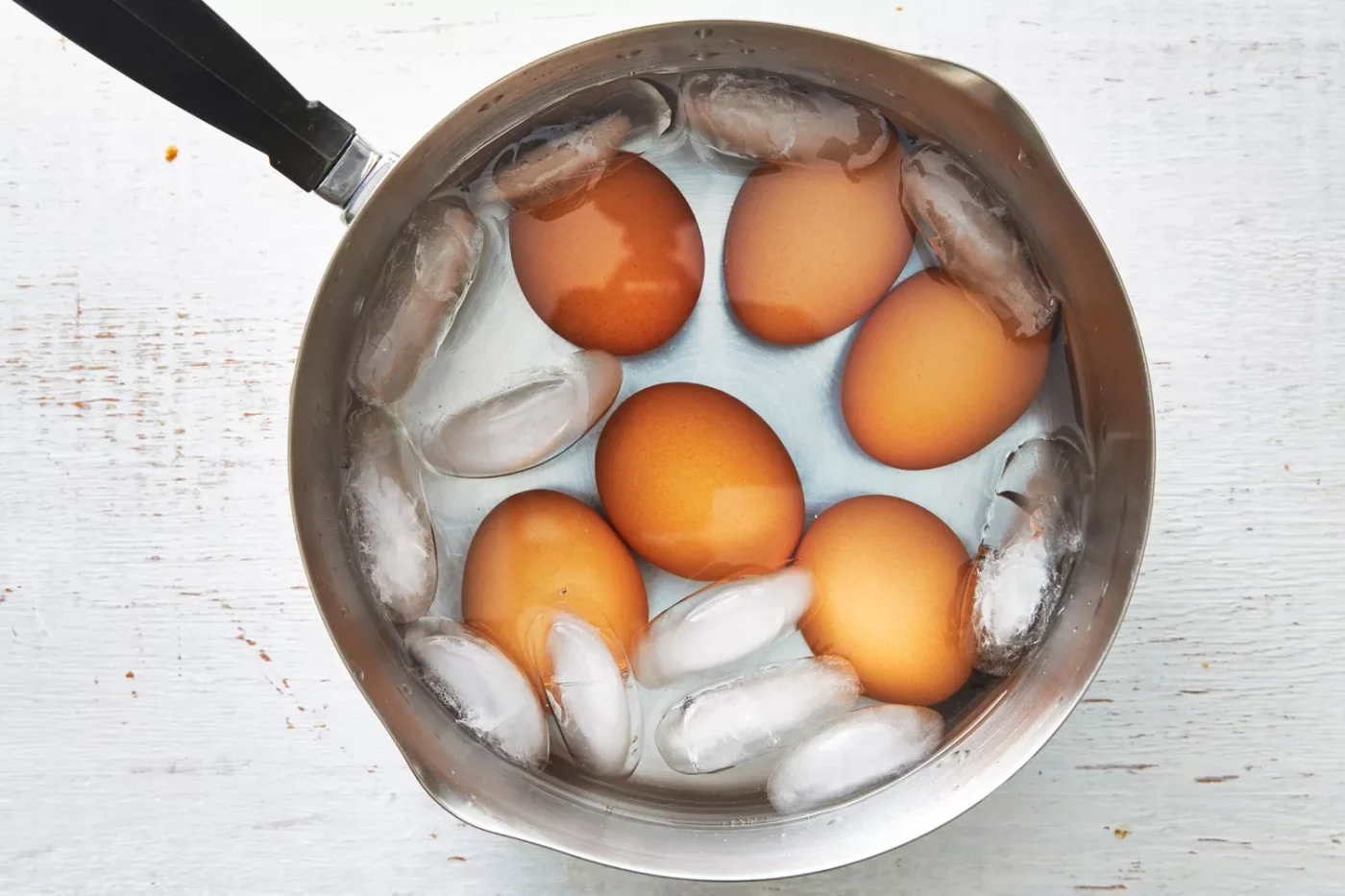
Freshly boiled eggs cooling rapidly in a bowl filled with cold water and ice cubes.
As soon as the timer sounds, pull the eggs out one by one. Before dropping an egg into the ice bath, give its base a firm tap with a small metal spoon.
You want to create a small crack in the shell without crushing the egg itself. This strategic fracture allows the ice water to seep between the egg white and the inner membrane.
Plop the cracked eggs into the ice bath and let them chill for three to five minutes. The sudden temperature drop combined with the water seepage forces the shell to release.
When you peel the egg, the shell typically slides off in just one or two long, satisfying strips. The whites remain perfectly smooth and intact, ensuring your holiday appetizers and weekly meal preps are always presentable.