The Hidden Purpose of the Handle Hole
Almost every frying pan features a hole at the end of its handle. Most people assume this cutout exists purely for storage, allowing cooks to hang their cookware on a wall or rack.
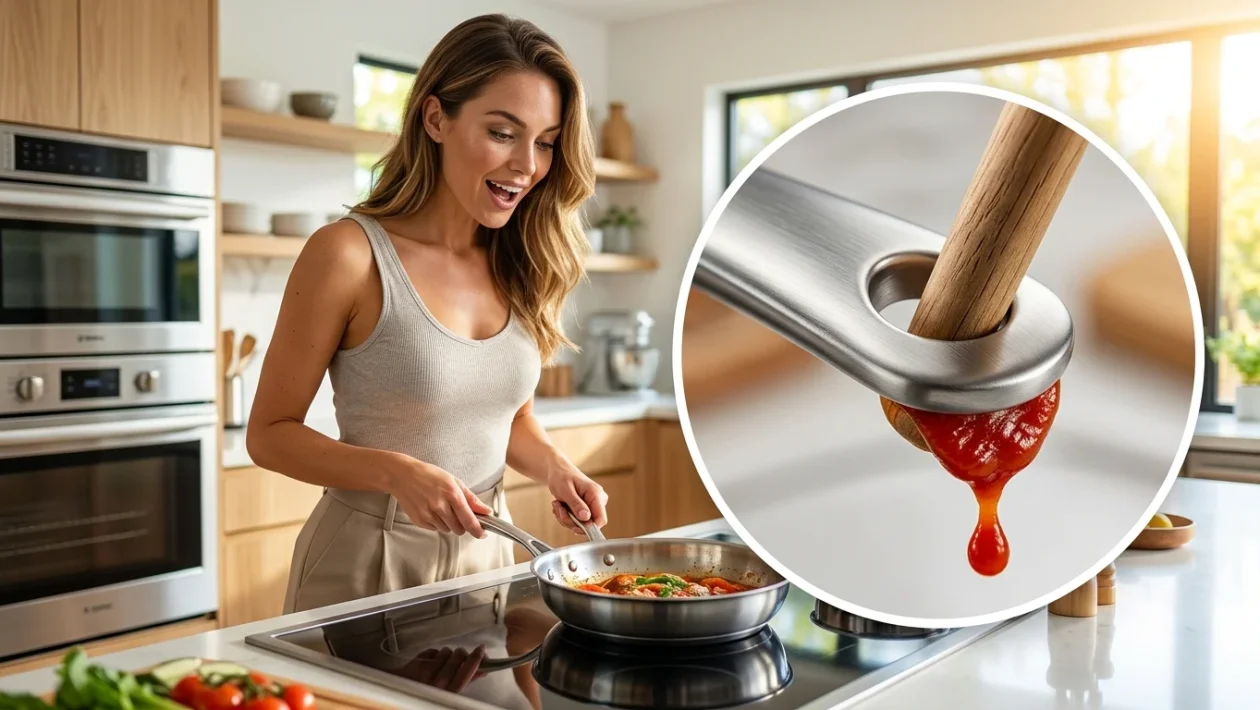
While hanging is a valid use, the hole was actually designed to act as a built-in utensil rest. Instead of placing a messy spatula or spoon on a clean counter, you can slide the handle of your utensil directly into the hole.
This holds the spoon at an angle over the pan. Any leftover sauce, oil, or food drips straight back into your meal instead of pooling on your stovetop.
This simple design trick keeps your kitchen surfaces clean and ensures your stirring spoon is always within reach. While some modern pans feature decorative holes that are too small for thick utensils, the hack works flawlessly on most standard cookware.
A Brief History of the Frying Pan
Cookware feels distinctly modern, but the frying pan has been around since Ancient Greece and Rome. Early models were forged from iron or bronze and used to fry meat, fish, and dough in olive oil.
During the Middle Ages, lower-income households relied on durable wrought-iron pans. Wealthier families, meanwhile, cooked with high-end copper pans.
The modern era of cooking arrived in the 20th century. The invention of Teflon in 1938 revolutionized the industry, paving the way for the non-stick surfaces that dominate today’s kitchens.
Quick Cookware Facts
When buying a new pan, weight is a critical factor. Heavier skillets distribute heat much more evenly than thin, lightweight alternatives, reducing hot spots.
Compatibility also matters. Pans used on induction stovetops require a magnetic base to function properly.
When it comes to maintenance, strict rules apply. You should never use metal scouring pads on non-stick coatings, as they will permanently ruin the finish.
Secret Features of Everyday Objects
The frying pan isn’t the only household item hiding a clever design trick. Manufacturers often build practical, stealthy features into everyday products.
- Spaghetti spoons: The large hole in the center of a pasta spoon isn’t just for draining water. It is sized to measure exactly one adult serving of dry spaghetti.
- Carton packaging: The small plastic folds and reliefs on standard milk and juice cartons help expel air. This design improves the liquid’s shelf life once opened.
- Denim jeans: The tiny pocket tucked inside the right front pocket dates back to the 19th century. Levi’s originally created it as a secure pouch to hold pocket watches.
- Pot lids: The tiny hole on glass and metal pot lids serves a dual safety purpose. It releases built-up steam and prevents boiling water from spilling over the sides.
- Bic pens: The small hole at the tip of a Bic pen cap is a deliberate safety measure. It acts as an emergency airway to prevent suffocation if someone accidentally swallows the cap.