Summer inevitably brings flies. They land on uncovered food and carry unwanted germs directly into the home.
Before reaching for a harsh chemical spray, consider a more natural line of defense. A handful of highly fragrant plants can quietly keep these pests at bay, and there is real chemistry behind why it works.
The Most Effective Fly-Repelling Herbs
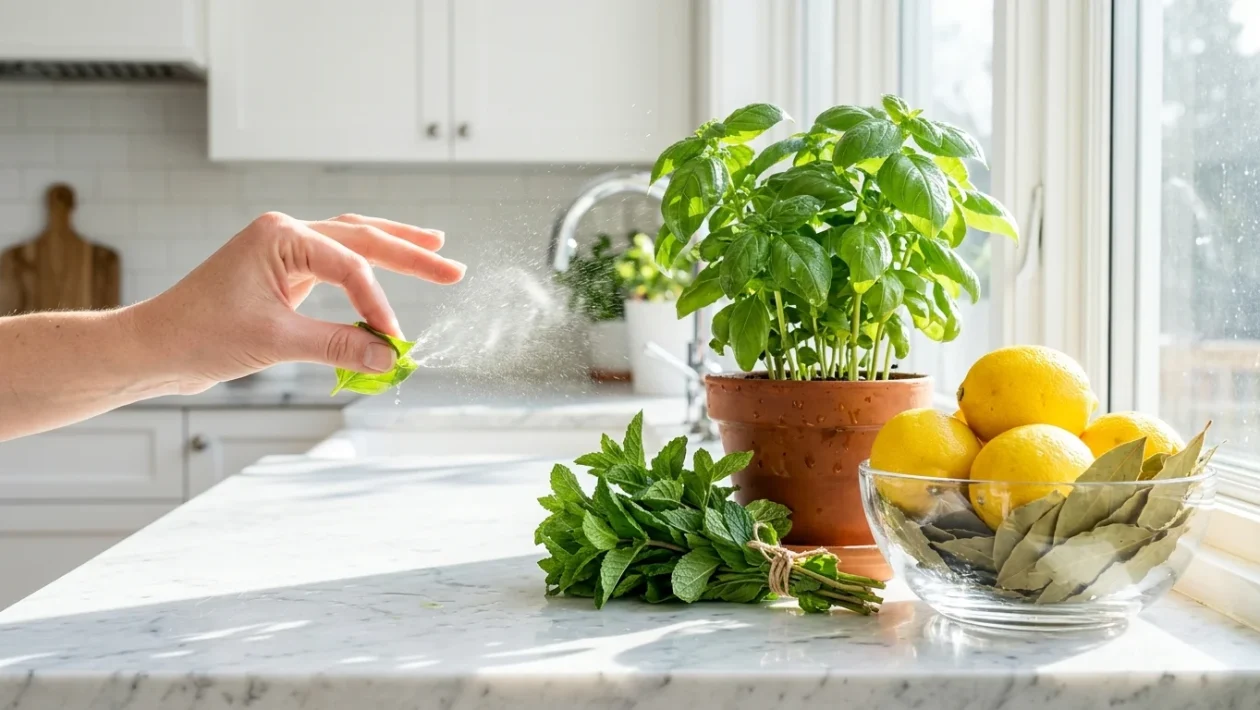
Basil tops the list as one of the most reliable natural fly deterrents. Keeping a potted basil plant on a kitchen windowsill or near an entryway utilizes its pungent aroma to ward off insects.
Other highly effective plants include mint, peppermint, lavender, rosemary, and marigolds. Even a dried bay leaf tucked into a fruit bowl or a jar of grains works exceptionally well.
A strategic mix of these different plants around your kitchen and patio provides much stronger protection than relying on a single variety.
The Chemistry of Plant Scents
This natural defense mechanism relies on volatile chemistry rather than traditional garden folklore. These herbs contain powerful aromatic compounds that overwhelm and confuse the scent receptors flies use to locate food.
Mint relies on menthol and menthone, sage utilizes thujone, and bay leaves produce eucalyptol. However, there is a practical nuance to keep in mind regarding their potency.
The strongest scientific evidence supports the use of concentrated essential oils, meaning a passive potted plant releases a much gentler scent. To maximize their effectiveness, gently brush or crush a few leaves near your seating area to bring the active oils to the surface.
Best Practices and Pet Safety
Keep expectations realistic: fragrant plants act as a helpful backup, not an impenetrable force field. The most effective defense remains a strictly clean kitchen.
Cover your fruit bowls, take out the trash promptly, and ensure all garbage bins are tightly sealed. Once the primary food sources are secured, the herbs can easily handle any straggling insects.
Pet owners must choose their plants carefully before bringing them indoors. While basil, mint, and lavender are perfectly safe for animals, some traditional fly-repelling plants like pennyroyal and rue are toxic if chewed.
The greatest advantage to this natural strategy is its dual purpose. The basil plant on your windowsill keeps the kitchen pest-free before eventually making its way into your fresh pesto.