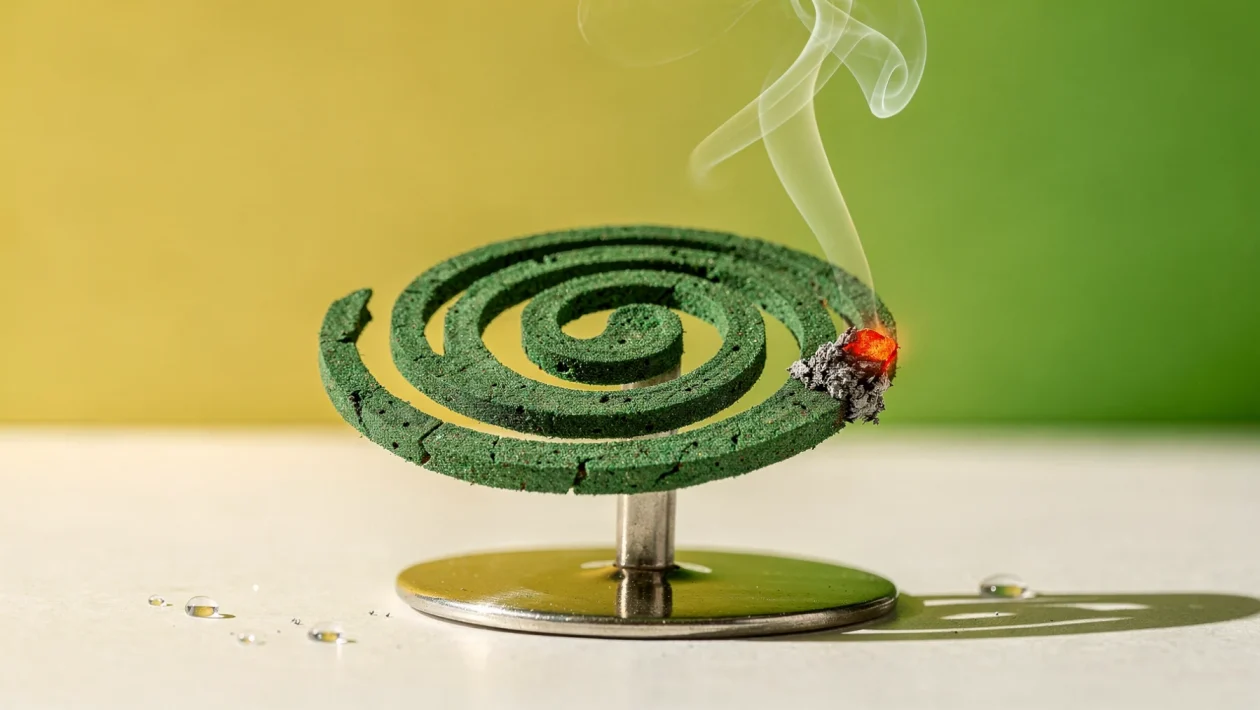
Summer brings soaring temperatures and relentless swarms of mosquitoes. To fight off the bites, millions of people rely on classic mosquito-repellent coils.
But behind their bug-zapping efficiency lies a significant health risk. Most users never consider the actual danger of the smoke filling their personal space.
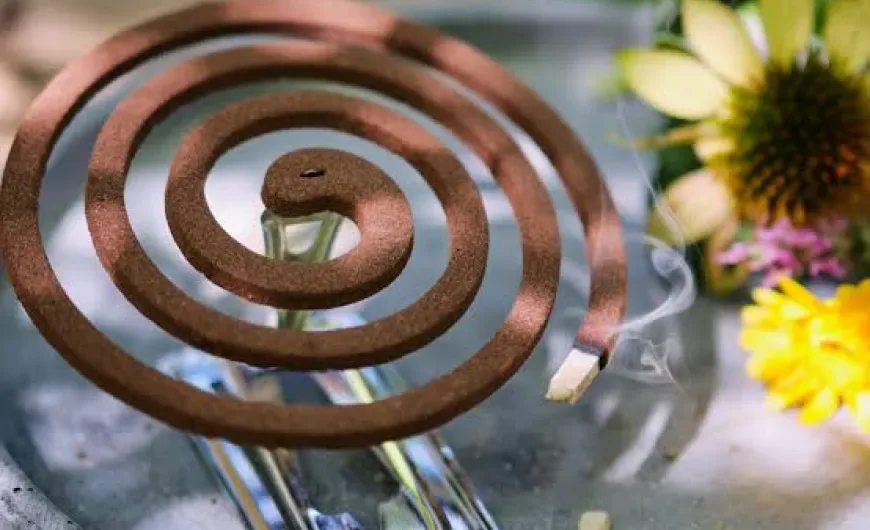
A traditional mosquito coil emitting smoke.
A “Natural” Ingredient with Heavy Side Effects
Most mosquito coils are manufactured using pyrethrum. This natural extract is derived from chrysanthemum flowers and serves as a highly effective, widely used insect repellent.
While generally considered safe when used exactly to spec, pyrethrum exposure is not harmless. Breathing the smoke can trigger eye and skin irritation, persistent headaches, nausea, and respiratory distress. If accidentally ingested, the consequences can be severe.
Worse Than a Pack of Cigarettes
The real alarm bells come from scientific studies analyzing the exact makeup of the smoke these coils produce. Research conducted in Malaysia revealed staggering data about the particulate matter released during combustion.
According to the study, burning a single mosquito coil emits the same amount of airborne particles as burning between 75 and 137 cigarettes.
In certain measurements, the resulting toxic burden on human lungs was equivalent to smoking nearly 100 cigarettes in a single sitting.
Hidden Carcinogens and Formaldehyde
The danger extends well beyond particulate matter. The smoke from these coils contains volatile organic compounds (VOCs), several of which are classified as known carcinogens.
The research highlighted that formaldehyde emissions from just one burning coil match the chemical output of roughly 51 cigarettes.
Keep the Smoke Outside
Health experts strongly warn against lighting mosquito coils in enclosed or poorly ventilated spaces. Using them indoors traps toxic pollutants, directly exposing your lungs to heavy concentrations of harmful chemicals.
If you choose to use them, health professionals and manufacturers are aligned on the safest method: burn them strictly outdoors. To minimize health risks, always ensure there is constant, heavy airflow to quickly disperse the smoke away from people.