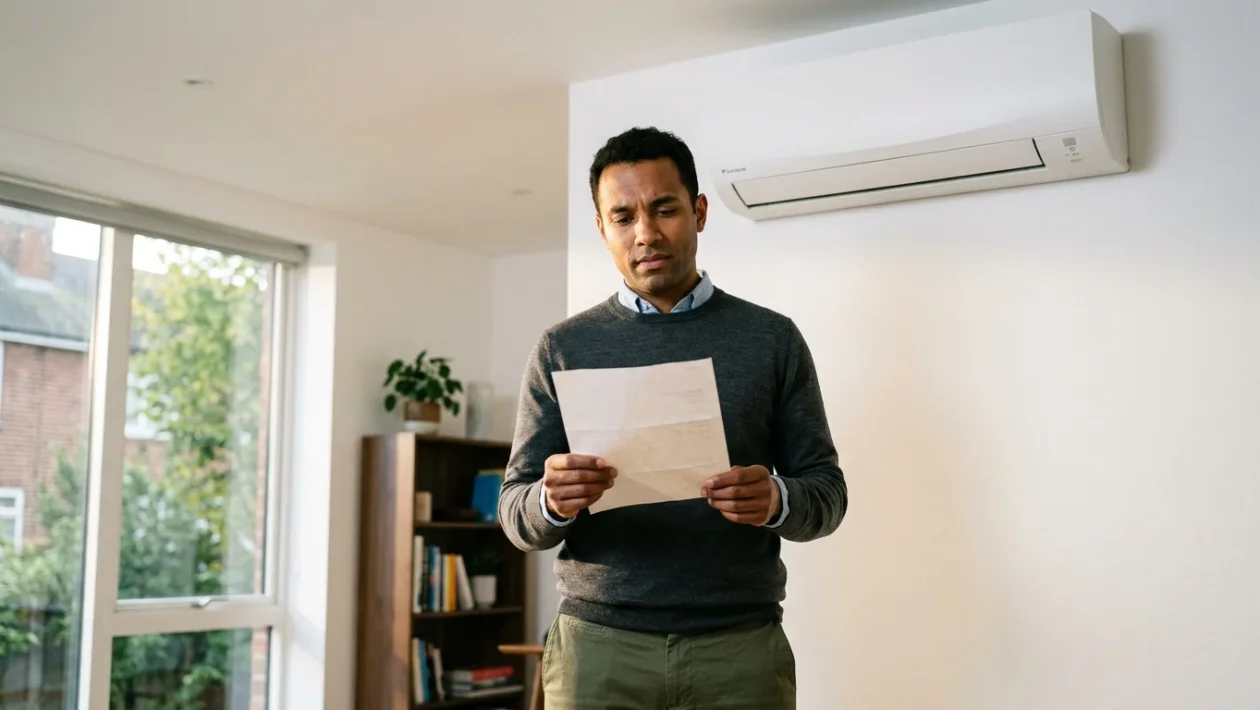
A modern white split air conditioning unit mounted on a home wall.
Summer heatwaves are driving up household expenses. Keeping homes cool during July and August now comes with a steep price tag.
As temperatures climb, electricity bills follow, hitting households that rely on air conditioning the hardest.
Energy experts warn that heavy usage, combined with poor home insulation, can severely inflate monthly expenses.
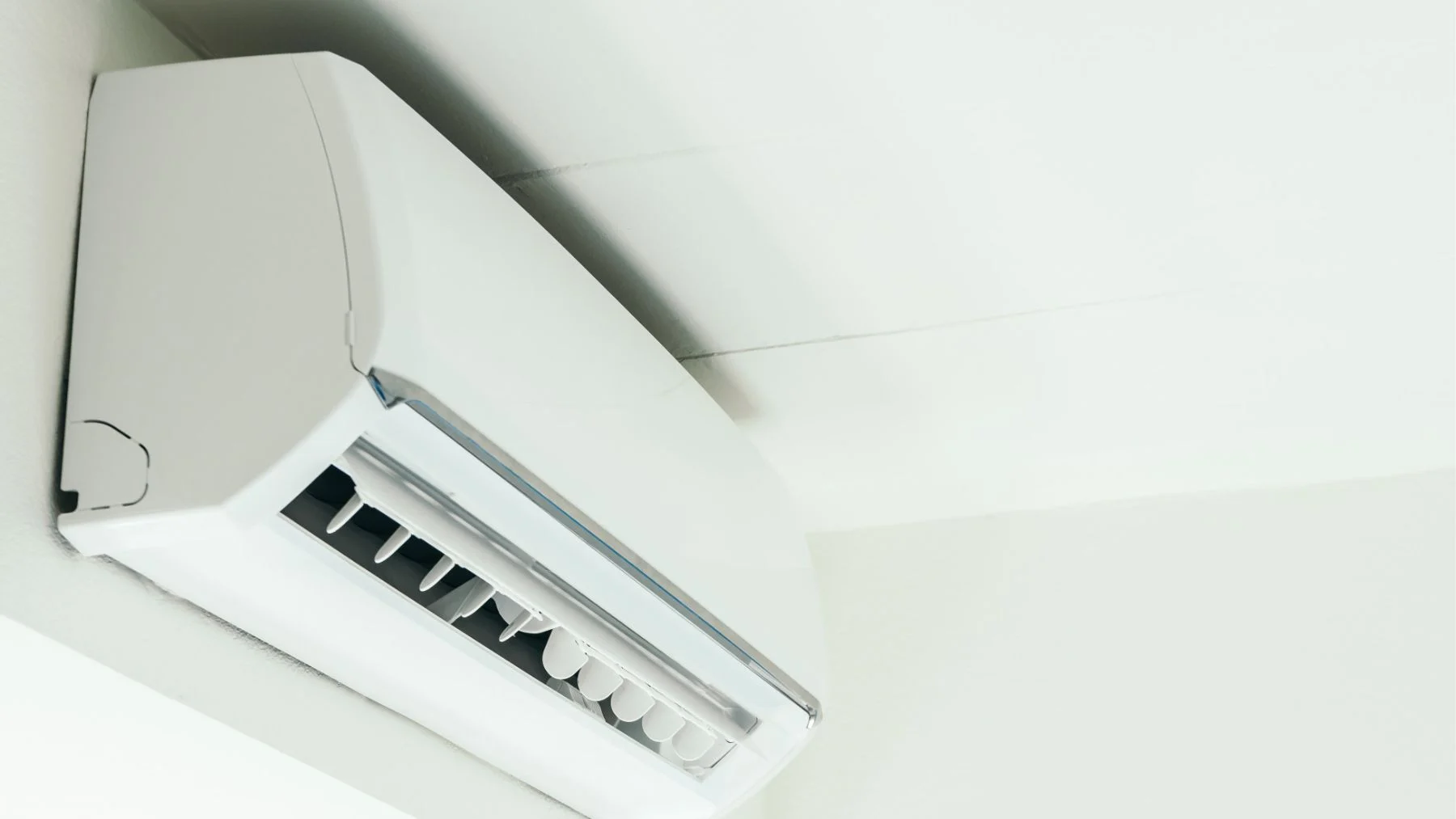
A modern white split air conditioning unit mounted on a home wall.
The €60 Monthly Spike
Scorching summer days and tropical nights—where temperatures refuse to drop below 25 degrees—force many to run their AC units non-stop just to sleep.
This climate shift has turned home cooling into a mandatory fixed expense. The Association of Air Conditioning Equipment Manufacturers (AFEC) reports a sustained increase in equipment sales driven by this exact need.
Running an air conditioner continuously takes a heavy financial toll. Energy efficiency expert Jesús Sahún told Aragón TV that using an AC unit for more than eight hours a day can increase a monthly electric bill by €50 to €60.
How to Slash Cooling Costs
Energy consumption depends on more than just usage hours. Equipment efficiency, programmed temperatures, and the physical state of the building all play a major role.
The Institute for the Diversification and Saving of Energy (IDAE) recommends simple passive cooling measures.
Lowering blinds during peak sunlight hours, using awnings, and installing thermal curtains block direct solar heat. These steps drastically lower the indoor temperature before the AC is even turned on.
Homeowners should also utilize early morning cross-ventilation. Opening opposite-facing windows at dawn flushes out stale heat, cooling walls and furniture naturally.
By using these methods, residents can delay turning on their air conditioning and reduce overall runtime.
Insulation and Long-Term Solutions
Trying to cool a drafty house is a massive waste of energy. If cold air escapes through poorly sealed windows and doors, the AC compressor must run longer, draining electricity.
The Organization of Consumers and Users (OCU) stresses that upgrading thermal insulation—like installing efficient windows and weather-stripping—lowers bills year-round.
For those seeking long-term upgrades, aerothermal technology provides superior energy performance for climate control.
Urban planning also plays a role in cooling efficiency. Experts advocate for planting more trees and expanding green zones to combat the urban heat island effect, which artificially raises neighborhood temperatures.
Finally, consumers should routinely review their electricity contracts. Switching away from uncompetitive rates, combined with smart AC habits, provides immediate financial relief.