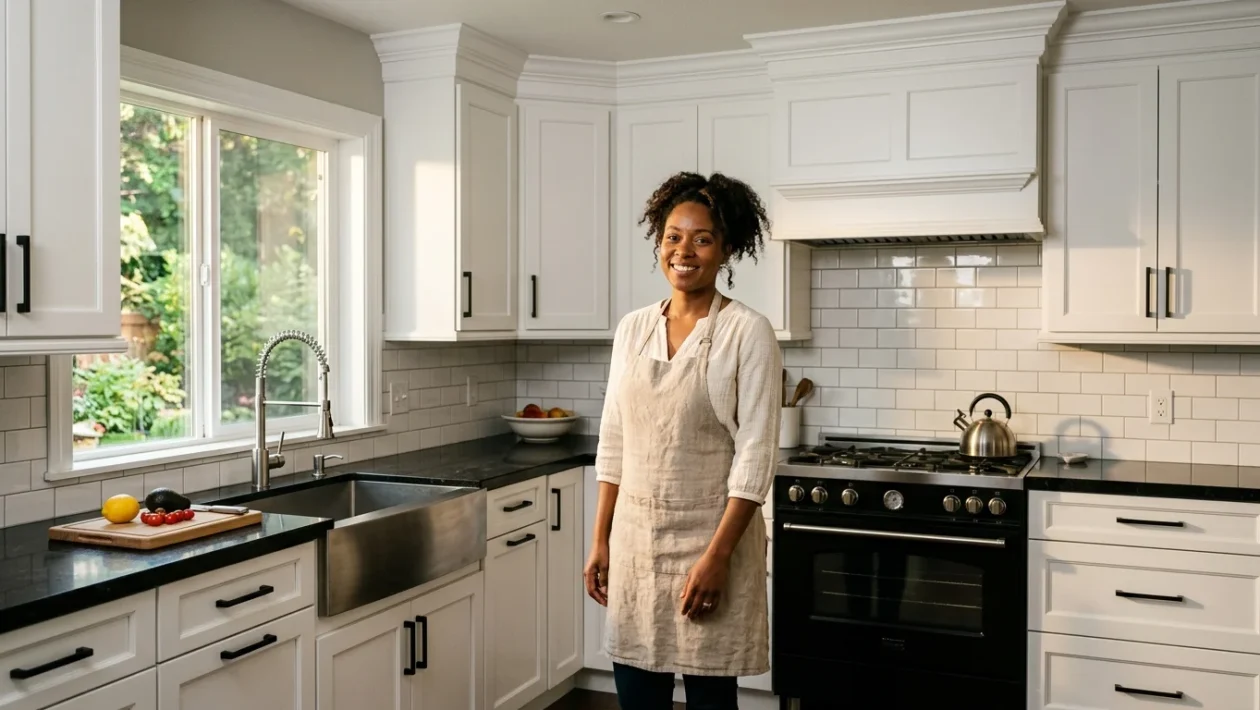
A stark before-and-after showing honey oak kitchen cabinets transformed into custom white cabinetry with crown molding and subway tile.
Most kitchen renovations cost a fortune, but strategic updates can completely change a room on a tight budget. Rather than replacing entire cabinet units, smart trim work and fresh paint can deliver a high-end finish.
Reddit user u/BakedPenna proved this by overhauling a kitchen for less than $500. Over two months, this DIY project relied on careful preparation, paint, new hardware, and concealed lighting instead of full demolition.
Outdated Honey Oak Cabinets
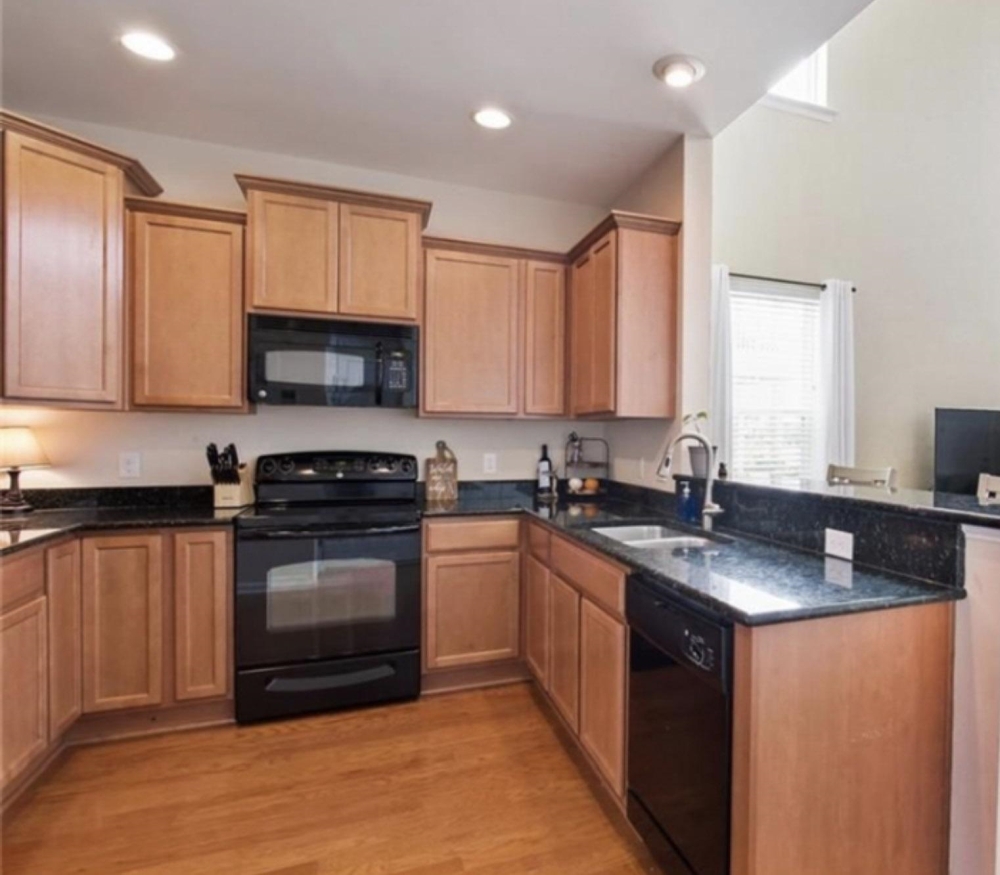
The original kitchen featuring standard honey oak cabinets and bare walls.
The space started with generic honey oak cabinets, dark granite countertops, and black appliances. A bare, painted wall separated the counters from the upper cabinets, leaving the layout feeling unfinished.
The original crown molding stopped awkwardly above the top cabinets. Without hardware or a backsplash, the room felt heavily reliant on the outdated wood tone.
Prioritizing Preparation Over Demolition
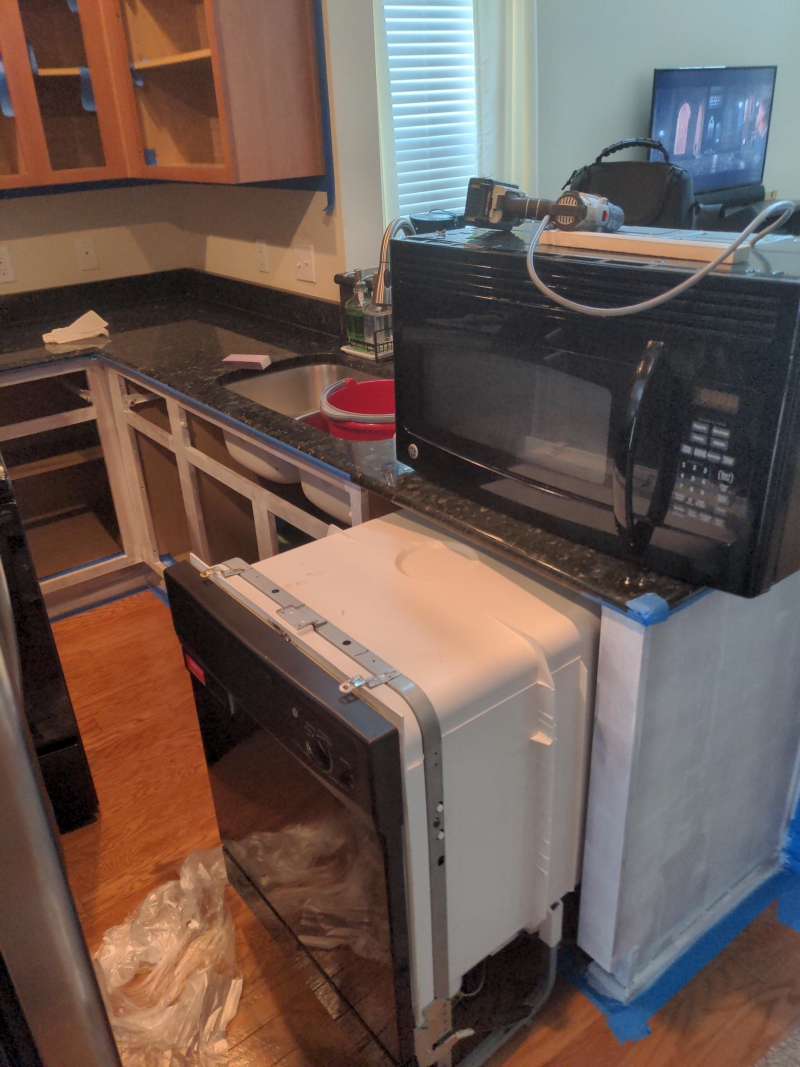
Cabinet doors and drawers removed for sanding and primer.
A successful cabinet paint job demands rigorous preparation. The homeowner removed all doors and drawers while leaving the major appliances in place.
This approach allowed every visible cabinet surface to receive an identical finish. Careful masking protected the dark granite countertops before the intense sanding and priming stages began.
Adding Height with Custom Trim
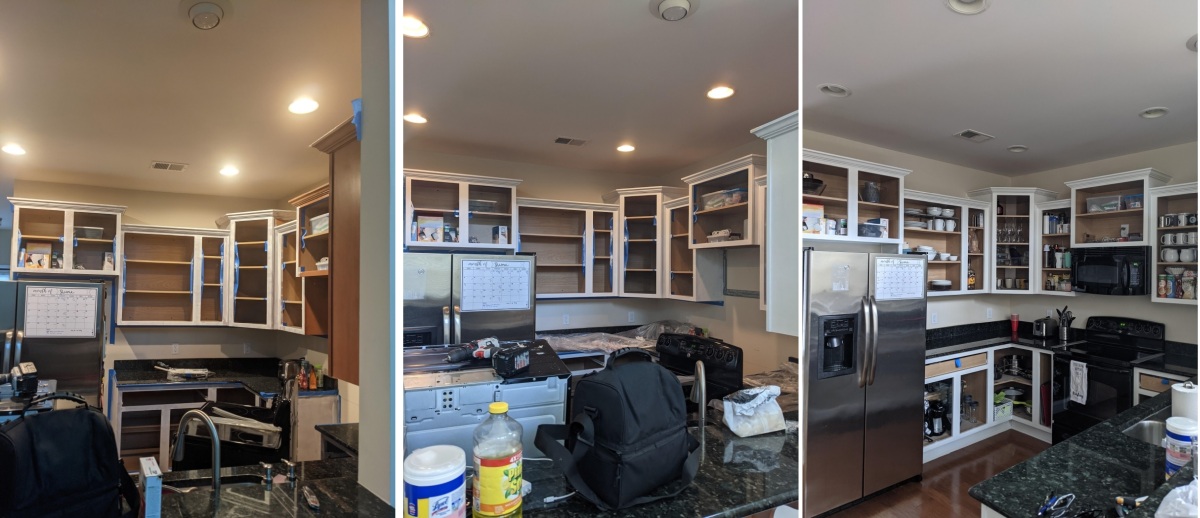
New crown molding installed above the exposed cabinet frames.
With the doors out of the way, the homeowner tackled structural upgrades. New crown molding and upper trim pieces were attached directly to the existing cabinet frames.
This crucial step added visual height and firmly connected the upper cabinets to the ceiling. The added woodwork changed the overall proportions, laying the groundwork for a custom-built look long before the paint cans were opened.
White Paint Unifies the Space
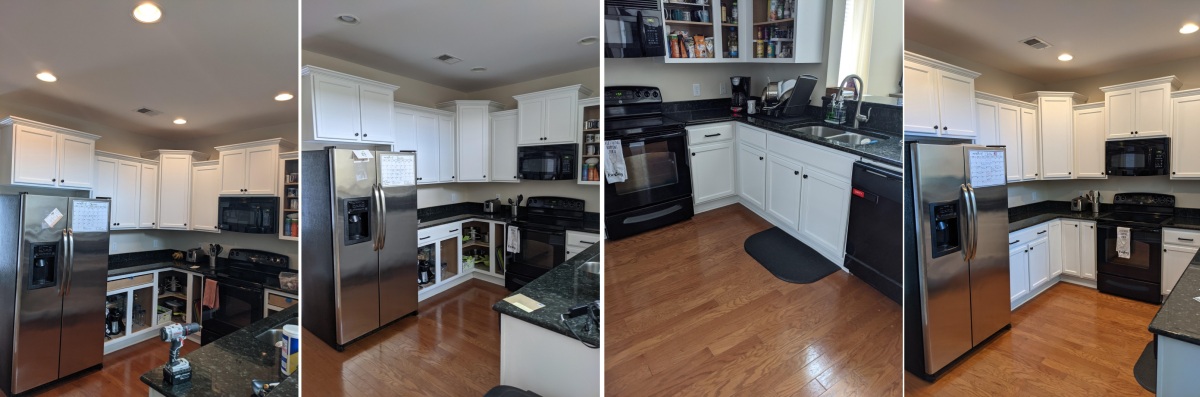
Freshly painted white cabinets contrasted with dark countertops.
Applying bright white paint instantly united the disjointed sections of the kitchen. The existing black appliances and dark countertops remained, offering a striking, high-contrast anchor.
Simple black hardware was introduced to add depth across the stark white surfaces. The dark handles and knobs created consistent shadow lines, highlighting the subtle shaker-style doors.
Achieving a Built-In Look
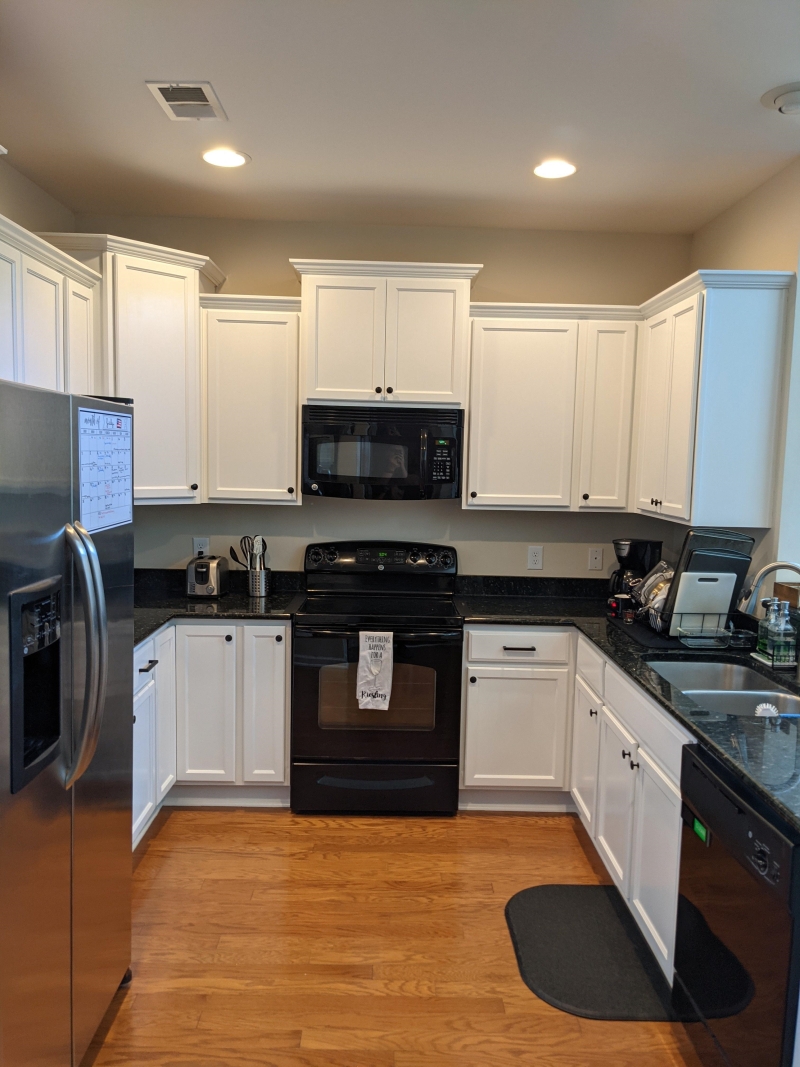
The finished upper cabinets showcasing layered crown molding.
The crown molding proved to be the most impactful visual upgrade of the entire project. Instead of ending with a flat, raw edge, the cabinets now feature layered trim reminiscent of high-end built-in furniture.
The taller center cabinet above the microwave amplifies this effect. The detailed woodwork creates a balanced focal point that elevates the entire cooking wall.
Routing Hidden Electrical Wiring
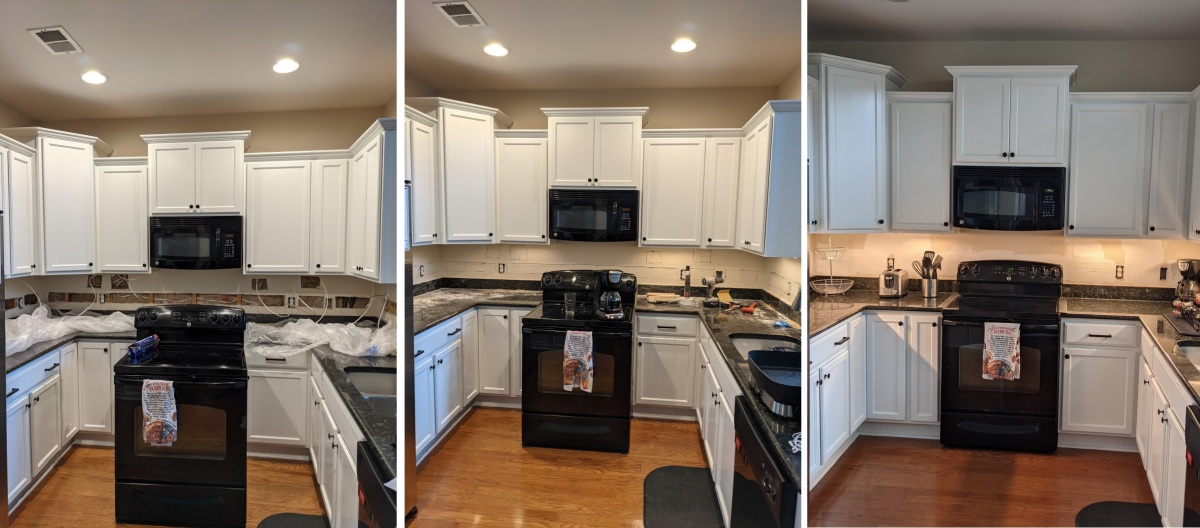
Drywall sections opened to hide wiring for under-cabinet lighting.
Exposed wires easily ruin a clean aesthetic. Instead of sticking LED strips under the cabinets and hiding cables with external tracks, the homeowner opened sections of the drywall.
All electrical wiring was routed cleanly inside the wall. The drywall was then patched, sanded, and painted over to create a flawless surface for the upcoming tile work.
Connecting the Room with Subway Tile
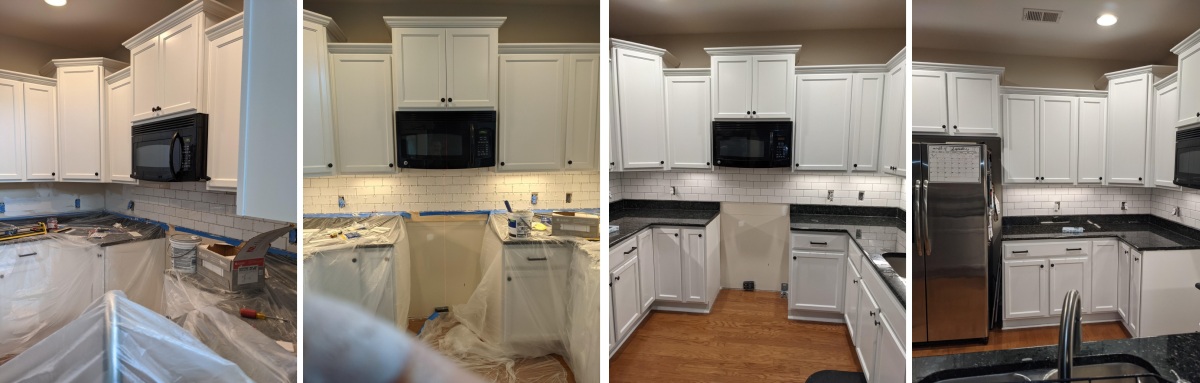
White subway tile covering the previously bare wall space.
Newly installed white subway tile filled the awkward gaps between the upper and lower cabinets. This continuous tile runs behind every work surface, visually tying the separate cabinet sections together.
The hidden under-cabinet lighting washes perfectly down the textured tile, highlighting the crisp grout lines. Instead of isolated blocks of cabinetry, the space now flows uninterrupted.
Black Hardware Anchors the Doors
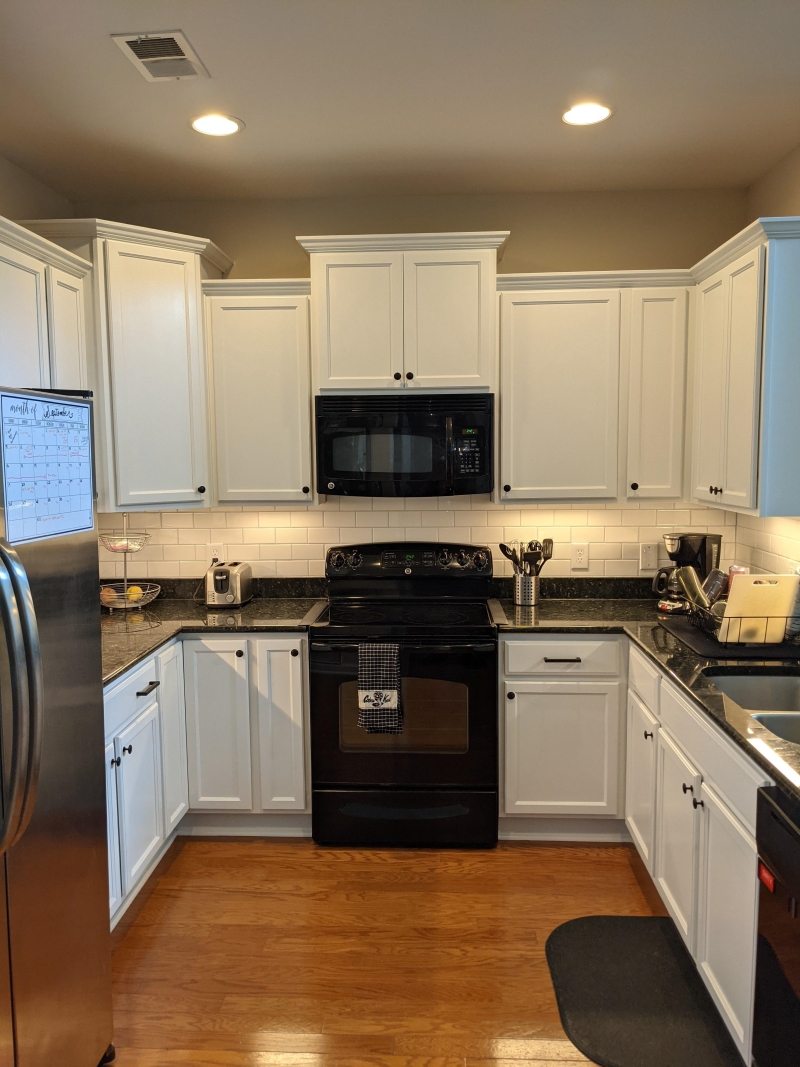
Contrasting black knobs and bar pulls on the finished white doors.
The final touches involved drilling holes for the new matte hardware. Small round knobs were placed on the doors, while sleek bar pulls were centered on the drawers.
These black accents give each cabinet face a defined, structured outline that the original bare oak severely lacked. The bold contrast bridges the gap between the white cabinetry and the dark counters.
Revealing the Hidden Details
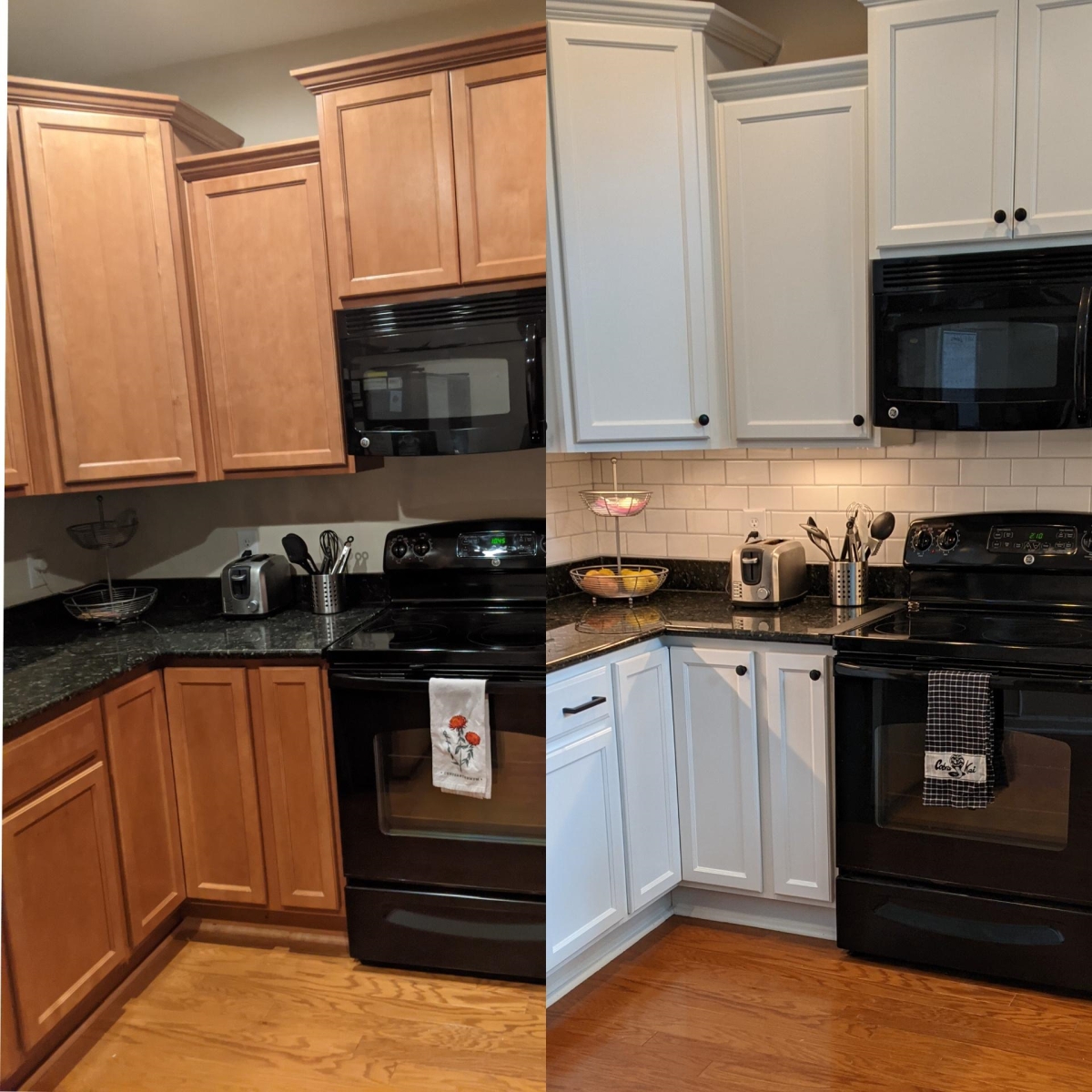
A direct side-by-side comparison of the kitchen’s transformation.
A side-by-side comparison reveals architectural details that were completely masked by the original honey oak. The custom crown molding and sharp vertical lines now dominate the visual field.
By painting the cabinets a uniform color, the eye naturally ignores the dated wood grain. Attention immediately shifts to the elegant proportions, structured trim, and modern hardware of the newly refreshed space.