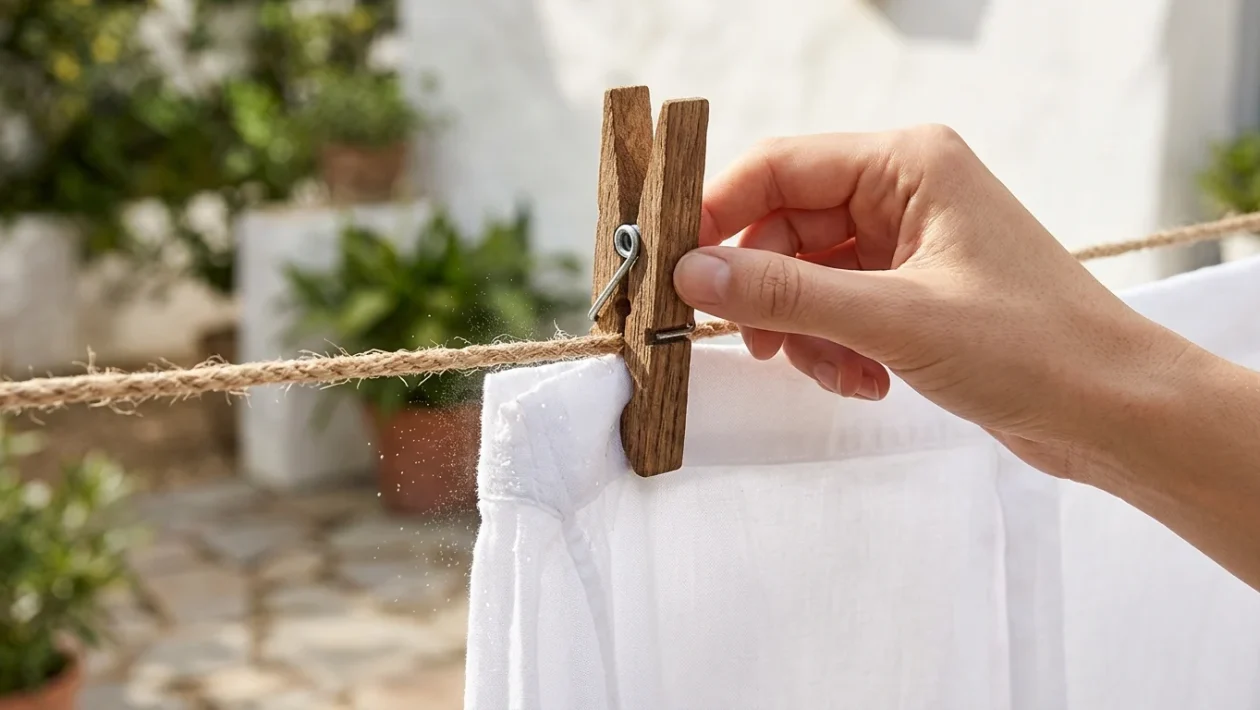
A close-up of wooden clothespins properly securing garments on a clothesline using the correct hole.
Hanging laundry properly extends the life of your clothes and heavily reduces ironing time. Yet, a vast majority of people have been misusing a basic household tool for years: the clothespin.
These small wooden or plastic clips feature a highly specific design that is no accident. The two differently sized holes serve a precise mechanical purpose that most people ignore.
The Real Purpose of the Two Holes
The standard habit is folding a garment completely over the clothesline and clamping the pin tightly over the top. This approach traps moisture, creates deep creases, and leaves annoying pressure marks on the fabric.
The dual-groove design actually exists to optimize the drying process:
- The small hole: This is engineered to grip the actual clothesline or wire. It locks the pin securely in place so it won’t slide in the wind.
- The large hole: This space is designed to hold the fabric right below the line, allowing the garment to hang straight down.
By separating these two functions, airflow circulates freely through the fabric. This method prevents unnecessary wear on the fibers and speeds up the drying cycle.
How to Hang Your Clothes the Right Way
Applying this method to your laundry routine requires a very simple adjustment.
First, snap the pin onto the clothesline using the smaller, inner groove. Next, secure the edge of your garment into the space created by the larger hole. The clothing should drop freely toward the ground.
Hanging clothes vertically rather than draping them over the wire stops collars, sleeves, and hems from stretching out of shape. You will immediately notice a sharp drop in the time you spend standing at an ironing board.
Specific Rules for Different Garments
Knowing the mechanics of the clothespin is only half the battle. Where you clip each piece of clothing determines whether it keeps its original shape.
- T-shirts and tops: Always clip them by the bottom hem. Any faint pin marks will be entirely invisible when tucked in or worn at the waistline. Never hang them by the shoulders, which permanently distorts the fit.
- Button-up shirts: The optimal method is placing wet shirts on plastic hangers and pinning the hanger itself to the line. If space is tight, secure them by the bottom hem.
- Pants and jeans: Turn them inside out and pin them by the waistband or ankle hems. The heavy, wet denim is easily secured by the clothespin’s larger hole without crushing the seams.
- Dresses and skirts: Fasten them by the waistband or the sturdy upper side seams. These reinforced areas easily resist deformation from the weight of wet fabric.
- Underwear and socks: Because these are lightweight items, you can use the smaller or medium groove to grip elastic bands quickly without stretching them out.