Imagine being hooked up to life-saving medical equipment when the entire building suddenly goes pitch black. That nightmare became a reality recently when a major Philadelphia hospital suffered a catastrophic power failure, forcing an emergency overnight evacuation.
If a massive medical facility with millions of dollars in infrastructure can go completely dark, your residential power grid doesn’t stand a chance. Power outage survival isn’t just about keeping the beer cold; it is about protecting your family’s safety and health when the modern world pulls the plug.
We are going to unpack exactly why these grid failures happen and how you can bulletproof your own home against the next inevitable blackout.
The Reality Of Power Outage Survival
We take the hum of our refrigerators and the glow of our Wi-Fi routers completely for granted. But the truth is, the North American power grid is aging rapidly and failing more often than ever before.
In fact, a recent report from the North American Electric Reliability Corporation revealed a shocking reality: extreme weather and infrastructure strain have caused a 78% increase in prolonged grid outages over the last decade. When the lights cut out, the clock immediately starts ticking on your food supply, your home’s climate control, and any medical devices you rely on.
You cannot sit around waiting for the municipal utility trucks to save the day. You need to step up and become your own first responder.
Lessons From A Major Hospital Evacuation
When Jefferson Methodist Hospital lost power, it was not just a minor inconvenience. It triggered a massive, high-stress logistical nightmare where patients had to be loaded into ambulances and shipped to nearby facilities in the dead of night.
The lesson here is crystal clear for homeowners: you must have an evacuation trigger point. If you are sheltering in place at home without power, you need to know exactly when it is time to pack up and leave to protect your vulnerable family members.
Here is the exact protocol you should follow the second your house goes dark:
- Secure your perimeter: Unplug sensitive electronics immediately to prevent catastrophic damage from power surges when the grid finally kicks back on.
- Assess medical needs: Check on anyone requiring CPAP machines, oxygen concentrators, or refrigerated medications like insulin.
- Activate backup power: Fire up your portable generators or battery banks to keep your critical appliances running smoothly.
- Monitor the timeline: Call your local utility information line, get an estimated repair time, and establish a hard deadline for when you will evacuate to a hotel.
Bulletproofing Your Home Backup Systems
You don’t need a massive, industrial-grade diesel plant to keep your household running safely. However, whether you are facing a severe spring storm this May 2026 or a random blown transformer, your backup equipment has to be rock solid.
I always tell folks to invest in trusted North American workhorses. Look into brands like Generac for seamless whole-home standby power, or grab a heavy-duty portable unit from Honda Power Equipment because they start on the first pull every single time.
“The biggest mistake homeowners make is buying a generator during a blackout. By then, the hardware shelves are empty. True resilience is built when the sun is shining and the grid is humming.” – Mark Vanderburg, Emergency Logistics Specialist.
Not sure which route to take for your property? Here is a quick breakdown to help you lock in your backup power strategy.
| Power Source Type | Best Home Use Case |
|---|---|
| Portable Gas Generator | High power output for fridges and heaters; strictly requires outdoor ventilation. |
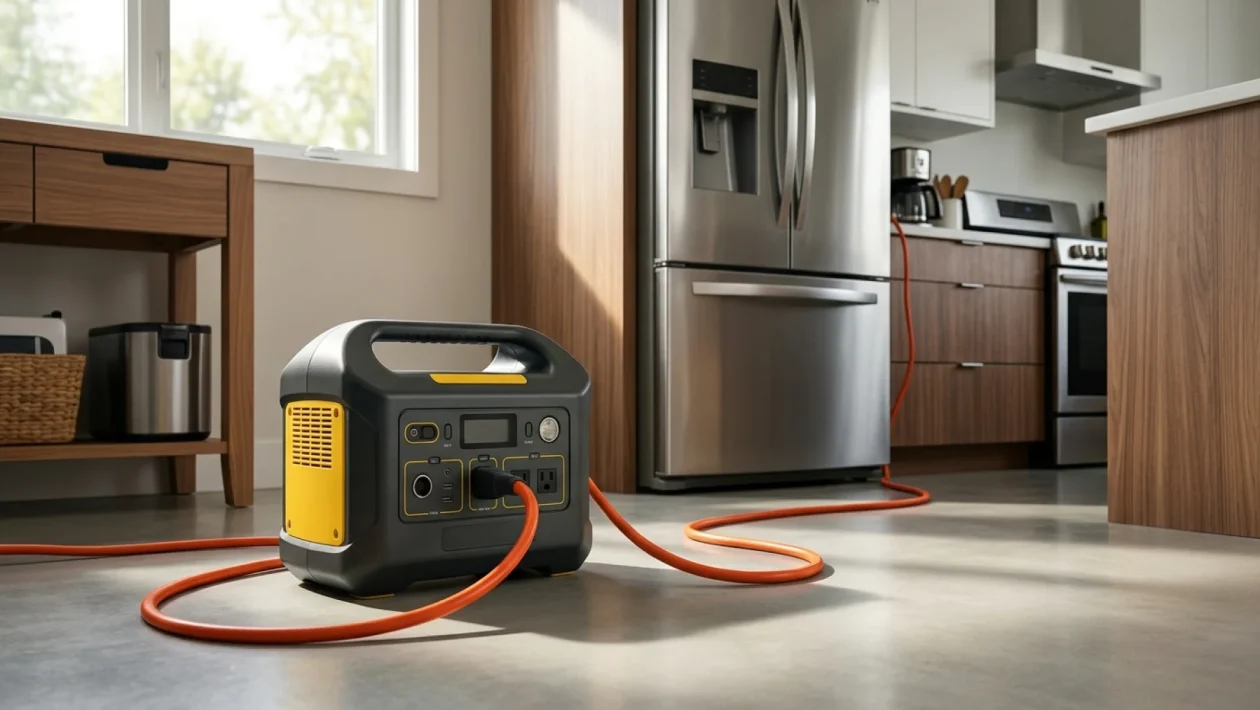
| Lithium Power Station | Silent, indoor-safe power that is perfect for CPAP machines and charging phones. |
| Whole-Home Standby | Seamless, automatic power for the entire house; requires a higher upfront cost. |
Frequently Asked Questions
How long can food last in the fridge without power?
If you keep the doors firmly closed, a standard refrigerator will keep food safely cold for about four hours. A fully packed freezer can hold its freezing temperature for up to 48 hours.
Are indoor battery stations enough for medical equipment?
Yes, modern high-capacity lithium power stations can easily run a standard CPAP machine for several nights. Just make sure you calculate your specific device’s wattage requirements beforehand.
When should I call emergency services during a blackout?
Only dial 911 if there is a direct threat to life, a fire, or a severe medical emergency. For general power updates, use your municipality’s dedicated non-emergency information line.
🤝 Being prepared isn’t about paranoia; it is entirely about securing your peace of mind. When you have the right gear and a solid action plan, a blackout transforms from a crisis into a minor inconvenience.
💡 Take ten minutes this weekend to test your flashlights, cycle the old fuel out of your generator, and map out your own evacuation trigger points with your family.
📱 If you found this breakdown helpful, share your thoughts below or send this to a buddy who still thinks a few prayer candles will get them through the next grid failure.
👇 Good luck out there, stay safe, and keep those engines running smoothly!