A woman smiling while cleaning her kitchen stove with a household sponge.
That highly effective “magic” sponge scrubbing your kitchen counters is leaving behind a massive, invisible mess.
A woman wiping down a kitchen stove using a household cleaning sponge.
New research indicates these household staples quietly shed trillions of microplastics into the environment every single month.
These microscopic fragments ultimately infiltrate the human food supply, drinking water, and the air we breathe. Once they enter the human body, early scientific evidence shows they can cause severe biological damage.
The Mechanics of Melamine Foam
Close-up of hands forcefully scrubbing a metallic surface with a cleaning block.
Scientists from the American Chemical Society recently investigated the friction-based cleaning blocks famously known as “magic” sponges. These products rely solely on water to strip away heavy grease and dirt.
The secret to their cleaning power is melamine foam. This durable, lightweight plastic acts as an ultra-fine abrasive, essentially functioning like liquid sandpaper.
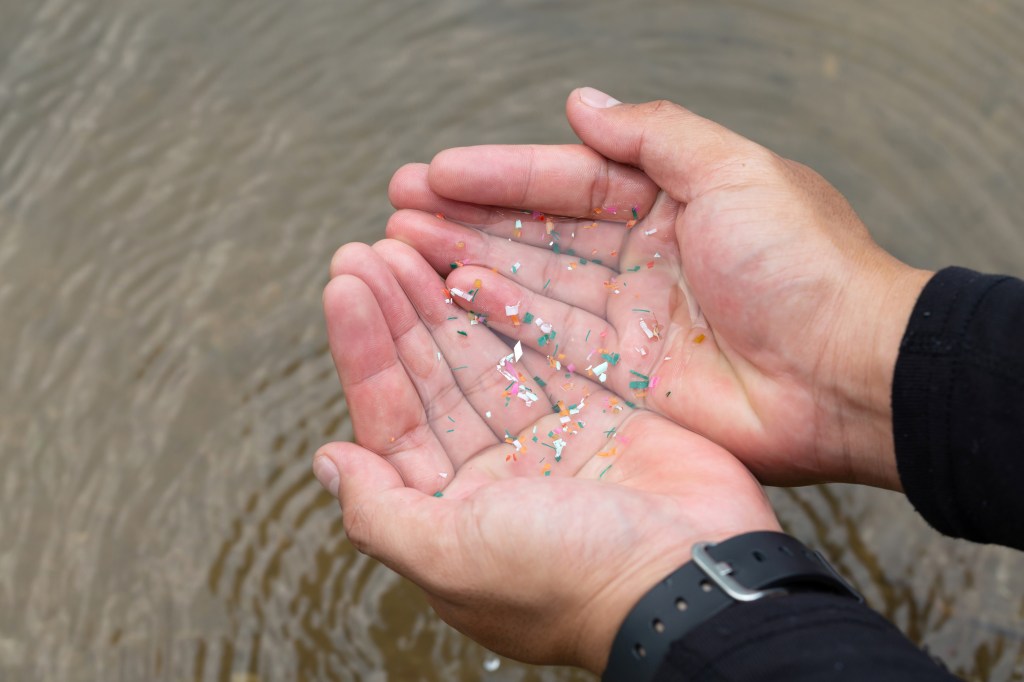
However, the foam degrades with every scrub. As the sponge disintegrates, it sheds a massive volume of microplastic fibers.
To quantify the pollution, researchers tested three popular sponge brands by rubbing them against textured metal, mimicking standard household cleaning. The results showed a single sponge sheds approximately 6.5 million microplastic fibers for every gram of worn-down foam.
Trillions of Particles Leaking Monthly
A hand wearing a yellow rubber glove wiping a kitchen countertop.
The research team extrapolated this data using Amazon sales figures from August 2023. They assumed an average sponge loses roughly 10% of its mass through regular use.
Based on those calculations, an estimated 1.55 trillion microplastic fibers enter the environment every month.
Because this projection is based on a single online retailer, the actual global volume of plastic pollution generated by melamine sponges is undoubtedly far higher.
A Costly Human Health Crisis
Microplastics do not stay confined to the natural environment. They rapidly transition into the human body, embedding themselves in critical organs.
Researchers have discovered these synthetic particles in human lungs, livers, kidneys, hearts, testicles, and placentas. They have even been detected in human brain tissue, breast milk, and semen.
A major scientific review published in January outlined how microplastic exposure threatens the respiratory, digestive, and reproductive systems.
Current studies link the particles to cellular damage, organ disruption, and compromised immunity. Exposure is also associated with higher risks of certain cancers, strokes, and heart attacks.

A woman cheerfully cleaning domestic kitchen appliances with a foam sponge.
The neurological impact is equally alarming. Microplastics in the brain may trigger fatigue and dizziness, and elevated levels have already been identified in patients suffering from dementia.
The financial toll is staggering. One recent study calculated that microplastics—and the “forever chemicals” they carry—are driving a $250 billion-a-year health crisis in the United States alone.
Minimizing Plastic Exposure
To curb this specific source of pollution, the American Chemical Society is advising manufacturers to produce denser, highly durable sponges that resist breaking down under pressure.
For consumers, experts recommend switching to natural, plastic-free cleaning tools and installing point-of-use water filters to trap microplastics before consumption.
Broader lifestyle changes are also necessary to lower overall exposure. Health advocates suggest eliminating single-use plastics like straws, bottles, and grocery bags.
Switching to clothing made from natural fibers and strictly avoiding the use of plastic containers when microwaving food can further mitigate biological risks.
Advanced mitigation technologies are also emerging. Specialized washing machine filters are now available to capture shedding microplastics during laundry cycles, and experimental blood-filtration treatments are currently being developed to flush existing synthetic particles out of the human body.